Dear friends and neighbors,
This week, two issues continued to dominate conversations: land use and education. Both are complicated, both affect costs, and both are still very much in motion.
We saw a significant shift on Act 181, and the House passed H.955, the education transformation bill, sending it to the Senate. Below I walk through changes and what is still unresolved or up for additional changes.
First – an important civic reminder for Dover and Wardsboro voters. You have a role to play in maintaining high quality schools and setting residential property tax rates.
River Valleys Budget and Elections
This is our opportunity to ask questions and vote on the River Valleys Unified School District (Dover and Wardsboro) for next year and ask questions about the local decisions that are increasing your property taxes. Please engage and vote.
- Voting for school board members takes place by Australian ballot on Monday, April 27, 2026 from 10 AM to 7 PM
- All other items will be decided at the district meeting on Tuesday, April 28, 2026 at 7 PM at Dover Town Hall. At this meeting, you will vote on a roughly $6.85 million school budget that affects your property taxes, whether to use up to $470,000 in reserve funds to lower those taxes, funding for buildings and transportation, tuition rates for students attending schools like Burr & Burton, whether to continue the IB program in Dover, and other district operations and elections. You can read the full warning here
Update on Act 181 and S.325
There was a significant shift this week. After growing public pressure, a letter from the Rural Caucus and weeks of testimony, House leadership and the House Environment Committee indicated they are now prepared to repeal both the road rule and Tier 3 from Act 181 and reconsider how to work with communities on protection for critical habitats.
This is a major change from where things stood just a few weeks ago. At the same time, this issue is not yet resolved. The committee still needs to formally amend S.325, the House still needs to vote, and the bill will then return to the Senate. It is clear to me that this issue has moved beyond typical legislative debate. Vermonters are deeply engaged, organizing, meeting with their towns, writing, and showing up. That is having an impact.
Windham Regional Plan Update (Act 181)
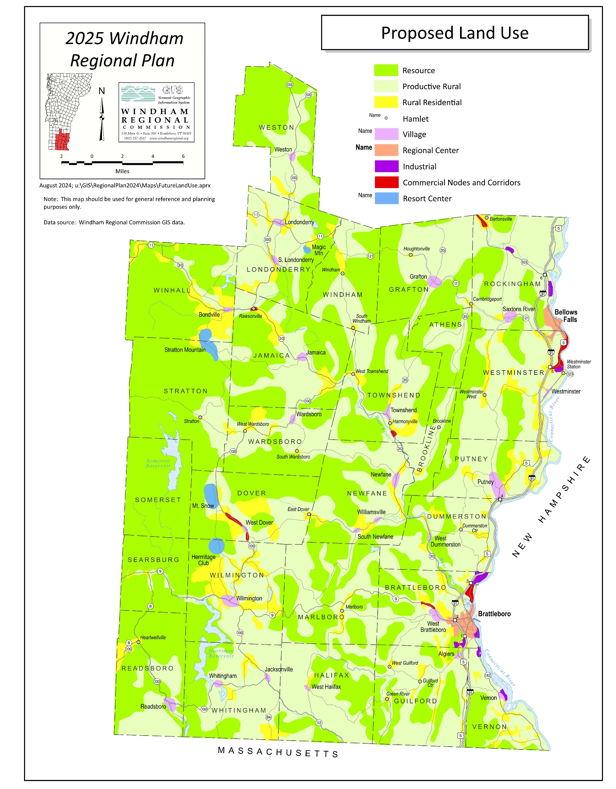
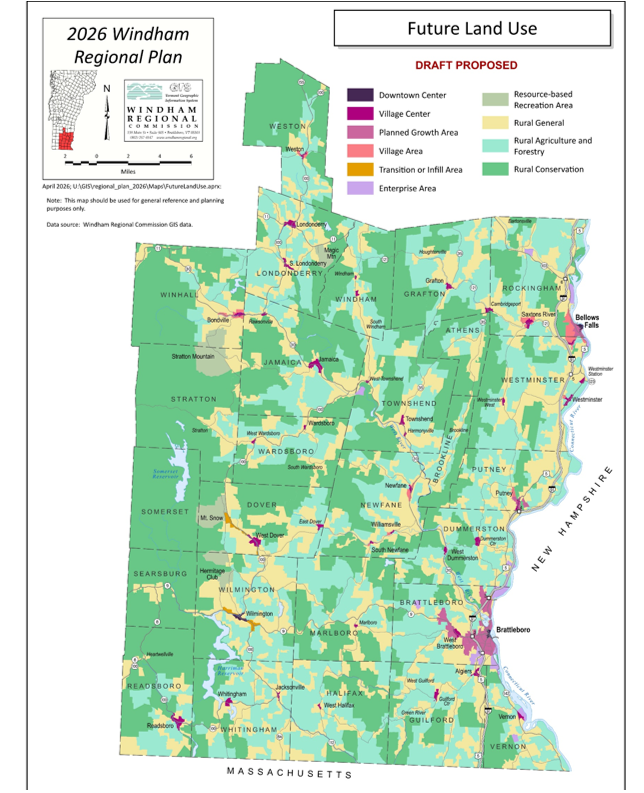
The Windham Regional Commission is updating its Regional Plan to comply with Act 181. This plan helps guide where housing and development are planned across the region. It does not change your local zoning but it is used in state permitting decisions, including Act 250.
You can review the draft plan and maps here: https://windhamregional.org/act-181/
A new regional land use map is part of this update. It shows areas planned for growth, village centers, and more rural or conservation areas. This map is meant to help align state and local decisions.
There has been a lot of discussion about Tier 3 and the road rule. Those areas are being handled separately at the state level, and the Legislature is considering changes and repeal to those provisions, so it is not certain how this part of the law will move forward.
The plan also includes housing targets for each town. These are not requirements. They are meant to show what may be needed to address housing shortages over time, but it is still up to each town to decide what, if anything, to do.
There are two public opportunities in May to review the plan and ask questions. An in-person meeting will be held May 7 in Brattleboro – location TBD, and a virtual meeting will be held May 20. The draft plan will be submitted to the Land Use Review Board at the end of May, with additional hearings later this summer and fall, and a final decision by the LURB expected in early 2027.
For questions, contact Chris Campany at ccampany@windhamregional.org or Matt Bachler at mbachler@windhamregional.org
Court Decision on Climate Impacts
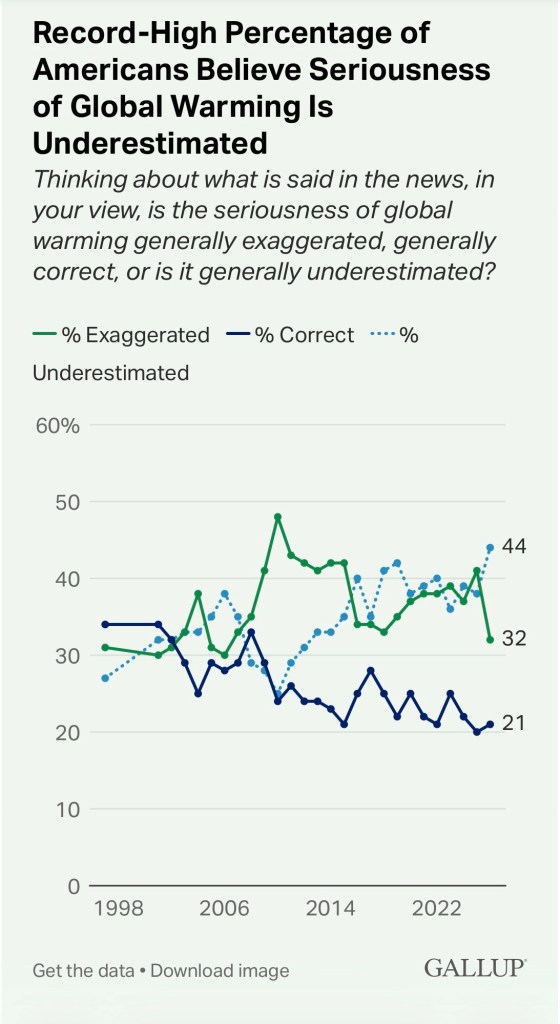
A recent Supreme Court case highlights a broader issue that also matters here in Vermont. Louisiana has lost about 2,000 square miles of land which is roughly the size of Delaware since the 1930s due to coastal erosion from rising sea levels and changes to natural water systems from decades of infrastructure for fossil fuel extraction that weakened the landscape. While Vermont is not losing coastline, we are seeing climate impacts from flooding and river damage that are attributable to changing weather patterns. The Supreme Court did not decide who is responsible for the damage, rather it decided that these cases will be heard in federal court instead of state court, which may make it harder for states and local communities to recover costs.
Education Update
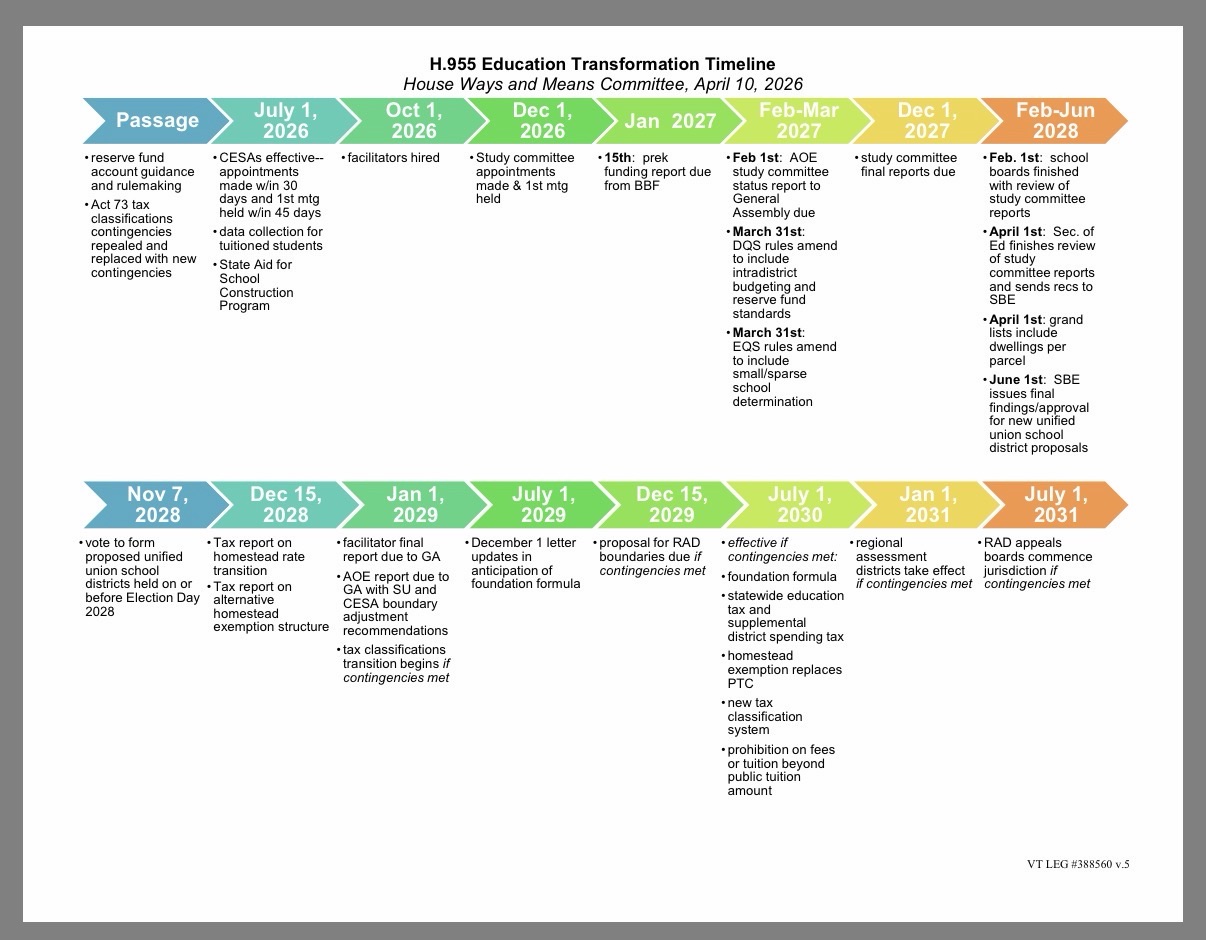
The House passed H.955, the education transformation bill with a 79–62 preliminary vote. The bill reflects months of work on school governance, property taxes, and how we deliver services across districts, but there are still significant questions about cost, implementation, and what this means for communities. The bill now is in the Senate for consideration.
Below is a more detailed breakdown of what is in the bill and what it could mean.
Foundation Formula
One of the most important changes in the education bill this week is to the timeline for the new funding system, often called the foundation formula. The original plan assumed this would begin around 2028. That is no longer the case. The earliest it can now take effect is July 1, 2030, and only if several conditions are met first. School districts must study and vote on potential mergers, the State must complete a full financial analysis comparing the current system to the new one, and the Legislature must still resolve major unanswered questions like how to fund transportation, career and technical education, special education, and the real cost differences between rural and more populated areas. In plain terms, this slows the process down and requires more of the work to be done upfront before anything changes for communities.
A move to take rural and small school cost factors out of the core funding formula in the future happened in Act 73. This bill puts a replacement in place by bringing back small schools grants. These changes are contingent on other things happening and this whole item is up for discussion next year. I do not and can not support a return to the heavily politicized small school grant model and will fight this should voters send me back to Montpelier next year.
Tuition
For families whose children attend school outside their home district, this bill stops schools that receive tuition students from charging extra fees beyond the tuition that is paid through public funds.
RADS
H.955 proposes moving from our current town-based property tax system to regional assessment districts (RADs). Some pieces are clear. Each district must include at least 10,000 properties, which means many towns in our region would be grouped together into a multi-town system. The State, not towns, would draw those boundaries.
Over time, towns would no longer conduct their own independent reappraisals. Instead, reappraisals would happen on a shared regional schedule, at least every six years, using common standards. The goal is to keep property values more current and consistent across communities, which is an issue today. Property tax appeals would also shift from local Boards of Civil Authority to a regional appeals system.
The transition is scheduled to begin in 2028, with the current town-based system largely phased out by 2031.
There are still important details that are not clearly defined. The bill does not fully establish who governs these regional districts on a day-to-day basis, how decisions are made, or how individual towns will be represented. It also leaves open how costs will be shared across towns, how existing local staff and listers will transition into the new system, and how accountability to taxpayers will be maintained.
This is a very big structural change to how property taxes are administered in Vermont. Some argue it is a way to improve consistency and address capacity challenges. Others are concerned about loss of local control and the lack of clarity on how the system will function in practice. Much of that detail will need to be worked out in future legislation and rulemaking.
Property Classification and School Construction
Two parts of H.955 that could affect property taxes over time: how property is classified and how school construction is paid for.
First, property classification. The bill creates three statewide categories:
- Homestead (your primary residence)
- Nonhomestead residential (second homes, short-term rentals like Airbnbs, and long-term rentals)
- Nonhomestead nonresidential (business and commercial property)
The goal as explained is to make the system more consistent across towns. This does not set tax rates by itself, but it does affect how taxes are distributed. Depending on how a property is classified, some owners may pay more and others less relative to today. For second homes and short-term rentals, this category is being more clearly defined.
Second, school construction. The bill would have the State take on a larger share of school building costs, including at least half of new construction and a portion of existing school debt. That could reduce pressure on local property taxes tied to school projects.
However, those costs are largely shifted into the statewide Education Fund, which is supported primarily by property taxes. In plain terms, some communities may see relief from specific local projects, but the overall cost is spread across taxpayers statewide and still needs to be paid for over time.
These changes are not immediate. Most are tied to a multi-year transition, with major pieces expected to begin phasing in around 2028–2030.
Impact on property taxes
In the short term, property tax relief is being addressed through the annual yield bill and a proposal to change the excess spending penalty. Those are the main tools the Legislature is using right now to manage next year’s tax bills.
At the same time, one of the biggest drivers of rising property taxes is healthcare premiums. That pressure is outside of this bill, but it continues to push costs up across the system.
Act 73 set up a new structure, but left major cost questions unanswered. H.955 adds more details and more changes, including shifting more school construction costs to the state and adjusting how taxes are calculated, but it does not clearly identify how all of this will be paid for long term. Some costs may go down in certain towns, especially when there is existing school debt. But those costs do not go away. They are spread across the state through the Education Fund, which is still largely paid for by property taxes.
This bill moves costs around more than it reduces them in the short term. Fiscal Note
As always, please reach out if you need help navigating state services or want to share what you’re seeing locally. I read and value your notes, even if I can’t always respond immediately. I do not have staff and I work year-round, so if you do not hear back in a day or two, please follow up or send a text. If you find my work useful and are able to support it, you can do that here.
Thank you for staying engaged and staying in touch!
Rep. Laura Sibilia
Windham-2 District (Dover, Jamaica, Somerset, Stratton, Wardsboro)
Email: lsibilia@leg.state.vt.us
Phone: (802) 384-0233
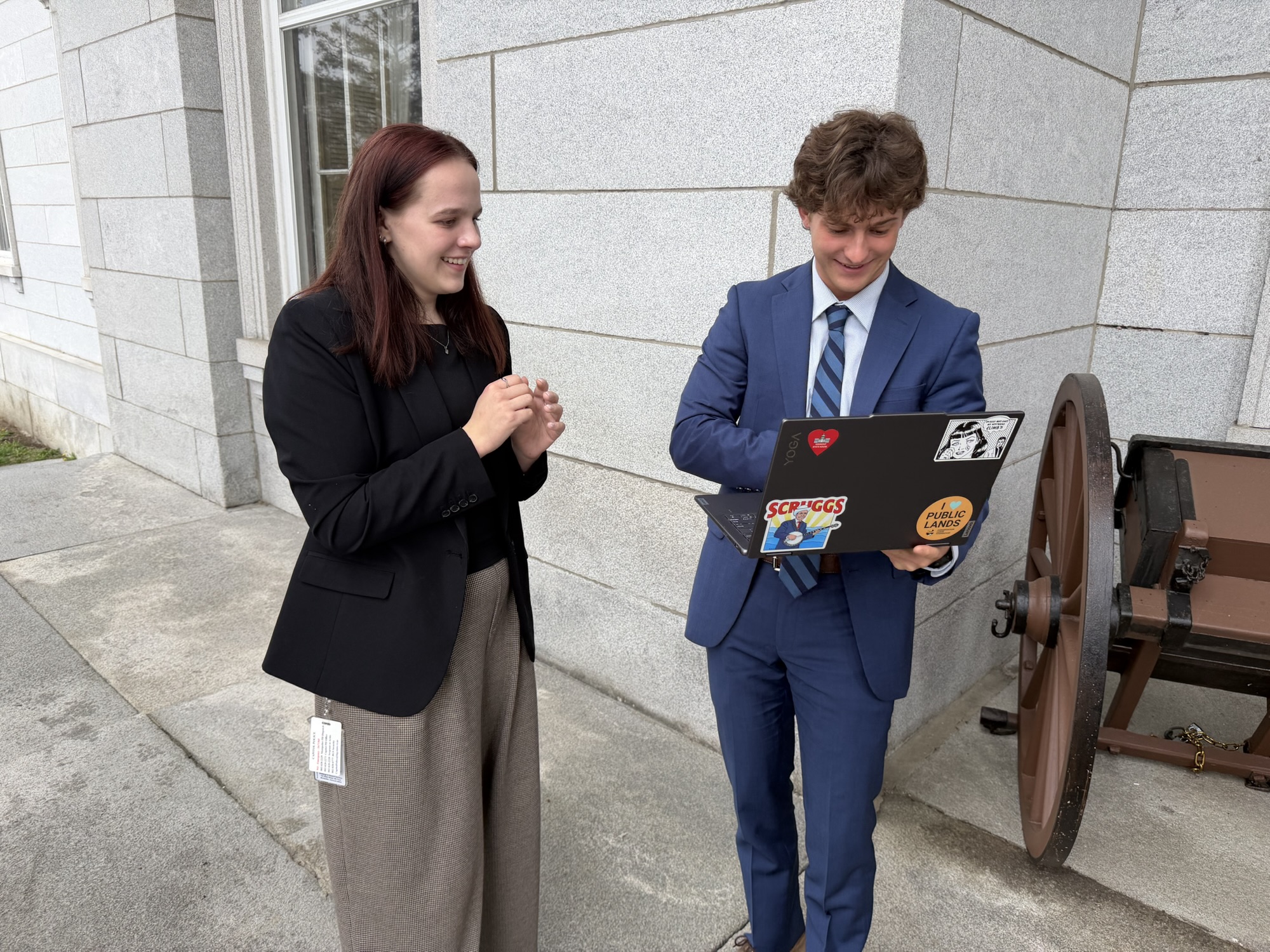
My interns McKenzie Hart and Owen Rhudy coaching me on a social media video update Owen scripted and made this week. Some of you have been asking me to record and post more videos. Owen previously filmed a reelection piece for me when he and McKenzie came to our region for Town Meeting. Stay tuned!
Discover more from Vermont State Representative Laura Sibilia
Subscribe to get the latest posts sent to your email.
 Vermont State Representative Laura Sibilia