Hello friends and neighbors,
I hope to see some of you tomorrow at Jamaica’s MayFest – I will be at the Joining Fair at the town Hall from 2-4 pm.
We are now in the final stretch of the legislative session, and these are often the hardest and most complicated days and weeks of the year.
In a typical year, we would likely be preparing to adjourn around this weekend. This year is different. Major education policy disagreements, the volume of bills still moving through the Senate, and ongoing negotiations between the House, Senate, and Governor are all contributing to a longer and more difficult end to the session.
For those who do not follow the process closely, every bill must pass both the House and Senate in identical form before it can move to the Governor. When one chamber changes a bill passed by the other chamber, the bill must return for further action and negotiation. There are also procedural timelines, committee requirements, and constitutional steps that can slow things down, particularly at the end of the year when many major issues are moving at once.
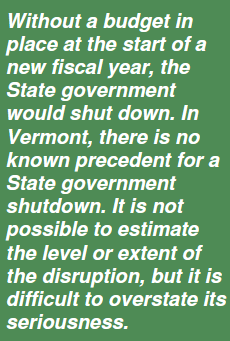
Recent public comments from legislative leaders and Governor Scott make clear that education transformation remains the central unresolved issue. Governor Scott has publicly stated he may veto the budget and other major spending bills if the Legislature does not send him a bill that includes mandatory school district consolidation. That has added pressure and tension to negotiations. The Joint Fiscal Office, which provides non partisan fiscal analysis for the legislature has posted information about what happens in a government shutdown.
At this point in the session, people are tired. Tempers can get short. We have had some borderline disrespectful testimony in committee this week. But this is also a reminder of why the principles of democracy, separation of powers, and respect for institutions is so important.
My friend and colleague Rep. Elizabeth Burrows often reminds me to “assume good intention” of others. I have been thinking about that a lot in these final weeks of session.
At its core, democracy means people with different views and interests govern together through debate, elections, laws, and public participation rather than force or intimidation. Democracy requires patience, negotiation, and the ability to disagree without treating each other as enemies.
Like many people in the building, I am tired, but I remain fully engaged in the work. My focus continues to be making sure our district’s voice is represented in these final negotiations and that the ability of people within our communities to disagree respectfully with one another is also protected and respected.
Below are a few updates on major bills and negotiations still moving through the Legislature.
Education Transformation – H.955
H.955 is the House’s broad education transformation bill focused on school governance, regional service delivery, long-term district structure, and the future of Vermont’s public education system. The bill has now been moved out of the Senate Education Committee on a divided 3-3 vote and then advanced out of Senate Finance on a 5-1 vote, setting up further negotiations in the final weeks of session. The bill will be on the Senate Floor on Tuesday.

I will be at the Joining Fair at Jamaica Town Hall from 2:00–4:30 p.m. and hope to see many of you there.
One of the biggest differences between the House and Senate versions of H.955 is how they approach regional study committees and future school district alignment.
The House version grouped many districts together largely based on geography and size targets. The Senate Education and Finance version substantially changed those proposed groupings, particularly in Southern Vermont. Many of those changes are connected to longstanding discussions around school choice and maintaining feeder towns for publicly funded enrollment at Burr and Burton.
These proposed study committee groupings are consequential because they could influence future governance structures, regional partnerships, tuitioning relationships, and where our students ultimately attend school.
Communities must be able to weigh in on these decisions. Rural communities are not interchangeable, and potential changes of this scale should not move forward without meaningful public engagement and strong local voices at the table. No matter where these negotiations ultimately land, I remain committed to continuing to work with our communities, school boards, educators, families, and students to try to find solutions that communities can live with and help shape together. I will be watching these negotiations very carefully and encourage constituents, school boards, and community members to stay engaged and continue reaching out with concerns, priorities, and questions. As I have previously noted, education votes are some of the most difficult and divisive votes legislators take because schools are deeply connected to our communities, identities, children, taxes, and local futures. Vermonters can and do disagree strongly about the right path forward.
Business Managers Weigh In
This testimony was submitted to the House Ways and Means Committee by Elizabeth Jennings, President of the Vermont Association of School Business Officials (VASBO), about H.949, the annual “yield bill” that affects education property tax rates statewide. VASBO is the association of all of the Business Office leaders of Vermont’s supervisory union.
Her main message is that constant changes to the education tax formula during session are making it harder for school districts to give voters accurate information about property taxes.
She explains that districts build their budgets using the state’s December tax estimates, but when lawmakers change the numbers repeatedly later in session, voters lose confidence in the process. The testimony also warns against using one-time money to temporarily lower taxes because it can create bigger problems later if the underlying costs are still rising. Finally, VASBO raises concerns about proposals that pressure higher-spending districts to cut staffing or programs without addressing the real reasons education costs are increasing.
Data Centers and Large Energy Loads – H.727
The House and Senate have passed versions of H.727, proposed legislation I sponsored that is focused on large data centers and other major electric loads.
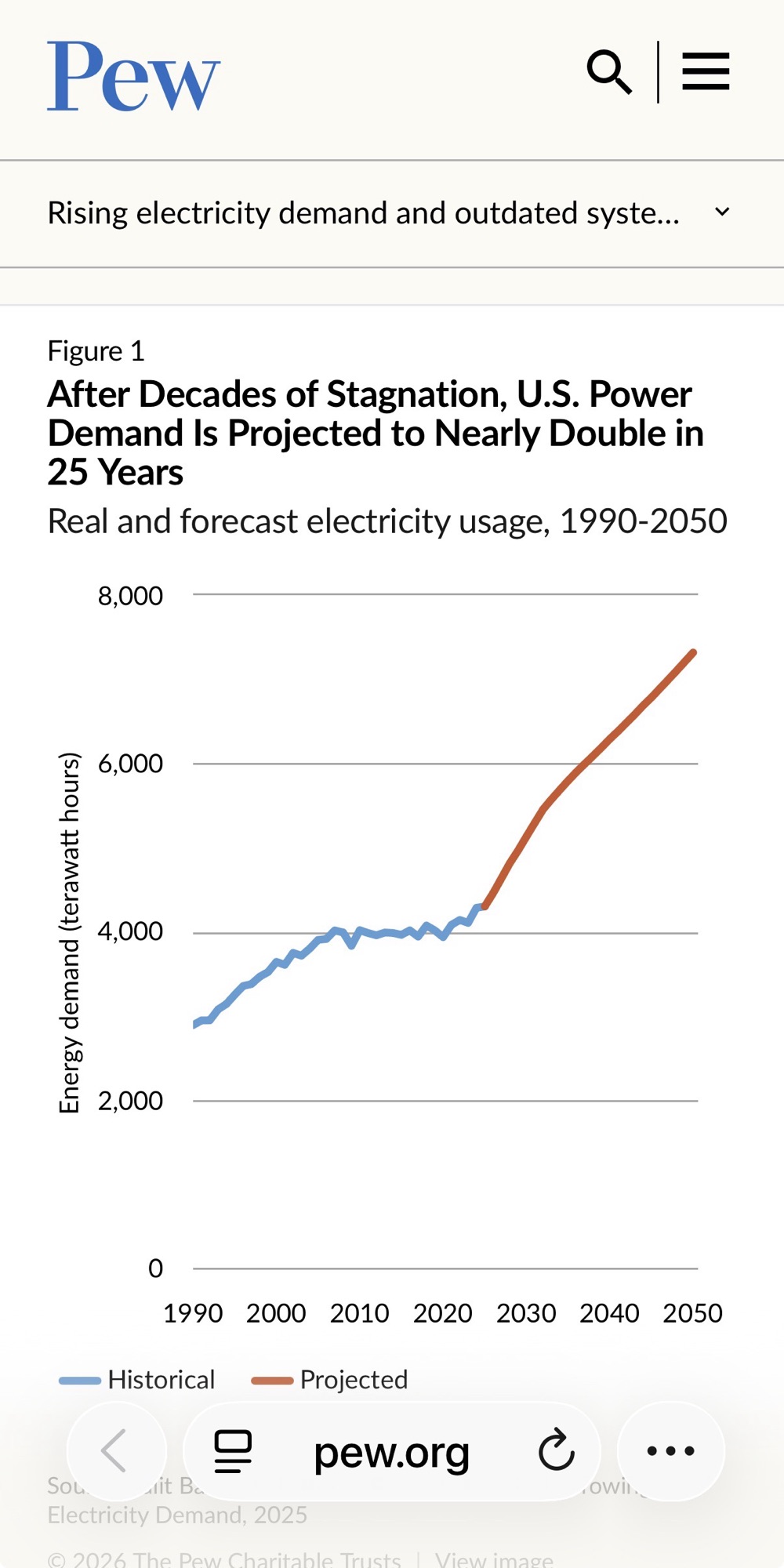
As states across the country race to address growing electricity demand tied to AI and large data centers, Vermont has been working through questions around grid infrastructure, ratepayer protections, water use, permitting, and long-term energy planning.
H.727 attempts to create a framework for how Vermont should approach very large new electric loads while protecting existing ratepayers and communities from subsidizing infrastructure costs tied to those projects.
The Senate made substantial changes to the House version, including the addition of annual payments from data centers towards energy transformation projects that reduce fossil fuel usage. There are still active discussions underway about how to strike the right balance between protecting ratepayers, maintaining grid reliability, supporting long-term energy planning, and ensuring Vermont has a workable and transparent regulatory framework.
To date, both the House and Senate versions of the bill have received overwhelming tripartisan support.
I also appreciated seeing Vermont’s work on H.727 and large energy loads recently featured by Environment+Energy Leader.
Act 181 and Land Use Reform
The Senate did not concur with the House amendments to S.325 and asked for a Committee of Conference. These are three members from the House and three members from the Senate who are appointed to negotiate on behalf of each body. If they are able to come to a majority agreement on a final version, that final version will then go back to the House and Senate for a vote to agree or disagree. No amendments are possible at that point. Committees of Conference are tracked on this page.
Vermont Public: Dartmouth researchers find rain is consolidating into bigger storms as the climate changes
PR.4 – Equal Protection Amendment
PR.4 is a proposed amendment to the Vermont Constitution focused on equal protection under the law.
Vermont’s process for changing the Constitution is intentionally slow. A proposal must pass the Legislature twice over two separate bienniums before going before Vermont voters statewide.
If approved by voters, the amendment would add language to the Vermont Constitution stating that government cannot deny equal treatment and respect under the law based on race, sex, disability, sexual orientation, gender identity, or national origin.
Supporters argue Vermont should have clearer protections in its own Constitution at a time when federal protections and court decisions continue to shift. Others have raised questions about how courts may interpret broad constitutional language in the future.
P.R.4 has passed the Senate and House with large bipartisan votes, Vermont voters will have the final say at the ballot box in November.
Bills Signed by the Governor
Governor Scott recently signed several bills into law, including:
• H.410 – Calculation of recidivism and criminology measures
• H.519 – Vermont State Employees’ Retirement System Group G membership
• H.762 – County and Regional Governance Study Committee
• H.940 – Miscellaneous public utility subjects
As always, please reach out if you need help navigating state services or want to share what you’re seeing locally. I read and value your notes, even if I can’t always respond immediately. I do not have staff and I work year-round, so if you do not hear back in a day or two, please follow up or send a text. If you find my work useful and are able to support it, you can do that here.
Thank you for staying engaged and staying in touch!
Rep. Laura Sibilia
Windham-2 District (Dover, Jamaica, Somerset, Stratton, Wardsboro)
Email: lsibilia@leg.state.vt.us
Phone: (802) 384-0233
I announced this week that I would be seeking reelection to represent Windham 2 in the 2027/2028 biennium – please be in touch with your questions and concerns.
Discover more from Vermont State Representative Laura Sibilia
Subscribe to get the latest posts sent to your email.
 Vermont State Representative Laura Sibilia