Happy Mother’s Day.
“Not all of us can do great things. But we can do small things with great love.” — Mother Teresa
This quote makes me think of the mothers in my life and of the people who I have watched step into that role. I hope you had a good day. I was happy to have my Vermont kids home this weekend, along with our grand puppies. I also got to spend time with my mom and my mother-in-law, and my husband has been making great food for all of us all weekend. It was good to all be together.
I’ll be back in Montpelier this week, and focused on the end of session work ahead.
Education reform
Many of you are asking where things stand. There is no final agreement yet. The larger structural changes tied to Act 73, including governance and funding, are still being worked on.
What is currently moving are funding shifts in the tax bill, health care cost changes tied to school employees, and continued work on Pre-K.
I’ll provide a full update when there is something concrete to evaluate.
Proposition 4 (Equal Rights Amendment) update
Proposition 4 is the proposed Equal Rights Amendment to the Vermont Constitution.
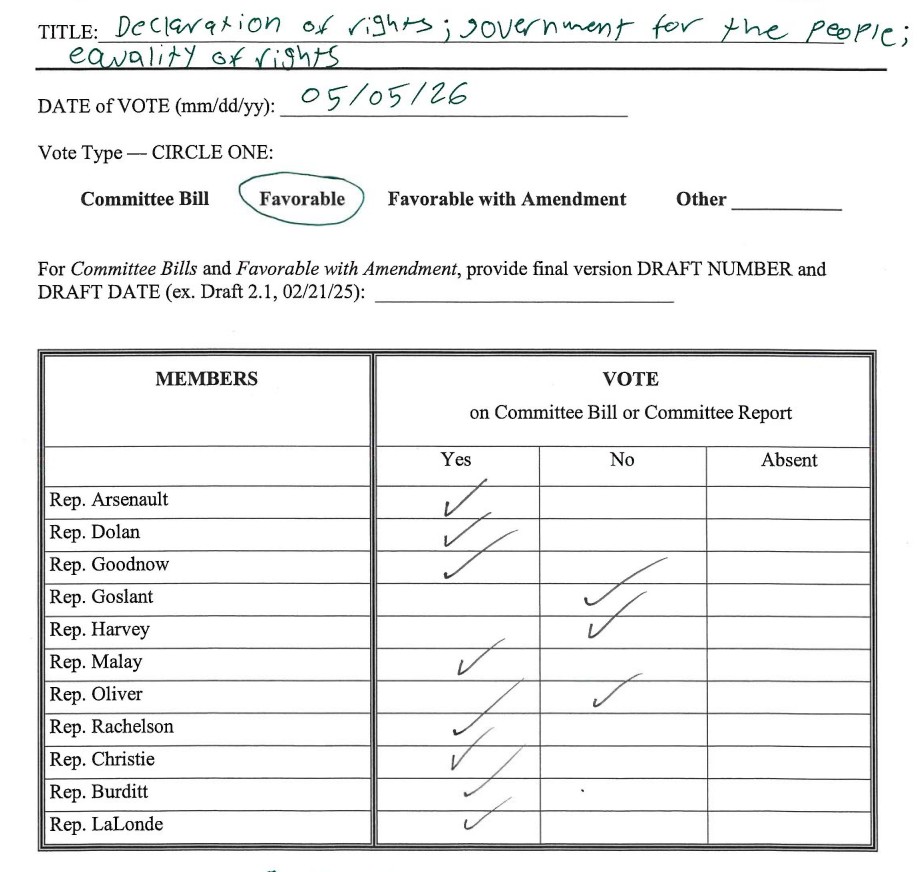
The exact same language passed last biennium. For it to move forward, it has to pass the House and Senate again this year, unchanged. The House is scheduled to vote on it Wednesday. If it passes both chambers again, it will go to voters on the November 2026 ballot.
What the language does: it adds a new Article 23 stating that people are guaranteed equal protection under the law, and that the State cannot deny equal treatment based on race, ethnicity, sex, religion, disability, sexual orientation, gender identity, gender expression, or national origin. It also states that this does not prevent policies intended to address past discrimination or improve opportunity for groups that have been treated unfairly.
This is not a policy bill. It is a constitutional amendment. If it passes this year, the final decision is with voters in November 2026.
This would put a clear equal protection standard directly into Vermont’s Constitution. Like most constitutional language, the effect of that amendment will show up over time through court decisions and how laws are written and applied.
The Senate approved this unanimously, both in committee and on the floor. In the House Judiciary Committee, the vote was not unanimous, with three of five Republicans voting no.
Some have asked whether this is the right use of time. Vermont has used this same process to let voters decide foundational issues before. The reproductive liberty amendment, which protects personal reproductive autonomy, followed this path. Its importance became clear after the U.S. Supreme Court overturned Roe v. Wade, when federal protections were no longer in place. The reproductive liberty amendment was supported on the ballot in every single town in Vermont.
I plan to vote for this amendment. I’ll report back after the House vote this week.
Land Use (Act 181 / S.325)
The House passed S.325 this week, making major changes to Act 181. Most notably, the bill repeals both the Tier 3 mapping provisions and the Road Rule, which had expanded when Act 250 jurisdiction would apply and raised significant concerns in rural communities about uncertainty, cost, and how land use decisions were being made.
The House also adopted a surprise floor amendment exempting certain accessory on farm businesses from Act 250 jurisdiction. The amendment reflected growing bipartisan concern that existing land use regulations do not always align well with the realities of modern farming and diversified agricultural businesses.
End of Session Health Care Update
As we approach adjournment, Vermont’s health care transformation effort continues through both administrative work and legislation. Many of you have asked what current proposals could mean for Grace Cottage Hospital and other small, rural hospitals. Two recent reports required under Acts 68 and 167 outline ongoing efforts to reduce hospital spending, improve coordination and expand community-based care, and address affordability pressures across the system.
The reports show that all 14 Vermont hospitals have now submitted transformation plans focused on reducing administrative duplication, strengthening regional partnerships, expanding telehealth and preventative care, and shifting some services away from higher cost hospital settings when appropriate. At the same time, the reports also point to major challenges: workforce shortages, difficulty accessing primary care, increased behavioral health needs, and rising insurance costs for many Vermonters.
Those broader transformation efforts are also shaping the debate around S.190, a health care reform bill still under discussion at the State House. The latest version would begin implementing “reference-based pricing,” which ties some hospital reimbursement rates more closely to Medicare benchmarks to slow insurance and premium growth. The bill also includes new hospital pricing transparency requirements, oversight of outsourced hospital services, and a study of whether Vermont should create a unified public employee health benefit authority covering State, municipal, school, and higher education employees.
The bill also includes provisions related to school employee health plans offered through VEHI, including limits tied to the actuarial value of plans offered on Vermont Health Connect.
Another section addresses concerns about high outpatient costs at Vermont’s critical access hospitals serving rural communities. Under the proposal, critical access hospitals would need to identify outpatient services where charges are five times or more than the Medicare allowed amount and reduce those charges beginning in fiscal year 2027.
Health Care Spending Reduction Report | Health Care System Transformation Report
Technology and Privacy
A recent PCMag article outlines how much personal information Google collects through search history, apps, location tracking, and advertising tools, along with steps users can take to limit that data collection. The article shows how to turn off web and app activity tracking, manage or delete location history in Google Maps, and disable personalized advertising settings tied to user behavior and interests. It also notes that many people never review these settings, even though they can significantly affect how much personal information is stored and shared online. Read here for more information.
Tax bill update (H.933)
The Senate made significant changes to this bill. It now includes a mix of technical fixes and policy decisions that affect how Vermont raises and distributes tax revenue. A few pieces worth noting:
- Closing loopholes: The bill tightens rules on the property transfer tax so second homes cannot avoid the higher rate through technical workarounds.
- Current Use: Makes changes to how land use change tax is handled and gives property owners more time to appeal decisions.
- Estate tax: Raises the filing threshold to $5 million so it aligns with when the tax actually applies.
- Communications property: Sets a more consistent statewide approach to valuing telecom infrastructure like fiber and towers.
- Health IT fund: Extends an existing funding source through 2031.
- Long term review: Includes a $100,000 General Fund appropriation for a 10-year review of Vermont’s tax system.
The bill does not create new taxes, but it does shift where existing revenue goes:
- A larger share of meals and rooms tax moves to the Education Fund
- A larger share of vehicle purchase and use tax moves to the Transportation Fund
These changes move about $10–11 million between funds, with a small net increase to the Education Fund
Local option tax and PILOT An amendment also changes how local option tax revenue interacts with the PILOT Special Fund:
- Towns continue to receive 75% of local option tax revenue
- If the PILOT fund balance is strong (over $18 million), towns receive an additional 5%
- Remaining revenue continues to support the PILOT fund, which helps offset taxes on state-owned property
This ties local revenue more directly to the PILOT fund balance. There are also a number of technical updates, including shifting grand list timelines and cleaning up outdated statutes. This is still moving and may change significantly. Fiscal note:
S.223 – Water quality and wetlands
This bill takes a step back and asks whether our current approach to protecting lakes, ponds, and wetlands is working as intended. It creates a study group to review how waters are classified, how high quality waters are protected, and whether Vermont is meeting federal requirements. The goal is to identify gaps and recommend changes that balance environmental protection with practical use.
It also asks the Agency of Natural Resources to evaluate whether Vermont should certify wetlands professionals who identify wetland boundaries. That review looks at whether a certification program could improve the permitting process and what it would mean for cost and liability. There are no immediate changes to permitting in this bill.
Libraries and afterschool funding (S.232)
This bill allows public libraries to access an existing pot of funding for afterschool and summer programs. That funding already comes from the cannabis sales tax, which is directed into the Universal Afterschool and Summer Special Fund and managed by the Agency of Education.
The bill does not create a new tax or new spending. It allows the Agency of Education to share a portion of that existing fund with the Department of Libraries so libraries can offer or expand programs for kids and families, especially in the summer and after school hours.
The fiscal note shows the fund is expected to bring in about $10–11 million per year from cannabis tax revenue over the next several years. Right now, those dollars go to afterschool programs. This bill simply makes sure libraries can participate in that same funding stream. You can read the fiscal note here
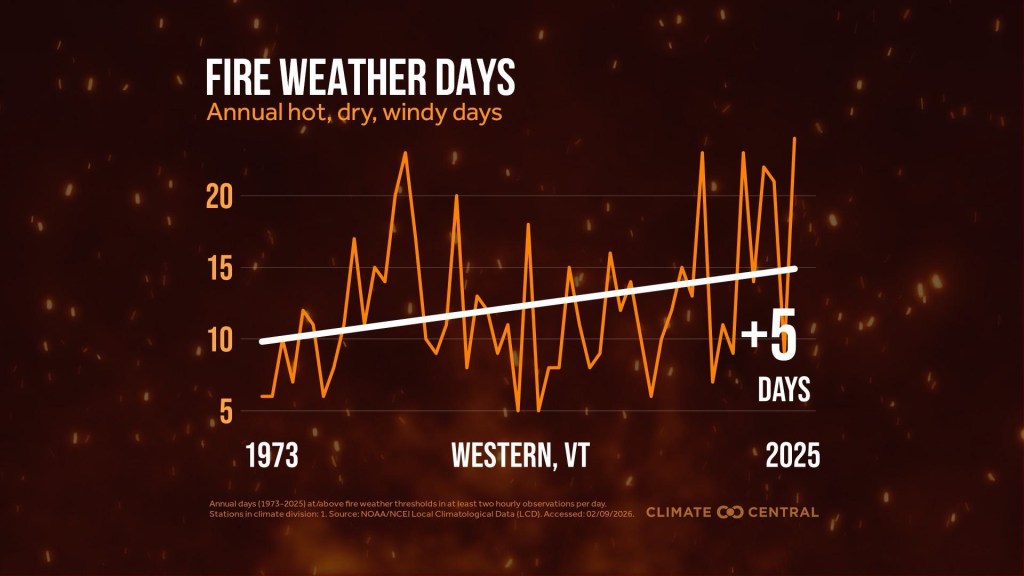
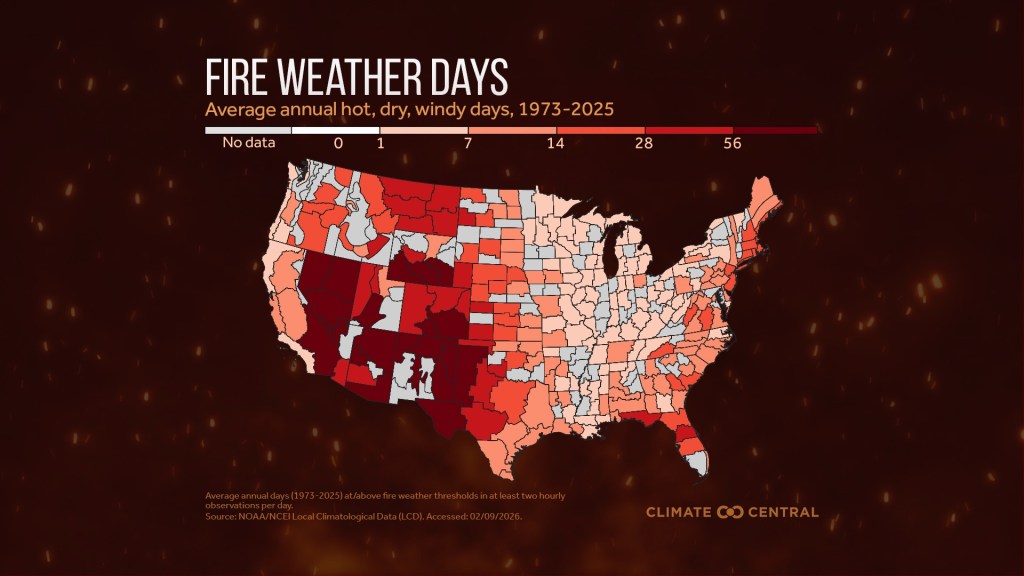
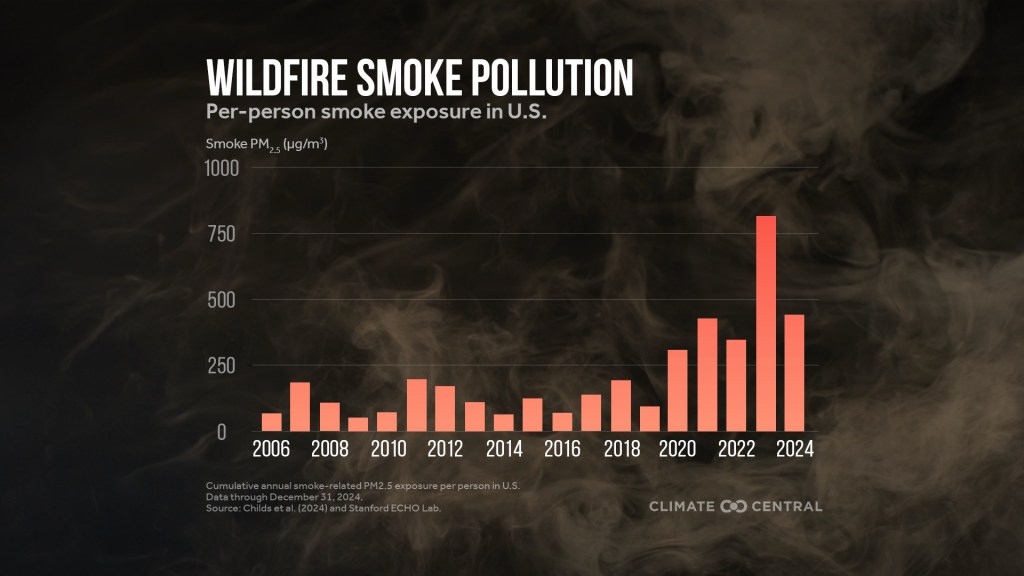
Climate change is causing more frequent fire weather across the U.S. Warming temperatures and increasingly dry air, vegetation, and soils make it easier for fires to spread, and harder to fight or prevent.
Reports Released
Annual Evaluation of Pre- Kindergarten Education Programs The Agency of Education and Agency of Human Services released Vermont’s annual report on Universal Pre-K, providing a statewide update on enrollment, quality, and funding. Vermont currently serves 8,146 publicly funded PreK students through a mixed delivery system that includes both public school and community-based programs. Vermont continues to rank second nationally for access to publicly funded PreK for both 3- and 4-year-olds. The report also found that children who attend publicly funded PreK enter kindergarten more prepared than peers who did not participate, with strong outcomes in literacy, math, and social-emotional development. About half of all providers are now rated at the highest 5 STARS quality level. At the same time, the report highlights ongoing challenges including workforce shortages, declining enrollment since the pandemic, pressure on community-based providers, and concerns that the current education funding formula does not fully fund PreK programs. The agencies specifically recommend revisiting how PreK students are counted in Vermont’s education funding system as broader education reform discussions continue under Act 73. Read the full report here:
Bills Signed or Vetoed By the Governor
- Signed S.163, An act relating to the role of advanced practice registered nurses in hospital care
- Signed S.181, An act relating to eliminating the requirement for a presentence investigation for imposition of a deferred sentence
- Vetoed S.218, An act relating to reducing chloride contamination of State waters | Letter
As always, please reach out if you need help navigating state services or want to share what you’re seeing locally. I read and value your notes, even if I can’t always respond immediately. I do not have staff and I work year-round, so if you do not hear back in a day or two, please follow up or send a text. If you find my work useful and are able to support it, you can do that here.
Thank you for staying engaged and staying in touch!
Rep. Laura Sibilia
Windham-2 District (Dover, Jamaica, Somerset, Stratton, Wardsboro)
Email: lsibilia@leg.state.vt.us
Phone: (802) 384-0233
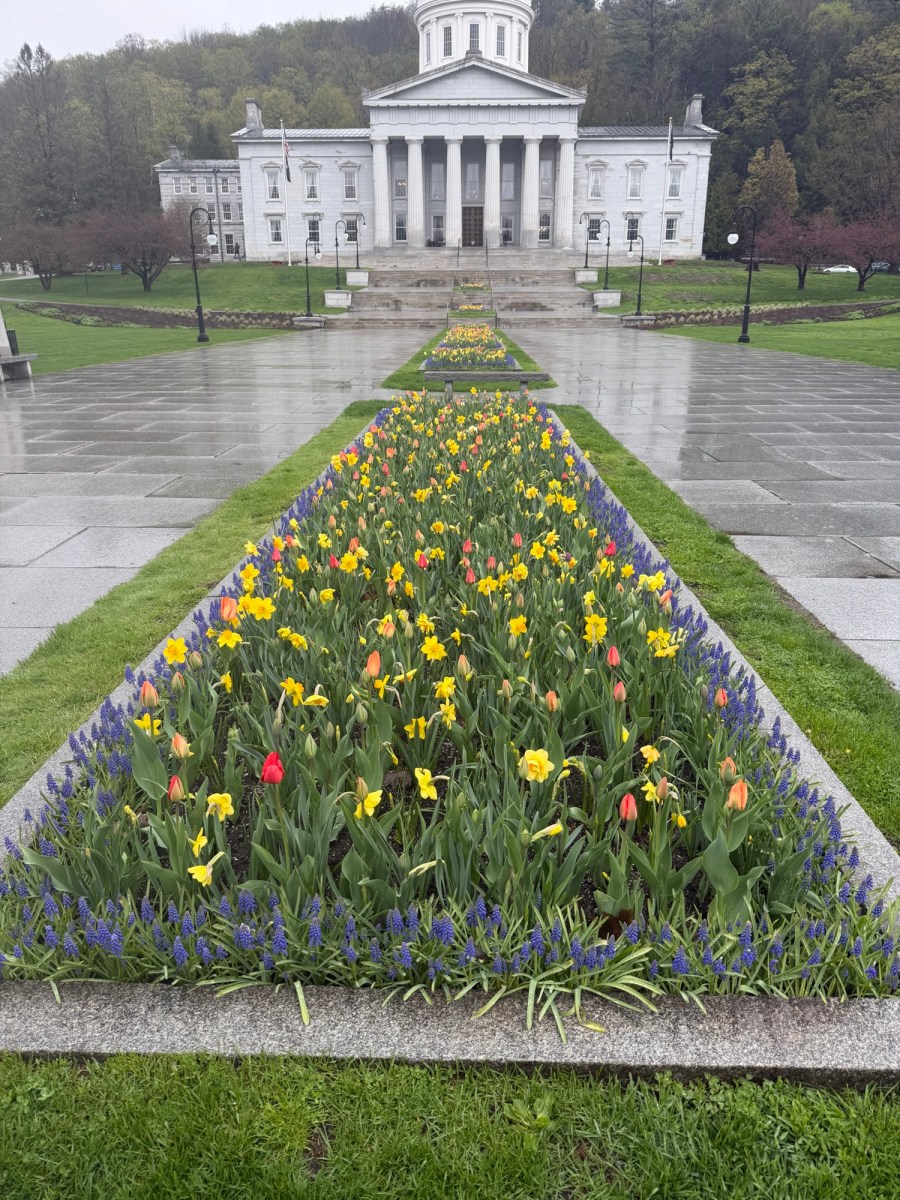
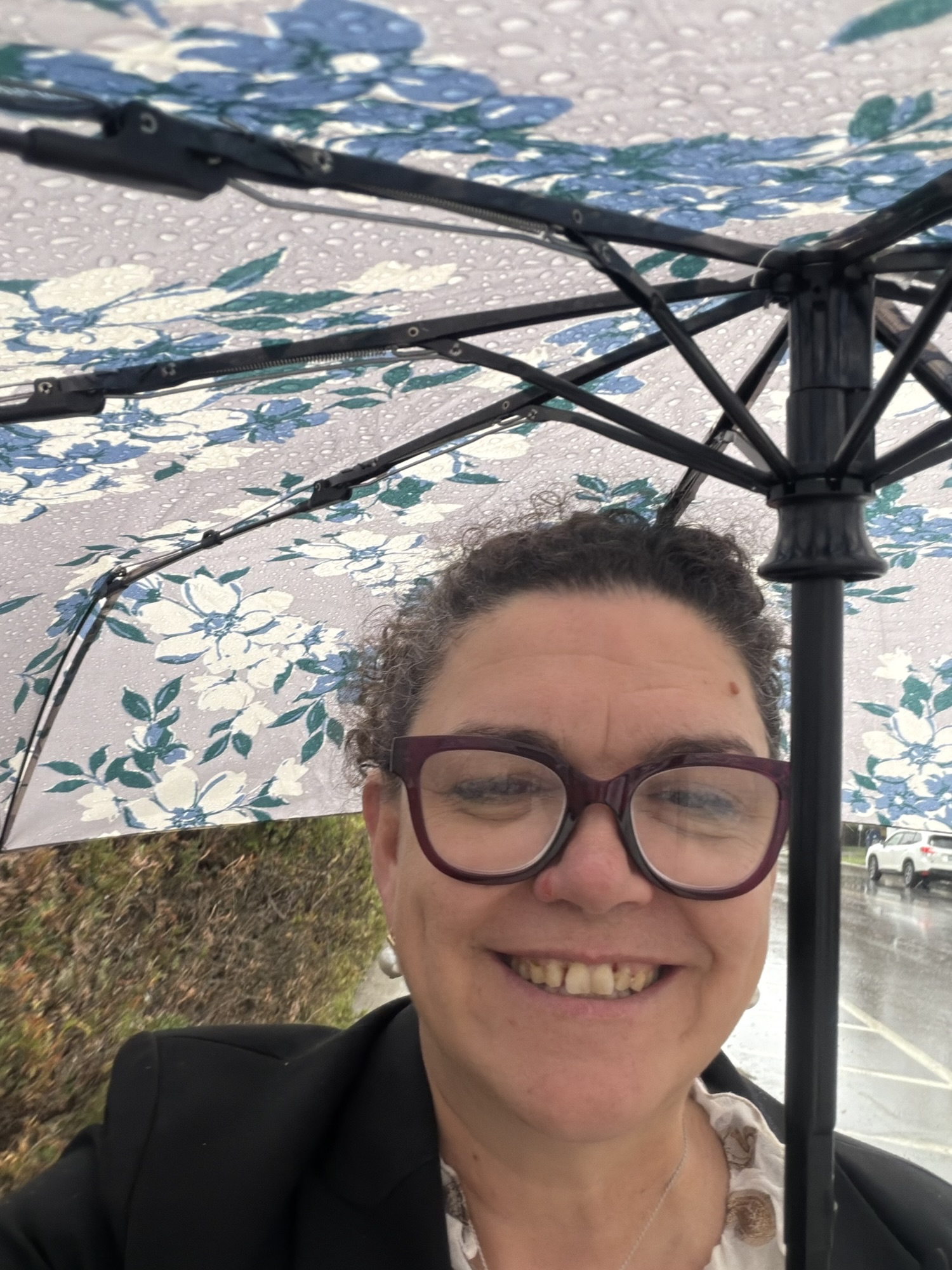
It was a rainy walking week in Montpelier!
Discover more from Vermont State Representative Laura Sibilia
Subscribe to get the latest posts sent to your email.
 Vermont State Representative Laura Sibilia