Good evening,
A reminder that I will hold office hours this Saturday April 6th from 11-noon at the Dover Free Library – please stop in.
The Department of Taxes has announced the reimbursement process for municipalities affected by flood-related damage and property tax abatements, with applications due by April 26, 2024. Eligibility for reimbursement is contingent upon specific criteria, including property location in federally declared disaster areas and abatement by April 15, 2024. Municipalities may apply for reimbursement using Application #1 for abatements and Application #2 for incurred interest. Approved reimbursements will be made through Cash Flow Statements to School Districts, and further details can be found here.
Thank you for reaching out on various issues these past few weeks including taxes, Act 250 reforms and hunting. A reminder that we don’t have staff – if you don’t get a timely response from me, please reach out again.
Some good news: the House has passed a bill that significantly increases data privacy protections, H.121 by a vote of 139-0. The bill outlines regulations to ensure responsible handling of personal data, requiring processors to follow controller instructions, maintain data security, and conduct assessments for potential privacy risks. It seeks to protect individuals’ data privacy rights by setting standards for data processing practices and puts in place enforcement mechanisms overseen by the Attorney General. This is an important bill as we see our world becoming more and more digitized and our data disseminated. I’m hoping we can get a few more bills out that deal with helping our communities adapt to the changing climate and address our demographic challenges.
The Vermont Senate passed the Climate Superfund Act, S.259, which looks to hold big oil companies accountable for climate change damages and adaptation costs. The bill, approved 26-3, now heads to the House. The fund, which would be managed by the state treasurer, targets companies responsible for significant carbon emissions. A study will assess fossil fuel sales in Vermont from January 1, 1995, to 2024, identifying major oil companies responsible for emitting over one billion tons of carbon. These companies would be held accountable for climate damages under the proposed legislation. The bill is expected to face legal challenges, but follows past precedence of holding industries accountable for environmental harm.
This has been a challenging legislative session. I’ve observed election year rhetoric coming from the Governor’s Office that has left me really disappointed, alongside unnecessary divisions within the legislature stemming from leadership struggles. Vermonters benefit most when communications from the Governor’s Office prioritize substance over hyperbole, and when the legislature is guided by responsive and respectful leadership.
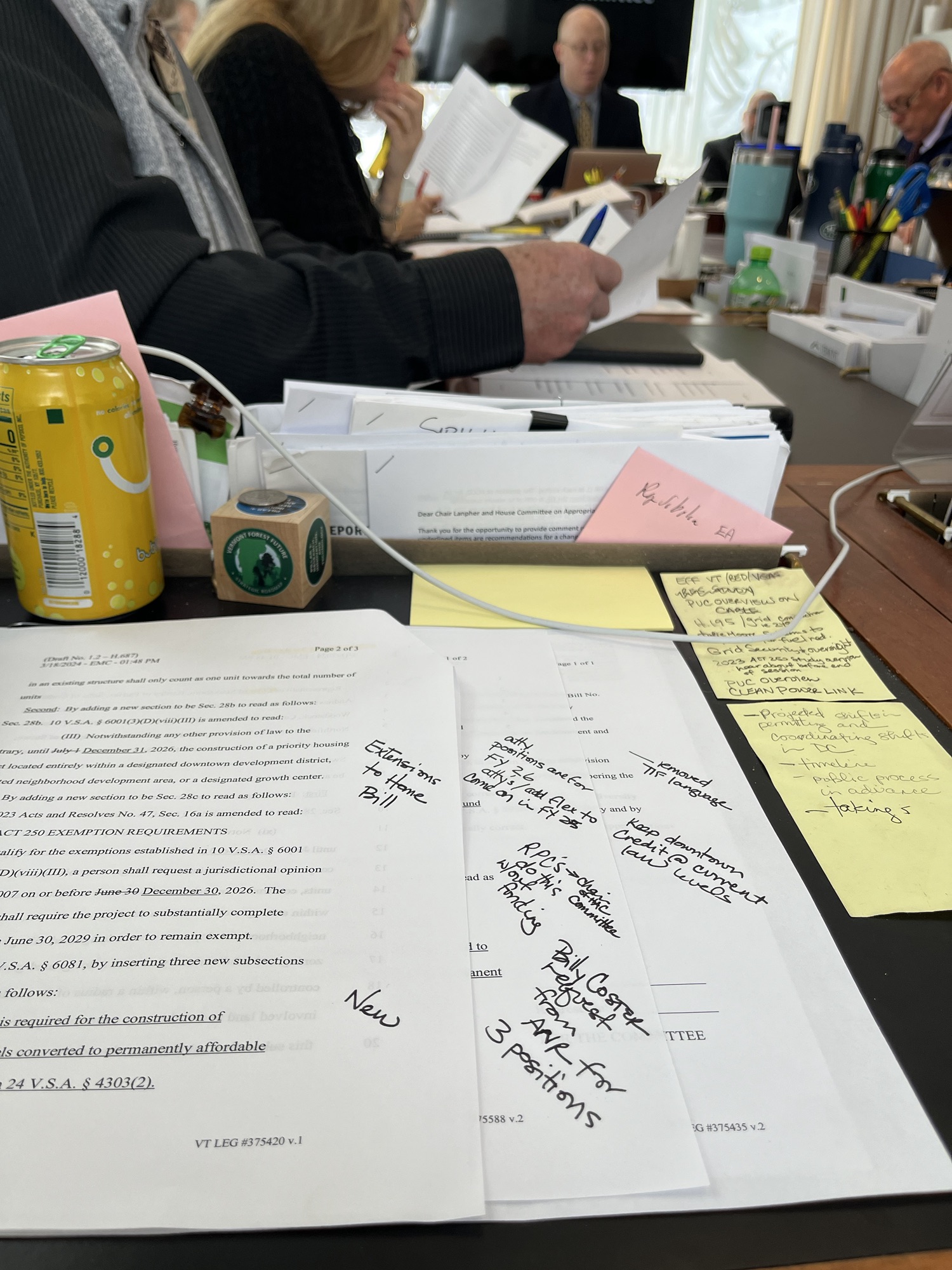
Last week was epic as we spent late nights on the floor of the house debating bills, new taxes and passing the budget sending all over to the Senate. This included H.687 (Act 250 modernization) which drew 10 proposed amendments and didn’t garner enough votes (2/3) for a veto override – which it may need. That bill has now gone to the Senate where we believe it will be combined with S.311 a housing bill the Governor has expressed appreciation for. A reminder, H.687, is a historic conservation and Act 250 modernization bill. The bill professionalizes the Natural Resources Board and introduces location-based jurisdiction for Act 250, allowing exemptions for towns with human and financial resources. It also adds criteria for “Road Rule” and forest blocks, while critical resource areas will automatically fall under Act 250 jurisdiction. The Rural Caucus weighed in with requests on the bill.
FY2025 Budget
Last week, the House passed the budget, and it is now in the Senate for their input. Notably, the budget lacks funding for major new proposals for criminal justice, Medicare expansion, and housing, which drew complaints about transparency from some members. It is unclear if any of these proposals will get support in the Senate.
Key highlights of the budget include allocations for the Pay Act, fully funding the Department of Public Safety’s contract with designated agencies, additional Mental Health Crisis Specialists, investments in the Department of Mental Health, the Secretary of State’s Office, and funding for healthcare services, childcare, and corrections. Housing initiatives include substantial allocations for emergency housing, shelter bed expansion, and programs aiding homeless individuals. Public health initiatives encompass funding for substance use prevention and treatment. The budget also addresses reallocations from the American Rescue Plan Act (ARPA), directing funds towards emergency management, housing, and audit response. Notable allocations include funds for mental health urgent care centers, comprehensive child welfare information systems, Vermont State Colleges transformation, election support, agricultural grants, and the Truth and Reconciliation Commission.
Renewable Energy Standard Update
During the recent debate on updating Vermont’s almost ten-year-old Renewable Energy Standard, there were contentious discussions regarding cost estimates from the Governor’s Office. Despite challenges, the bill, H.289, passed. The original fiscal note assessment estimated costs at $1 billion over 10 years, but a more thorough investigation by the Joint Fiscal Office (JFO) revised the estimate downward to between $150 million and $450 million over the same period. H.289, known as the “An Act Relating to the Renewable Energy Standard,” proposes significant amendments to Vermont’s Renewable Energy Standard (RES), mandating that the majority of retail electricity providers ensure that 100 percent of their yearly load comes from renewable energy sources by January 1, 2030. The bill also increases required thresholds for distributed renewable generation, new renewable energy, and load growth renewable energy, with specific criteria for different electricity providers.
VTDigger: New analysis suggests lower price tag for changes to Vermont’s renewable energy law
Regulating Wetlands, River Corridor Development, and Dam Safety
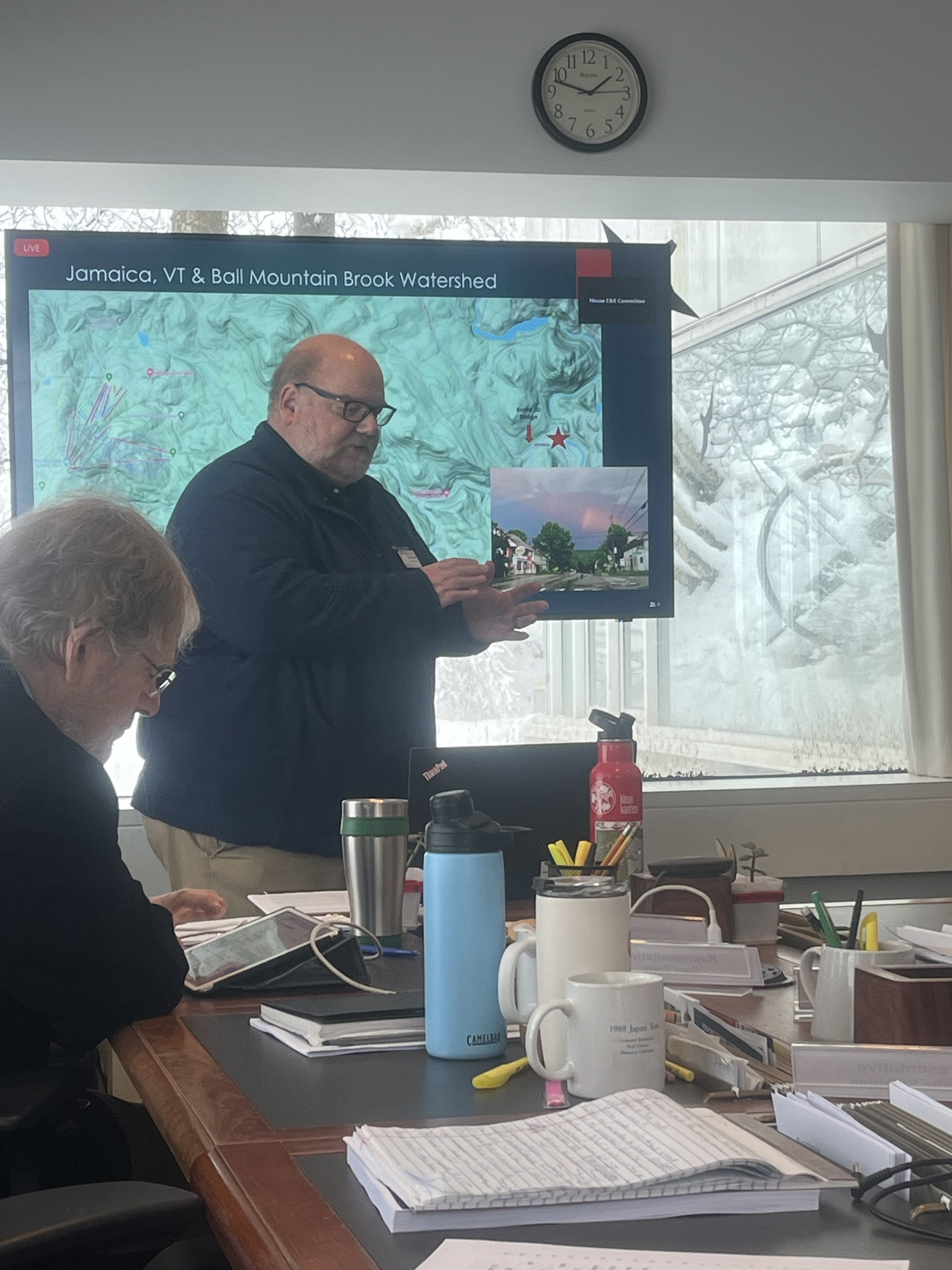
The Senate has passed S.213, a bill to regulate the state’s river systems, wetlands, and dams. The bill mandates state permits for construction within river corridors and put into statute a net increase in wetlands over time. It also proposes to increase dam safety measures. The bill proposes increased resilience against future floods, following the significant damage caused in 2023. This bill is now in my committee where we are taking testimony. Current Fiscal Note
Municipal Code Of Ethics
“State Ethics Commission & State Code of Ethics Bill,” aims to enhance ethical standards in government by:
- Mandating financial disclosures for county officers seeking or holding office.
- Modifying disclosure requirements for certain elected officials.
- Imposing penalties for late disclosures by candidates and elected officials.
- Empowering the State Ethics Commission to investigate, hold hearings, and issue warnings or reprimands.
- Creating a standardized Municipal Code of Ethics.
- Repealing redundant municipal ethics laws and mandating ethics training for current municipal officers.
Other Legislative Updates
- S.159: Creates the County and Regional Governance Study Committee to address local government capacity challenges, public safety enhancement, regional collaboration, and effective public resource allocation.
- H.469: Relates to remote and electronic processes for executing an advance directive.
- H.871: Relates to the development of an updated State aid to school construction program. The bill establishes the Facilities Master Plan Grant Program, prequalified architecture and engineering consultants list, and the State Aid for School Construction Working Group. No $$
- H.882 An act relating to capital construction and State bonding budget adjustment
- VETOED: S.18 An act relating to banning flavored tobacco products and e-liquids
2024 River Valleys Unified School District Annual Meeting: Scheduled for April 29, 2024, for Australian Ballot and April 30, 2024, at Dover Town Hall for all other articles. Warning
It continues to be an honor to represent the Windham-2 District in the Vermont House of Representatives.
Monitor the bills I am sponsoring and recorded roll call votes.
As always, if you have suggestions, concerns or critiques please be in touch so we can schedule time to discuss. Please do not hesitate to contact me if you need assistance navigating government services at (802) 384-0233 or lsibilia@leg.state.vt.us. Follow my regular posts online at http://www.laurasibiliavt.com
Rep. Laura Sibilia – Dover, Jamaica, Somerset, Stratton, Wardsboro
Discover more from Vermont State Representative Laura Sibilia
Subscribe to get the latest posts sent to your email.
 Vermont State Representative Laura Sibilia