Friends and neighbors,
This past week was one of the more intense weeks of the session for me. Much of it centered on Act 181. Some of it was public. A lot of it was not, including offline conversations happening as members try to work through next steps and what changes, if any, will be made to the current approach in S.325.
This week I have also heard from many Vermonters who are deeply concerned about what is happening nationally and globally. The escalating conflict with Iran, the President’s recent statements, and the potential economic impacts are adding to a broader sense of instability.
That matters to governing in Vermont, because when people are already feeling uncertainty about costs, safety, and the future, the way decisions are made in our state can matter even more.
At the same time, members of the Vermont National Guard are currently deployed in the Middle East, and their deployment has been extended, with no clear timeline for return. That creates stress and hardship for families here in Vermont. If you would like to support Guard families, the Vermont National Guard Charitable Foundation provides direct assistance.
Last week, I shared what we heard in the Rural Caucus listening session, including concerns about displacement and whether people will be able to stay in the communities they have built their lives in. That has not slowed down.
What is different this week is the scale of public engagement. Vermonters are organizing. There is a large and growing network of people talking to each other, writing letters, and asking towns to weigh in on Act 181 decisions that affect their land and their future.
That is not something I created, or direct. But it is something many of us in the House are taking seriously. Vermonters should keep communicating. Your informed input matters, and it is shaping what is happening right now.
The reason this movement is growing is not complicated. Vermonters now understand that they were not part of the conversation about their own land and communities. I said that directly in an interview with WCAX this week. This is primarily a disagreement about how this work is being done.
Vermonters were not meaningfully involved at the beginning, rules and maps are still being developed, and key decisions are moving forward anyway. That has created uncertainty for landowners, towns, and families. As the bill was being developed, I kept a running list of the questions and implementation pieces that needed to be addressed. I have included a photo of that list below which I originally posted in 2024.
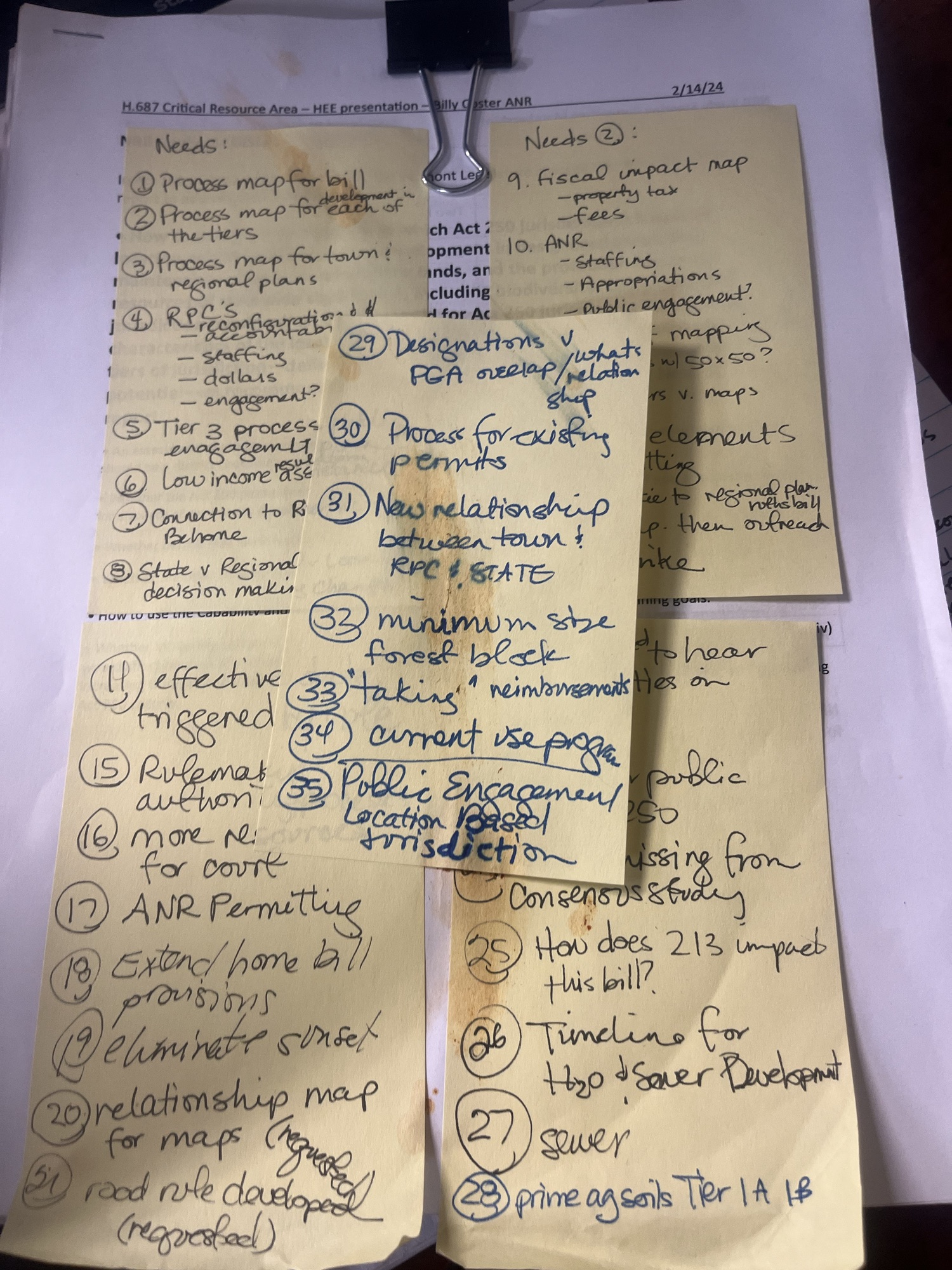
Many of those items remain unresolved.
Inside the Statehouse, there is not yet a clear path forward. Most of the work this week has happened behind closed doors, with limited public communication beyond the Speaker’s statement two Fridays ago and a written response to the Rural Caucus letter acknowledging concerns and indicating there will be more testimony.
There are real differences in approach, and they are not being worked through in public. That makes it difficult for Vermonters to understand or trust what comes next.
Right now, there is not consistent public explanation from leadership about what is happening or how decisions are being made. Vermonters are already frustrated and that is not helping. Individual members are filling that gap.
I no longer believe delay alone is enough. We need to correct course. That means repealing Tier 3 and the road rule and starting over at the ground level, with communities and with Vermonters who want to protect their land as weather patterns change.
Rural Vermonters that want assistance need funding and technical assistance to respond to changing conditions. When policy adds cost and complexity without that support, it risks pushing people out and changing who can afford to stay. That concern is not theoretical. Testimony this week raised real questions about whether tiered land use systems can lead to outcomes that function like economic sorting. Whether intentional or not, that is a risk we should not ignore.
The Rural Caucus followed last week’s listening session by sending a letter to House leadership outlining what we wanted to see in on the path forward. One third of House members signed onto this bipartisan letter calling for:
- Repeal Tier 3
- Repeal the road rule
- Complete the on-farm business work
Next Steps on Act 73 and H.955
Last week, I shared an overview of H.955, the House’s education transformation bill following Act 73.
Since then, the bill has moved through Ways and Means and was voted out on a 6–5 vote. There is still no fiscal note, which makes it difficult to fully understand the cost implications. The bill is now in Appropriations.
The expectation is that the bill will come to the House floor this week. If it passes, it will then move to the Senate, where it will be taken up by the Education, Finance, and Appropriations Committees.
I will share more next week when the fiscal note is available and there is a clearer understanding of both the costs and the path forward. If you have thoughts on this bill or how it may affect your community, I welcome hearing from you.
At the same time, cost pressures continue to build for Vermonters.
An analysis by the Energy Action Network shows that fuel prices jumped sharply in March, adding about $32 million in costs in just one month. The average driver is now paying about $50 more per month for gas, and heating oil costs have risen even faster. These increases are driven by global events and are largely outside Vermont’s control. When we rely heavily on fossil fuels for transportation and heating, Vermonters are exposed to sudden price swings that hit household budgets immediately.

Healthcare continues to be one of the biggest cost pressures for property taxes, families, employers, and the state. Bills like S.197 (primary care reform) and H.585 (association health plans) have a goal to improve access and expand options, but they do not yet address affordability.
The legislature is also working on S.138, CPACE, which would allow businesses to pay for energy upgrades over time through their property tax bill. This is one practical way to reduce long-term energy costs and limit exposure to price spikes.
We are heading into the final weeks of the session with major issues still unresolved, including land use and education governance. I will keep listening, being direct about what I am seeing, and pushing for a path that reflects what we are hearing from Vermonters.
As always, please reach out if you need help navigating state services or want to share what you’re seeing locally. I read and value your notes, even if I can’t always respond immediately. I do not have staff and I work year-round, so if you do not hear back in a day or two, please follow up or send a text. If you find my work useful and are able to support it, you can do that here.
Thank you for staying engaged and staying in touch!
Rep. Laura Sibilia
Windham-2 District (Dover, Jamaica, Somerset, Stratton, Wardsboro)
Email: lsibilia@leg.state.vt.us
Phone: (802) 384-0233
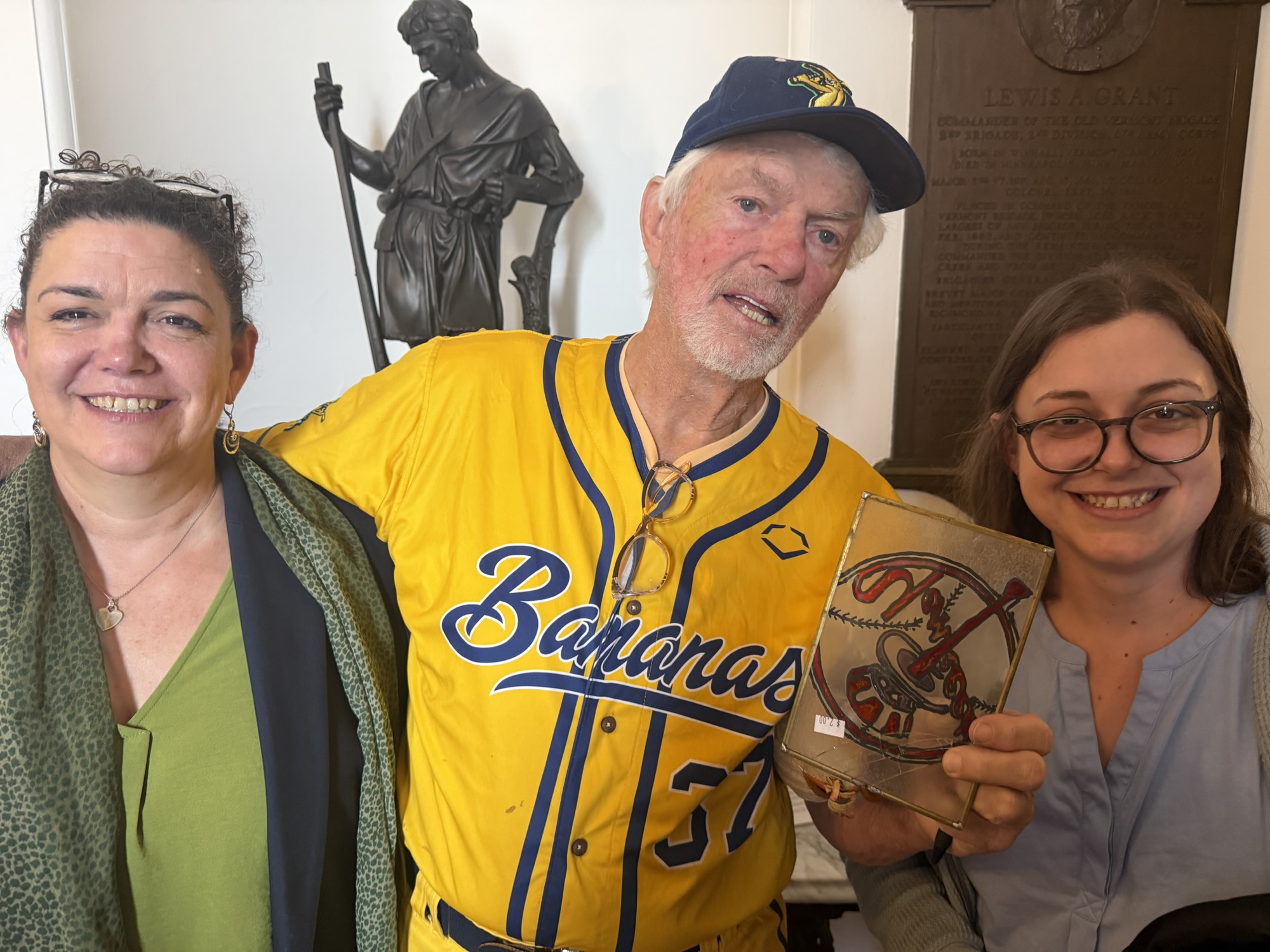
At the Statehouse with Bill “Spaceman” Lee.
Discover more from Vermont State Representative Laura Sibilia
Subscribe to get the latest posts sent to your email.
 Vermont State Representative Laura Sibilia