Friends and neighbors,
We have reached the halfway mark between the Christmas/Hanukah holidays and Spring and the pace at the statehouse is picking up!
A quick scheduling note: this week’s office hours are being moved to Saturday, February 14 at 11:00 a.m. at the Dover Free Library so that my family and I can travel to celebrate a birthday together this Saturday. I appreciate your flexibility and hope to see many of you at the library next week.
At the Statehouse, much of my time this week has been spent, alongside members of the Rural Caucus, pressing for the Legislature to take up the Act 181 timelines through H.730. This bill would slow down the historic Act 250 legislation and better align it with the mapping processes. As of today, neither the House nor the Senate committee of jurisdiction has begun considering these timelines. That is a serious problem. The implementation of Act 181 is in process, but the timing of the rules and maps rural landowners are expected to rely on are not aligned.
This requires attention and action, not delay, so that is where I am spending my time right now, pressing leadership to take this up while there is still time to fix it.
Elsewhere in the Statehouse, committees are beginning their annual conversations about education finance and the state budget, new draft school district maps have been introduced and this week we also advanced a bill to strengthen protections for voters and election officials.
A Map and 2 new draft Committee Bills in House Education
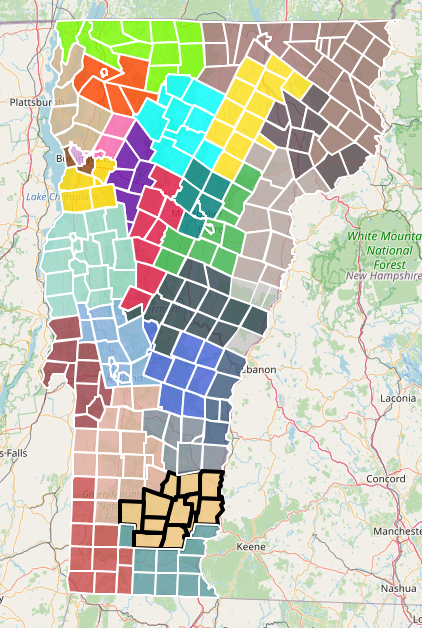
Below a newly introduced draft map, along with a link to the GIS site showing the school district maps that were presented in House Education on Thursday. I’ve also included a YouTube link to the committee discussion for additional context. Following this are two committee bills that are being developed.
Everything is very fluid at this stage, but I’m interested in your perspectives on the direction this appears to be heading and any initial reactions you may have.
Draft 1: Miscellaneous Education Changes This draft makes several updates to existing education law. It keeps the moratorium on new approved independent schools in place, while clarifying that therapeutic schools are not forced to reapply solely because of a change in ownership or tax status. The bill also updates attendance and discipline provisions, joins the Interstate Compact for Education, and adjusts the special education census grant for inflation beginning in FY27.
Draft 2: School Size and System Standards This draft is broader and more conceptual. It looks at minimum class sizes, limits on multi-age classrooms, and shared data systems for school finance and student information. It signals the committees intent to move toward larger, more sustainable secondary schools over time and tightens the rules around school designation and tuitioning after school closures.
Yield Bill
The House Ways and Means Committee has begun work on the Yield Bill which sets education tax rates. Here is what that means.
In simple terms, the yield is how much money the state needs to raise per student to pay for education statewide. Vermont sets two yields each year. One is based on property value. The other is based on household income and is used to calculate the property tax credit. Together, these yields determine education tax rates which can then be impacted by the CLA and local spending.
Setting the yield is not a single decision. It includes deciding how much revenue comes from non property taxes, whether one time funds are used to lower property taxes, how costs are shared between homestead and non homestead properties, and how strongly income sensitive households are protected through the property tax credit. You can see some of the choices the committee is considering in the Education Fund Outlook posted below.
- Education Fund Outlook reviewed by the Committee this week
- Annotated Education Fund Outlook explainer
Joint Appropriations Public Hearings 2/12 & 2/19
The Vermont House and Senate Committees on Appropriations will hold two joint public hearings on Thursday, February 12, 2026, at 1:45 p.m. and Thursday, February 19, 2026, at 5:00 p.m. via in person or video conference.
The Committee will take testimony on the Governor’s recommended budget at the above date and time. Anyone interested in testifying should sign up in advance of the hearing through the following online form not later than 10:00 a.m. on February 12, 2026, for the first hearing, and 10:00 a.m. on February 19, 2026, for the second hearing. Instructions on how to access and participate in the hearing will be sent once you have signed up for the hearing.
The hearing will be available to watch live on YouTube.
For more information about the format of these events, contact Autumn Crabtree or Elle Oille-Stanforth. Written testimony is encouraged and can be submitted electronically or mailed to the House Committee on Appropriations, c/o Autumn Crabtree, 115 State Street, Montpelier, VT 05633. FY27 Budget Press Release
H.541: Interference With Voters and Election Officials
The House Judiciary Committee unanimously advanced H.541, a bill to strengthen protections for voters and election officials.
The bill updates existing law to clarify that interfering with a voter inside a polling place or attempting to influence how someone votes is punishable by a $1,000 fine. It also creates a new section of law making it a crime to intentionally or recklessly intimidate, threaten, or coerce voters or election officials in order to interfere with voting or the administration of an election.
Violations of the new offense could result in up to two years in prison, a fine of up to $2,000, or both. The bill takes effect upon passage.
H.740 Greenhouse Gas Inventory
This bill expands the Agency of Natural Resources’ authority to collect more detailed, Vermont-specific data for the greenhouse gas inventory and registry. It directs ANR to adopt rules creating a comprehensive greenhouse gas reporting program that covers all major emission sources, including fuel suppliers. At a minimum, fuel sellers would report the types and volumes of transportation and heating fuels sold, broken out by sector and by county.
Vermont’s climate goals depend on having accurate, Vermont-specific information about where emissions are actually coming from. H.740 helps by strengthening the state’s greenhouse gas inventory so it relies less on estimates and more on real data. By requiring fuel suppliers to report the types and volumes of transportation and heating fuels sold, broken out by sector and by county, the state gets a clearer picture of what is driving emissions and where.
This bill does not set new limits or mandates. It focuses on measurement and transparency so Vermont can track progress accurately and make informed decisions as it works toward its legally required emissions reductions.
Bills I’m Sponsoring This Session
| H.846 | An act relating to artificial intelligence and elections |
| H.883 | An act relating to a permit reform task force |
Recent State Reports
Deer and Moose Update
The Legislature received the annual Fish and Wildlife report on Vermont’s deer and moose populations informed by public input from nearly 500 Vermonters who participated in hearings and submitted comments.
In 2025, deer harvests increased slightly, but the state reduced antlerless deer permits by about 20 percent compared to last year. Public feedback reflected very different experiences across the state. Some Vermonters report healthy deer herds, while others are seeing fewer deer, lighter animals, and worsening habitat conditions. A consistent message was that long term deer health depends on stronger forest and habitat management, not just hunting regulations.
Moose management remains limited. The state issued 180 moose permits, all in Essex County, where winter ticks continue to harm moose health. Only 68 moose were harvested. No permits were issued elsewhere because populations remain below sustainable levels. Many Vermonters raised concerns about climate change, tick infestations, and the long term future of the Moose.
If you need help with state services, please reach out. I do not have staff and I work year-round, so if you do not hear back in a day or two, please follow up or send a text. If you find my work useful and are able to support it, you can do that here.
Thank you for staying engaged and staying in touch!
Rep. Laura Sibilia
Windham-2 District (Dover, Jamaica, Somerset, Stratton, Wardsboro)
Email: lsibilia@leg.state.vt.us
Phone: (802) 384-0233
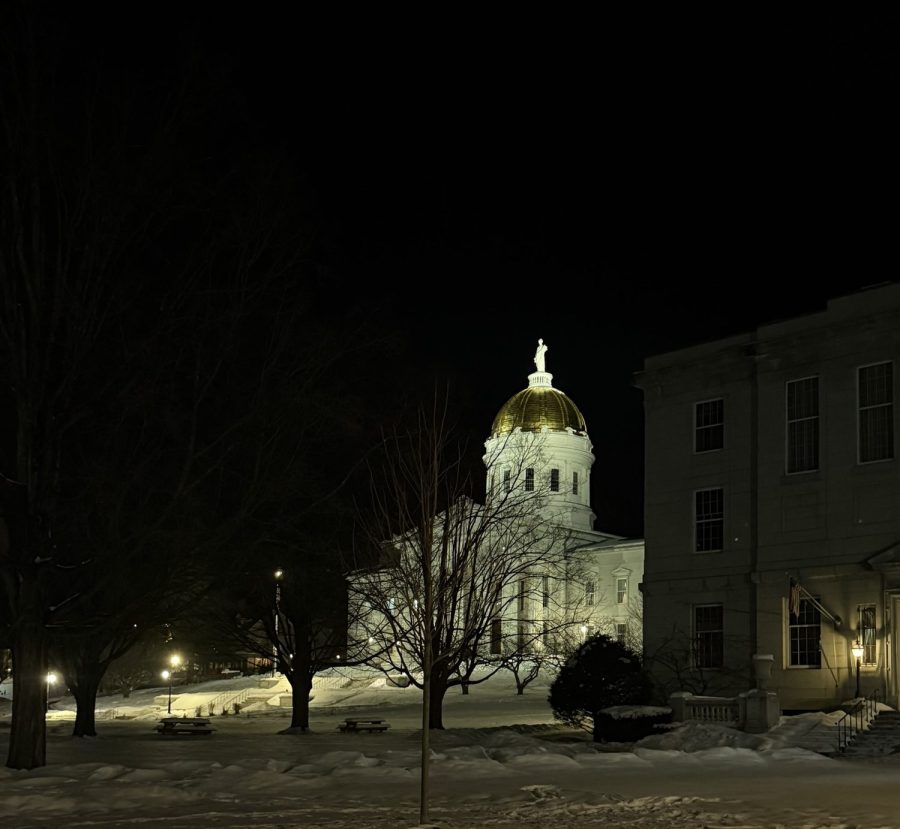
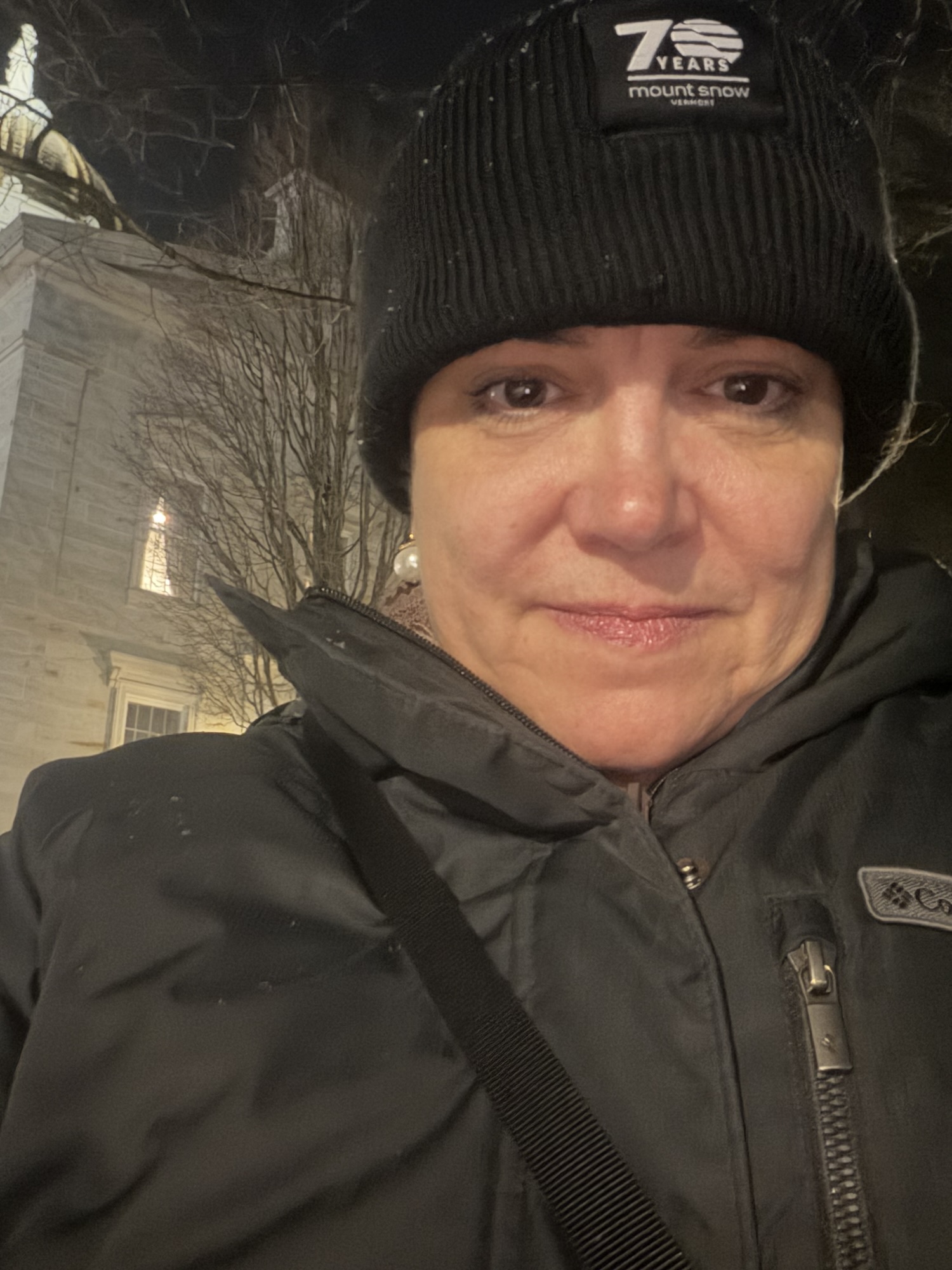
Late cold nights leaving the Capital lately…
Discover more from Vermont State Representative Laura Sibilia
Subscribe to get the latest posts sent to your email.
 Vermont State Representative Laura Sibilia