Dear friends and neighbors,
Last week was a very busy week with long day of debate on the floor. Both the budget and a miscellaneous tax bill passed out of the House as well as new legislation on data privacy that will affect how your personal information is handled. We talked a lot about the local option tax surplus and how that surplus should be addressed. On Friday I reported out on a data center siting bill for Vermont.
But we started the week with hundred of rural Vermonters rallying at the statehouse for changes to Act 181 – the 2024 overhaul of Act 250 which moves away from projects triggering Act 250 towards location triggering Act 250.
Updates follow below. Tonight at 5 pm I’m holding a one hour online Zoom meeting to talk about what Act 181 is and where things stand right now. A sign in is linked below.
House Budget:
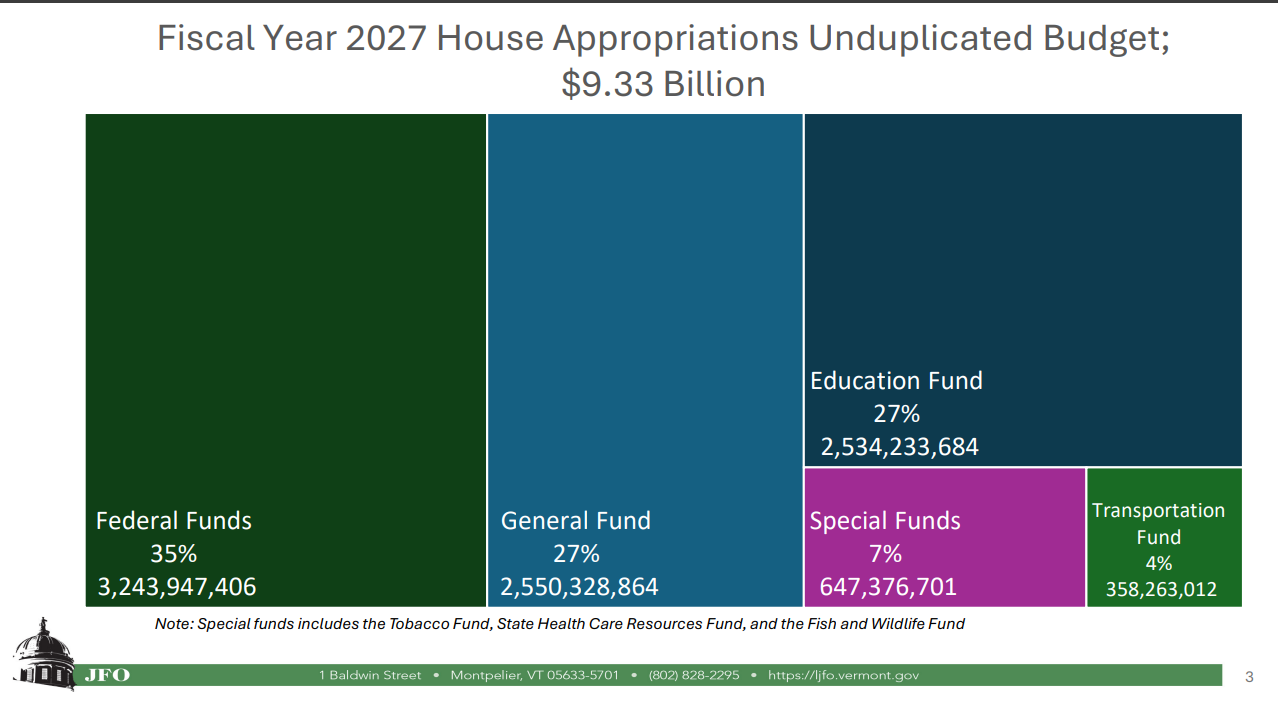
The House Appropriations Committee considered the Governor’s recommended budget and then voted out a budget 11-0. That tells me that no one got everything they wanted and everyone on the committee felt the tradeoffs were acceptable. That is a difficult outcome to get to and included solicitation from Vermonters and all members of the House via public sessions.
The FY2027 budget (H.951) proposes a total of about $9.3 billion across all funds, including $2.55 billion in General Fund spending, and is built on current revenue forecasts with some one-time funds carried forward. It funds required reserves and pensions and makes targeted investments in health care, housing, education, public safety, and economic development. Major drivers include increased costs in human services, housing and homelessness programs, and ongoing workforce and infrastructure needs, along with a one-time $104.9 million transfer to the Education Fund. The budget also includes funding for housing programs, health care providers, public safety, higher education, and several new or expanded positions across state government, while relying in part on one-time funds and cost shifts that will continue to be part of the conversation as the bill moves forward where it will be considered next in the Senate. Highlights can be found here
VTDigger: Vermont House budget writers approve a state spending plan for 2027
Miscellaneous Tax Bill
H.933 is a broad “miscellaneous tax bill” that makes a wide range of updates to Vermont’s tax system, including technical fixes, policy changes, and shifts in how revenue is allocated across state funds. It updates how Vermont conforms to federal tax law, expands several tax credits such as housing and research and development, and closes certain tax loopholes. The bill also makes changes to property tax administration, including timelines for reappraisals and appeals, and shifts some costs and responsibilities between the state and municipalities, including use of the PILOT fund. In addition, it reallocates existing tax revenues, moving more funding to the Transportation and Education Funds while reducing the share going to the General Fund. Overall, the bill is less about creating new taxes and more about adjusting how Vermont’s current tax system operates, distributes revenue, and supports policy priorities. Here is the fiscal note with more detail. Included in the fiscal note were sections related to the PILOT fund which is developing a significant surplus as more and more towns vote to raise a local option tax.
PILOT Fund and Municipal Concerns
We had substantial debate this week about how the Governor and budget writers are using the PILOT fund surplus.
In Appropriations, a proposal was included to use $3+ million in PILOT funds to pay for town reappraisals instead of using General Fund dollars. Similar language was added to the miscellaneous tax bill to make this shift permanent, despite no supportive testimony from towns or the Vermont League of Cities and Towns.
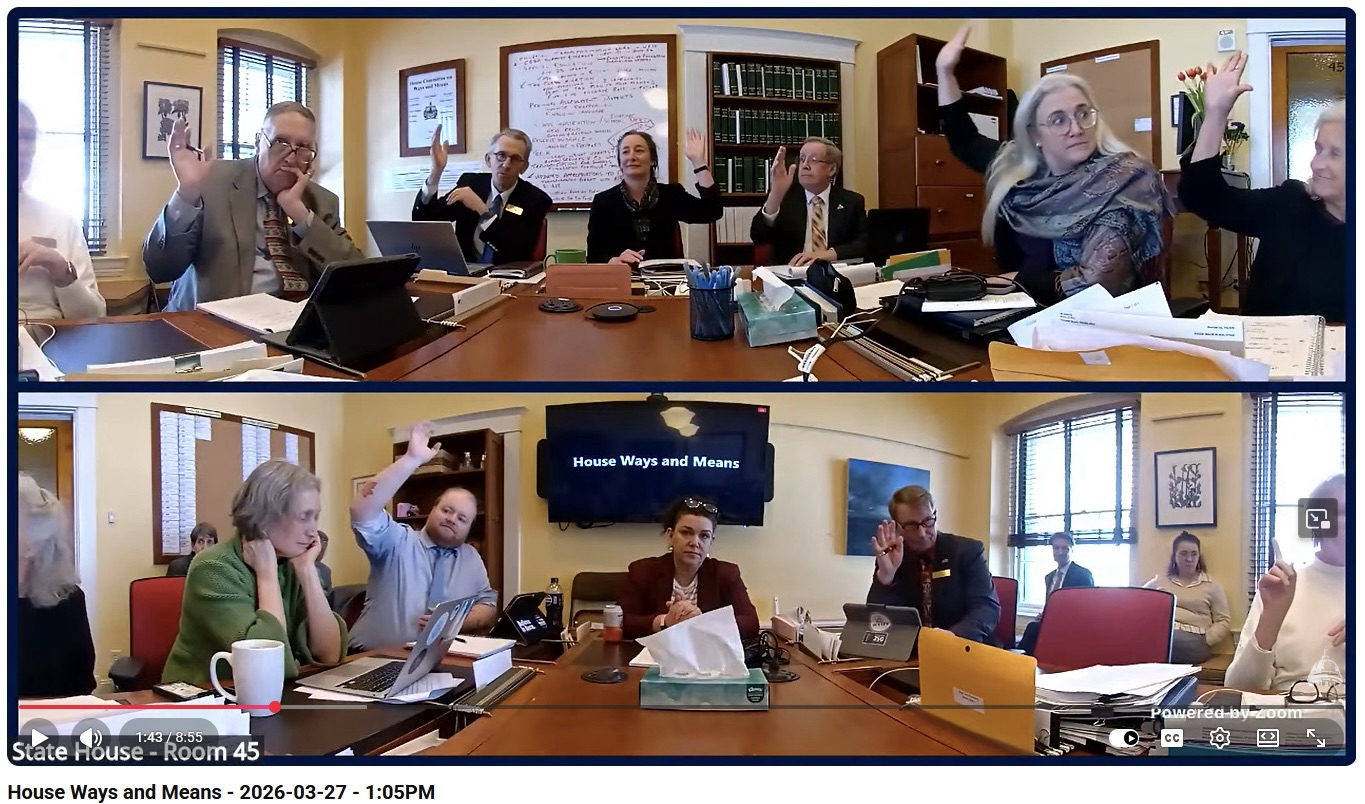
I worked with a bipartisan group of legislators and the House Ways & Means Committee to propose an amendment to remove that permanent change.
In a separate conversation, the Transportation Committee proposed using a portion of the surplus each year to send funding back to towns, but that proposal was removed by Ways and Means.
VTDigger: Vermont officials want to break with some new federal tax changes to avoid revenue shortfall
Data Privacy and H.211
We also took up legislation this week related to data privacy.
H.211 updates Vermont’s data broker law to give Vermonters more control over their personal information and clarify responsibilities for companies that collect and sell that data. It expands what counts as personal data, sets limits on its use, and requires data brokers to verify who they are selling to and how the information will be used.
It also strengthens consumer rights by requiring companies to provide a way for individuals to request deletion of their data and sets timelines for responding.
As this bill was moving, we also saw new information from California showing how active this marketplace is, with hundreds of thousands of residents using deletion tools and data brokers reporting sales of sensitive information, including precise location data, to government entities, foreign actors, and AI developers.
Overall, this bill is focused on increasing transparency and giving Vermonters more visibility and control over how their information is used. H.211 Fiscal Note
A simple step you can take
One of the most effective things you can do is regularly limit who has access to your personal information online. Take a few minutes to review privacy settings on accounts you use often, especially social media, and turn off location sharing and data sharing where you can. You can also use your browser settings or a privacy-focused browser like Duck Duck Go (this is what I use) to reduce tracking. These small steps won’t eliminate data collection, but they can meaningfully reduce how widely your information is shared.
Act 181 Update
I am continuing to hear from many in our district with questions about Act 181 and what it means for your land and your community.
Act 181 is a large and complex law. It changes how Act 250 works, creates the Land Use Review Board, and shifts decisions to mapped areas that determine where development is encouraged or restricted. It adds new environmental criteria and new triggers for when Act 250 applies, including 800 foot road construction. At the same time, it expands exemptions to support housing in downtowns and villages and creates new programs tied to housing and resilience.
This is a major restructuring of land use in Vermont. In 2024, I voted no on Act 181 and no to overriding the governor’s veto because I did not believe we had done the work needed with rural communities to get this right.
Where things stand
The Land Use Review Board (LURB) has a detailed page on the work they have been doing to implement the law. There have been numerous stakeholder groups working with the LURB on various rules and criteria needed to implement the law.
At the start of this session, members of the Rural Caucus introduced H.730 in the House. The goal was straightforward. Delay implementation, notify landowners, and give Vermonters and towns clear information before these changes take effect.
We also put that in writing.
In February, members of the Rural Caucus sent a letter to House leadership and House Environment outlining an ongoing issue with Act 181 implementation: the law is set up so that major regulatory changes, including the road rule and new Act 250 triggers, were on track to take effect before the maps that are supposed to guide those decisions are finished. We were informed that the letter was received. Senate leadership did engage with the Rural Caucus, and a Senate proposal, S.325, reflects some of that engagement. But it does not fully address what we raised.
What happened in the Senate
The current version of S.325 makes changes to timing.
- The road rule jurisdiction trigger is moved to January 1, 2030.
- Several housing-related Act 250 exemptions are extended to 2030.
- Tier 3 rulemaking is extended to June 30, 2028. The LURB is still determining what Tier 3 will mean in practice. They have been working to write the rules that will decide which land is included, how that land is mapped, and what activities will be allowed or restricted. Those rules are not yet final. As a result, many Vermonters do not yet know whether their land will be included, what restrictions may apply, or how it will affect their property.
- The Land Use Review Board is given authority to define how Act 250 criteria apply in Tier 3 and road rule. This means the LURB, not the law itself, will decide how the Act 250 rules are applied in practice.
These changes reflect the timeline concerns Rural Caucus brought forward, but do not include are the other key pieces of H.730: direct notice to landowners and a framework for how land should be valued as these changes take effect.
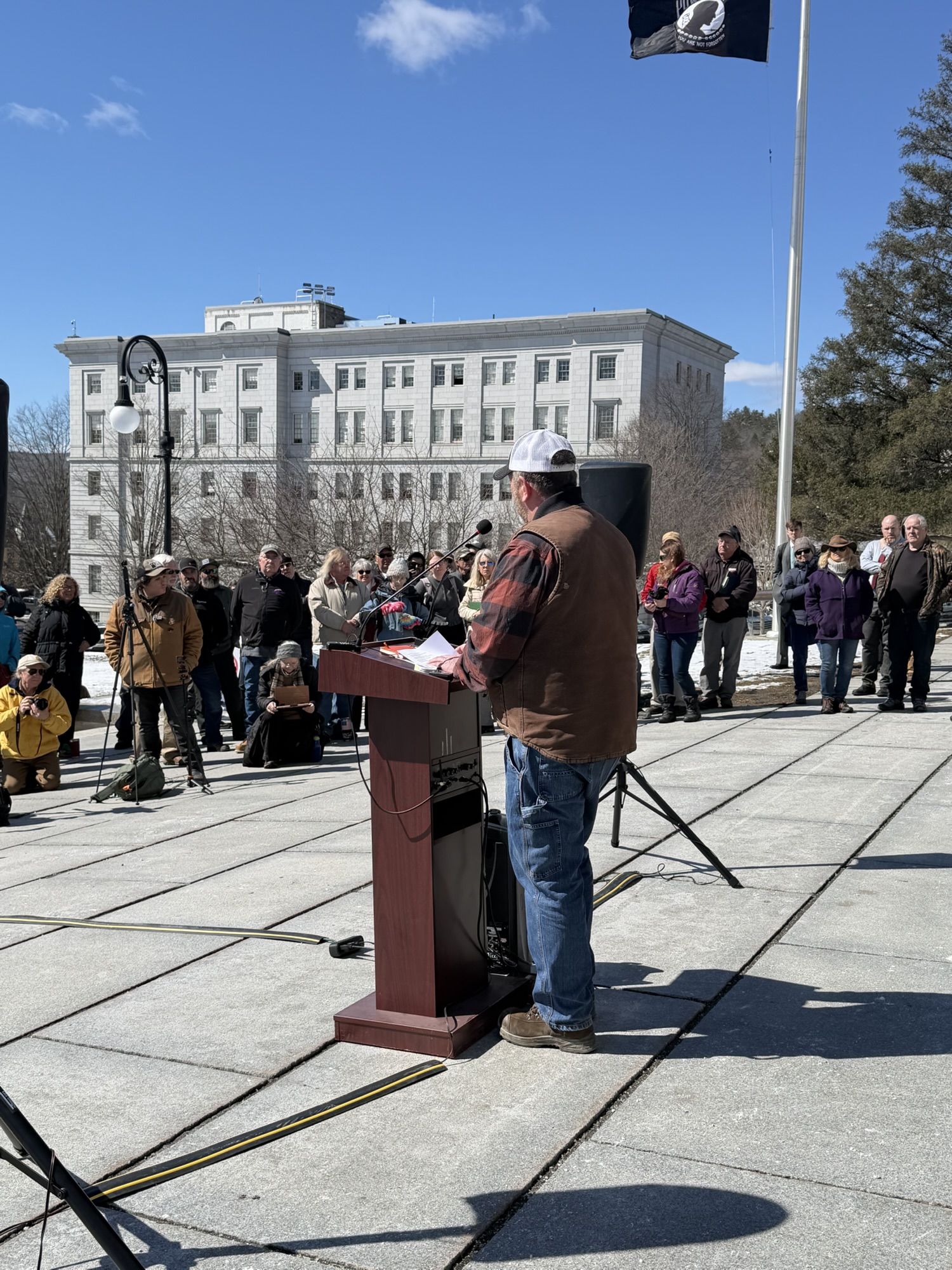
Rural Vermonters organized a repeal rally this past week at the statehouse, on March 24. I spoke at the rally with members of the Rural Caucus about what we are hearing and the work underway. Link to my remarks
What happens next
The bill has passed the Senate and now heads to the House Environment and Housing Committees. This is where the next set of decisions will be made. As the bill moves through the House, there will be continued focus on the parts of Act 181 creating the most concern and where further action is needed. S.325 is a step in the right direction, but it is late and, given what we are hearing from Vermonters, not enough.
Opportunities to engage
I will be holding a Zoom session for constituents this Monday from 5 to 6 pm to walk through S.325 and hear your questions.
Please sign up at the link. Many of you have already been able to register successfully. If you have difficulty, email me and I will make sure you receive the login information.
The Rural Caucus will also hold its rescheduled listening session this Wednesday from 5:30 to 7 pm. The speaking slots are full, but those who want to listen can register at www.ruralcaucusvt.com.
As always, please reach out if you need help navigating state services or want to share what you’re seeing locally. I read and value your notes, even if I can’t always respond immediately. I do not have staff and I work year-round, so if you do not hear back in a day or two, please follow up or send a text. If you find my work useful and are able to support it, you can do that here.
Thank you for staying engaged and staying in touch!
Rep. Laura Sibilia
Windham-2 District (Dover, Jamaica, Somerset, Stratton, Wardsboro)
Email: lsibilia@leg.state.vt.us
Phone: (802) 384-0233
Discover more from Vermont State Representative Laura Sibilia
Subscribe to get the latest posts sent to your email.
 Vermont State Representative Laura Sibilia