Friends and neighbors,
This was an intense week.
The time change was enough to throw people off, but this week also brought a lot of emotionally charged events. The resignation of Representative Bob Hooper, the ICE operation in South Burlington that drew large protests and law enforcement presence, and the ongoing national turmoil are affecting many Vermonters. I’ve heard from some of you who are feeling upset and anxious.
I also feel some of that, and it can be really challenging to stay focused on state policy when the national backdrop is so disrupted and unsettling. At the same time, the Legislature is at the high pressure mid-session crossover deadline, when bills must move out of committee to continue advancing this year.
Even in difficult weeks like these, I’m reminded every day how much collaboration still exists here in Vermont. People across parties and committees are working hard to try to agree on how to solve real problems for our communities. I promise you, I see this effort every day in the statehouse.
REMINDER: The Rural Caucus will be hosting an event to listen to the concerns of rural Vermonters on Wednesday, March 25th from 5:30-7:00 pm in Room 10 of the State House and online via Zoom. More information is linked here and available on the resources page of vtruralcaucus.com
Here are a few updates from the week:
Immigration Enforcement, Constitutional Rights and Government Accountability
Events that unfolded this week in South Burlington were deeply distressing for many Vermonters. A federal immigration enforcement operation drew hundreds of protesters and a significant law enforcement presence. Federal authorities have since confirmed that the person taken into custody during the operation was not the individual they were seeking.
Situations like this raise serious concerns about coordination, public safety, and the protection of constitutional rights. When enforcement actions take place in our communities, they should be conducted carefully and professionally, with respect for due process and attention to the safety of everyone involved.
The intensity of the response and the confusion that followed left many people shaken. Vermont communities expect transparency and accountability when government authority is exercised.
Moments like this are also a reminder of why constitutional protections and access to the courts matter. Vermonters should always have meaningful avenues to challenge government actions and defend their rights under the law.
Against that backdrop, the House passed H.849, legislation that gives Vermonters a way to seek damages in court if a government official violates their federal constitutional rights. The goal is simple: if a right exists, Vermonters should have a meaningful way to defend it.
Governor Scott and House Speaker Jill Krowinski also issued statements emphasizing the importance of constitutional protections when government power is exercised.
Energy Costs, Climate Policy, and Transparency
I also heard from Vermonters this week about energy costs and questions about climate policy.
Some recent messaging circulating online has compared Vermont policies to projections from New York’s climate law. Because New York’s energy system and regulatory structure are very different from Vermont’s, those projections do not translate directly to our state.
In Vermont, electricity rates are reviewed publicly by the Public Utility Commission. Prices for gasoline, heating oil, diesel, and propane, however, are largely driven by global markets.
I have also heard concerns about the Global Warming Solutions Act “right to sue” provision. That provision simply allows Vermonters to ask a court to require the state to follow the climate plan adopted in law if it fails to do so. It does not allow for damages.
Similarly, the Clean Heat Standard is often described as a tax, but the program is not currently operational and is not actually a tax.
Some of the emails I’ve received appear to be responding to messaging from national advocacy campaigns rather than Vermont policy itself. Last year Vermonters saw a wave of paid advertising from Americans for Prosperity, a national advocacy organization with ties to fossil fuel interests, opposing Vermont climate policies.
Because Vermont’s disclosure rules for paid lobbying advertisements only apply during the legislative session, groups like this can spend heavily outside the session in election years without public reporting.
To address that transparency gap, the House passed H.686, legislation I introduced to close that loophole. The bill does not limit speech or advocacy. It simply ensures that when paid lobbying advertisements are used to influence elections, Vermonters can see who is paying for those ads.
My focus on Vermont’s energy policies continues to be centered on affordability, reliability, and ensuring access for all Vermonters as we transition away from fossil fuels.
You can read more about my recent thoughts on energy affordability here:
https://laurasibiliavt.com/2026/02/27/rep-sibilia-week-8-of-the-2026-legislative-session/
AI and Data Privacy
Artificial intelligence and the digital economy are evolving quickly, and states across the country are working to establish thoughtful policies that allow innovation while protecting the public.
Here in Vermont, we are moving several pieces of legislation focused on the responsible and ethical use of emerging technologies.
Representative Monique Priestley and I both serve on a national state legislative task force examining how states can regulate industries that have historically been largely unregulated. The goal is to:
- ensure that innovation continues while also
- protecting Vermonters’ privacy, our environment, and electric ratepayers.
One bill, H.211, introduced by Representative Priestley, strengthens Vermont’s laws governing data brokers, the companies that collect and sell personal information about you, often without having a direct relationship with you.
The legislation requires data brokers to register with the state, disclose more about the kinds of information they collect, notify consumers if personal information is compromised in a data breach, and give Vermonters the right to request deletion of personal data held by these companies.
A second bill that I introduced addresses the physical aspect of the digital economy by establishing a framework for the siting of large data centers that may seek to locate in Vermont.
These facilities store and process massive amounts of information and require significant electricity and cooling resources. H.727, the Vermont Sustainable Data Centers Act ensures that if data centers locate in Vermont, they operate under rules that protect our electric system, environment, and Vermont’s existing ratepayers.
Large data centers would need approval from the Public Utility Commission and must enter into contracts ensuring that the cost of new electric infrastructure needed to serve them is paid by the project itself rather than shifted onto other electric customers.
Projects will also work with Vermont’s energy efficiency utility during design, report their energy and water use once operational, and follow Vermont’s environmental laws related to cooling and water use. New data center construction would also go through the Act 250 land use review process.
Both bills received bipartisan support coming out of committee and are expected to head to the House floor in the coming weeks.
I also want to recognize the leadership of Representative Mike Marcotte (R), Chair of the House Committee on Commerce and Economic Development, and Representative Kathleen James (D), Chair of the House Committee on Energy and Digital Infrastructure, for guiding these conversations in their committees.
Technology is evolving rapidly, and Vermont is working to ensure our laws keep pace in ways that support innovation while protecting Vermonters and the environment we all share.
This week Vermont enacted Act 75, a new law addressing the use of deceptive synthetic media, often called AI “deepfakes,” in elections. The law requires that manipulated audio, images, or video used in political communications include a clear disclosure so voters know the content has been altered. The goal is simple: Vermonters should be able to trust what they see and hear during an election campaign.
Protecting Your Personal Information
AI tools are quickly becoming part of everyday life. They help write emails, answer questions, and power many of the services we use online. At the same time, a large and mostly invisible industry collects, analyzes, and sells personal information. Most of us rarely see how that system works or how much of our data moves through it.
Be careful what you share with AI tools.
AI chat tools can be helpful, but they are not private spaces. Information entered into these systems may be stored or used to improve the technology. Avoid entering financial information, passwords, medical details, or sensitive documents.
Act 181 Implementation Update
Act 181, passed in 2024, was a historic update to Vermont’s land use system. The law aims to support more housing in and around our existing downtowns and village centers while protecting natural resources and limiting scattered development across rural landscapes.
As Vermonters are learning more about the law and what it could mean locally (I have seen the letters going around on social media), it is clear that many people are concerned. I have heard directly from constituents who are worried about property rights, about how the new framework will affect rural communities, and about whether the state is moving too quickly. Those concerns are real and are being taken seriously.
This week the Senate Natural Resources and Energy Committee advanced S.325, a bill that adjusts many timelines for implementing parts of Act 181 until after the 2027 legislative session (next June) so communities, planners, and state agencies have the time needed to do the work carefully and transparently.
One key provision delays implementation of the Act 250 “road rule” changes until 2030, giving municipalities and regional planners additional time to understand how road construction could trigger Act 250 review under the updated system.
The bill also extends temporary housing provisions that streamline Act 250 permitting for housing in designated centers and growth areas, including accessory dwelling units and the conversion of existing buildings to housing, through 2030.
Senator Anne Watson, who chairs the Senate Natural Resources and Energy Committee, met with and took testimony from the tri partisan Rural Caucus while developing this legislation. Many of us representing smaller towns emphasized the need to slow down the implementation timeline and ensure rural voices are part of shaping how the law is implemented.
Act 181 set a direction in 2024. Now we need to make sure its implementation reflects the realities of Vermont’s towns and the people who live in them. The challenge is finding the right balance between protecting Vermont’s environment, helping communities address the housing shortage, providing the resources towns need to implement these changes, and respecting property owners’ rights.
School Safety, PCB Testing, and Education Reform
Education reform continues to move forward this session, though this work will extend beyond the crossover deadline given the complexity of Vermont’s school governance and funding systems.
At the same time, the House is continuing to work through challenges related to PCB contamination in older school buildings. In 2021 Vermont enacted a first-in-the-nation law requiring indoor air testing for PCBs in schools built or renovated before 1980.
Testing has identified elevated levels in several schools across the state, including Bellows Falls Union High School and Twin Valley Elementary in Windham County. A Vermont Public article from last spring describes some of the challenges districts have faced as testing and remediation costs have grown.
While the testing effort has provided important information about school building conditions, it has also raised difficult questions about long-term costs. Legislation that has just passed the House will end the statewide PCB testing requirement going forward while continuing to address schools where elevated PCB levels have already been identified.
Community Gathering: Vermont Immigration Legal Defense Fund
On April 2, the Brattleboro Museum & Art Center will host a gathering to support the Vermont Immigration Legal Defense Fund, a statewide, nonpartisan effort that raises funds to help immigrants and asylum seekers access legal representation. Immigration proceedings are complex, and legal support can make a meaningful difference in ensuring people receive due process.
The evening will include updates from immigration attorneys, community leaders, and state officials about the Fund’s work and its impact across Vermont.
April 2, 2026 7:00–8:30 PM Brattleboro Museum & Art Center 10 Vernon Street, Brattleboro
Tickets are free but required, with a suggested donation of $25 or more. Contributions are tax deductible, and you are welcome to bring friends and neighbors. Please let me know if you have questions. Here’s the link: https://give.unitedwaynwvt.org/e/vildf-brattleboro
Sibilia: “Defend the Guard” and H.355
Share Your Conservation Priorities with the State of Vermont
Vermont Conservation Plan Discussion Hosted by the Windham Regional Commission Thursday, March 12 | 5:30–8:00 PM Bellows Falls Opera House – Lower Theater 7 The Square, Bellows Falls RSVP Here Heavy hors d’oeuvres will be served.
Background Adopted in 2023, Act 59, the Community Resilience and Biodiversity Protection Act, sets statewide goals to conserve 30% of Vermont by 2030 and 50% by 2050.
About 27% of Vermont is already conserved, leaving roughly 190,000 additional acres needed to reach the 2030 goal. Achieving that pace while sustaining investments in farms, forests, and water quality would be unprecedented, and the state is now working to prioritize the most feasible actions.
Additional Listening Sessions
- Windham Conservation District March 16 | 5:30–8:00 PM
https://www.windhamcountynrcd.org/2026-03-16-vermont-conservation-plan-act-59-stakeholder-led-listening-sessions - BEEC & Green Mountain Conservancy March 24 | 4:00–7:00 PM Retreat Farm North Barn
As always, please reach out if you need help navigating state services or want to share what you’re seeing locally. I read and value your notes, even if I can’t always respond immediately. I do not have staff and I work year-round, so if you do not hear back in a day or two, please follow up or send a text. If you find my work useful and are able to support it, you can do that here.
Thank you for staying engaged and staying in touch!
Rep. Laura Sibilia
Windham-2 District (Dover, Jamaica, Somerset, Stratton, Wardsboro)
Email: lsibilia@leg.state.vt.us
Phone: (802) 384-0233
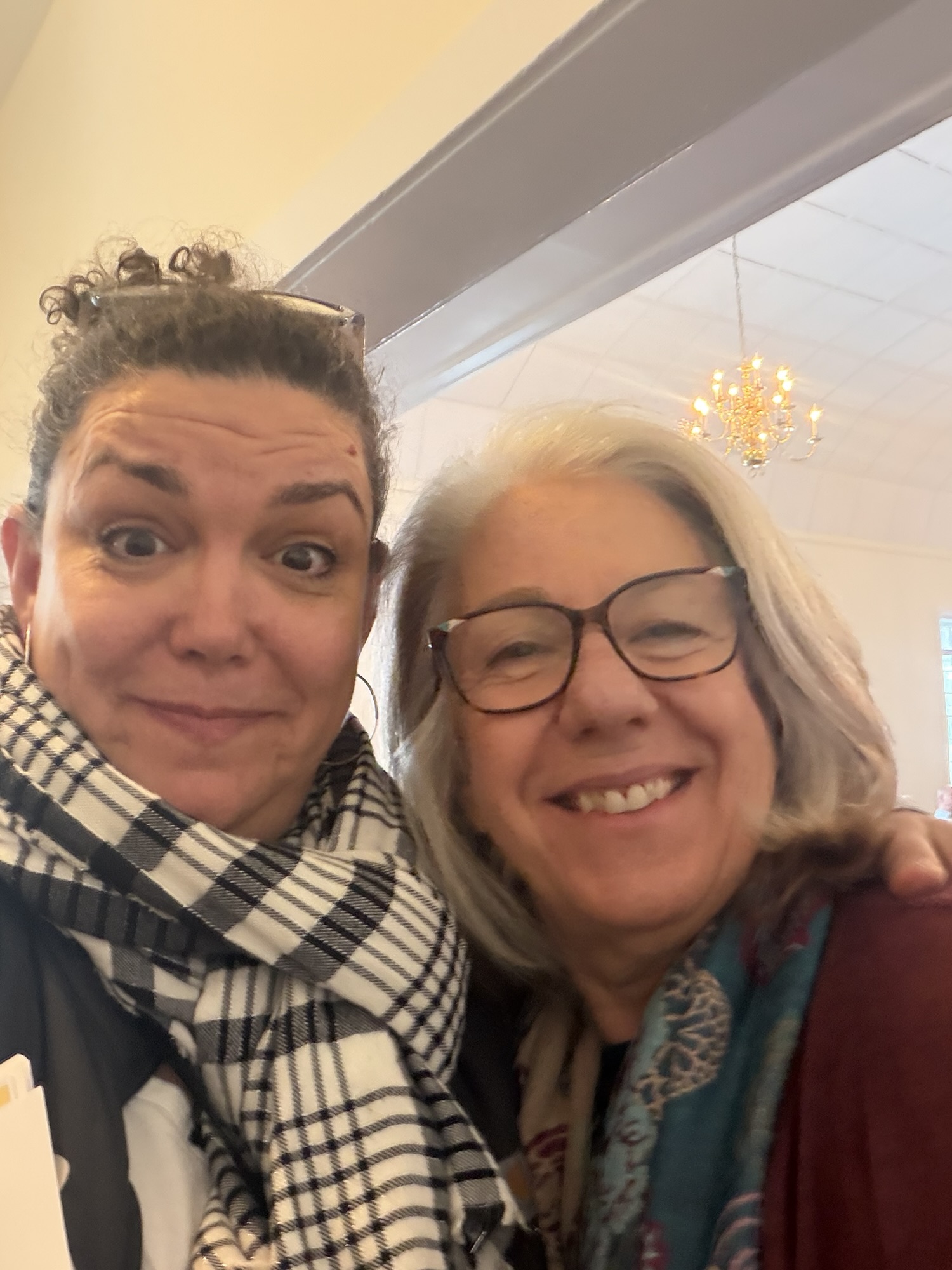
Windham County Senator Wendy Harrison and I at this year’s Dover Town Meeting

Discover more from Vermont State Representative Laura Sibilia
Subscribe to get the latest posts sent to your email.
 Vermont State Representative Laura Sibilia