
Dear friends and neighbors,
I began this week distraught by the news out of Minneapolis, where a U.S. citizen was killed by federal agents. It weighed on me, not only because of the loss of life, but because moments like this force us to assess how power is being exercised in our democracy.
Here in Vermont, the scale of responsibility is different, but the impact of leadership is still real. This week, the House Appropriations Committee advanced the budget adjustment act with a unanimous vote. That outcome did not happen by accident. It reflected a shared commitment to process, restraint, and respect for one another, even amid real disagreement.
I kept coming back to those two realities side by side this week. Leadership that respects process, restraint, and democracy lowers the temperature. Leadership that does not raises it.
I hope you have a restful and warm weekend. Please keep me posted on state policies you are wrestling with.
Budget Adjustment Act
This week, the House unanimously passed H.790, the 2026 Budget Adjustment Act, by a vote of 133–0. The bill reflects updates to the Governor’s proposal and makes mid-year adjustments to keep the FY26 budget on track. The Senate will now take up the bill.
Updated revenue forecasts allowed the Legislature to address higher-than-expected costs while also setting aside nearly $75 million for FY27 to manage potential federal funding shortfalls and property taxes.
The bill includes targeted funding for nursing homes, Medicaid caseload changes, non-emergency medical transportation, and Department of Corrections health care costs. It also supports mental health services, homelessness prevention, housing vouchers, recovery centers, public safety overtime, wildfire response, food access programs, and necessary system upgrades to Vermont Health Connect.
Act 250 Appeals
H.820 would move most environmental and land-use appeals out of the court system and into the Land Use Review Board and the Agency of Natural Resources. Decisions that are now reviewed by judges would instead be decided by the same administrative bodies that write and apply many of the land-use rules.
This matters because Act 181 and the Road Rule will place most of Vermont into potential Act 250 jurisdiction. The Land Use Review Board is deeply involved in defining when private property is regulated. Under this bill, that same entity would also decide appeals challenging those jurisdictional decisions.
For property owners, this creates a basic fairness problem. An entity should not both shape the rules that determine whether your land is regulated and then serve as the final decision-maker when you appeal that regulation. Even without bad intent, this structure creates a real risk of institutional bias.
The timing makes the risk worse. The Land Use Review Board is still new and is implementing the historic land use changes in Act 181 right now. Moving appeals before 2030 would place the Board in the position of judging challenges to rules and jurisdictional lines it is still actively developing. Until there is clear, consistent evidence that the system is stable and functioning well, and that there is no legal conflict, shifting this authority is not in the best interest of Vermont property owners or property rights.
H.R. 12
This week, I co-sponsored House Resolution 12, alongside Rep. Anne Donahue and many colleagues, in response to the Governor’s public statement about recent federal immigration enforcement actions in Minnesota.
In January, thousands of federal ICE and CBP agents were deployed to Minnesota. During those operations, a U.S. citizen was fatally shot by federal agents at a protest. That incident, along with others, raised serious concerns about public safety, coordination, and constitutional rights.
Governor Scott spoke plainly about those concerns, calling on federal officials to pause, de-escalate, and refocus enforcement in a way that respects constitutional protections. This resolution expresses support for the principles behind that statement.
It is important to be clear about what this resolution does and does not do. It does not change Vermont law, direct state policy or involve Vermont in federal immigration enforcement. What it does do is affirm: the right to peaceful assembly, due process, and that basic constitutional protections apply to everyone. When federal actions raise questions about those rights, it is appropriate for the Legislature to acknowledge that and speak on the record.
Consumer protections during the fiber transition
VTDigger: Lawmakers weigh expanded consumer protections as fiber optic transitions spark concern
This article summarizes a discussion currently underway in the House Energy and Digital Infrastructure Committee about consumer protections during the transition from copper phone lines to fiber service, particularly in rural areas. I’ve raised concerns based on constituent complaints and gaps in coordination that affect emergency communications.
One argument raised by Fidium is that states are federally preempted from regulating these transitions and that market-style regulation is sufficient. Vermont has heard this argument before in the telecommunications context.
Market-style regulation assumes competition will protect consumers. In much of rural Vermont, that assumption does not hold. Many communities have one provider, limited redundancy, and few alternatives if service is disrupted or changes are poorly communicated.
Under a purely market-based approach, companies are not required to notify the Department of Public Service or the E-911 Board when service transitions occur. That lack of notice creates real risks when changes affect 911 access, battery backup requirements, or service reliability during power outages.
Vermont has a well-established role in protecting consumers and public safety in telecommunications, and courts have upheld the state’s authority to require notice and coordination where federal rules set a floor, not a ceiling.
Land Use Update: Act 181, the Windham Regional Plan, and Rural Caucus
There’s an old saying, often attributed to an African proverb: “If you want to go fast, go alone. If you want to go far, go together.”
That idea applies well to Act 181. It is often easier to move faster with fewer voices and less deliberation, but that increases the risk of unintended consequences. Taking the time to engage regions, towns, and landowners leads to stronger implementation and broader public trust.
That perspective is especially relevant as Vermont works through the early implementation of Act 181 and its impact on regional and local planning. Act 181 effects every single parcel of land in Vermont, and though engagement is building and robust, the scale of the effects requires a lot more engagement by Vermonters.
The Windham Regional Commission has launched a new Act 181 webpage that brings together materials on how the region is updating its Regional Plan in response to Act 181, the land-use reform passed in 2024:
https://windhamregional.org/act-181/
I attended the most recent Windham Regional Commission meeting in my role as a Citizen Interest Commissioner. Commissioners from 13 of the region’s 25 towns heard from the new Land Use Review Board chair, Janet Hurley, and from staff about the timing of updated regional land-use maps. I raised a key timing question many are asking.

While Act 181 relies on new regional maps to guide future land-use decisions, the Windham region’s maps will not be finalized until next winter. At the same time, major parts of Act 181 take effect in July, including the Tier 2 road rule, which applies statewide. That creates a real question about how new rules are implemented before regional mapping is complete. The Land Use Review Board chair acknowledged this as an important issue to consider as implementation moves forward, particularly for rural communities that depend on clear notice and predictable rules.
The Windham Regional Commission is now updating its 2025 Regional Plan to comply with Act 181, with a focus on the Land Use and Housing chapters. A draft updated plan is expected by the summer of 2026. Draft Future Land Use Maps are being developed town by town, with direct outreach to local officials. Draft maps are complete for Brattleboro, Londonderry, Newfane, Weston, Windham, and Winhall, with additional town meetings underway.
A recording of the January 27 Commission meeting will be posted soon here:
https://windhamregional.org/committees/full-commission/
At the same time that regions and towns are working through Act 181 implementation on the ground, the Legislature is also looking at targeted adjustments to address timing and process issues.
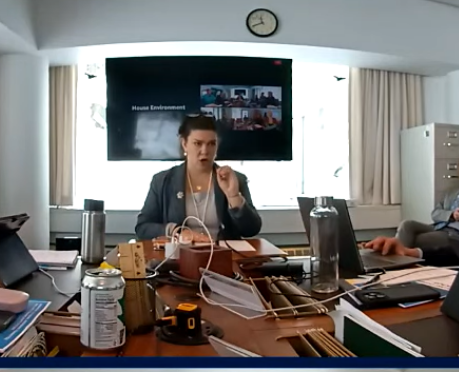
This week, I was asked to introduce the Rural Caucus bill in House Environment. The bill proposes modest, targeted changes to Act 181 to better align implementation timelines and reduce unintended impacts. The hearing included supportive testimony from the Vermont League of Cities and Towns and a walk through of the statutory changes by counsel.
Additional Act 181 resources, including summaries, municipal workshop materials, and the Land Use Review Board’s Act 181 page, are available on the Windham Regional Commission website.
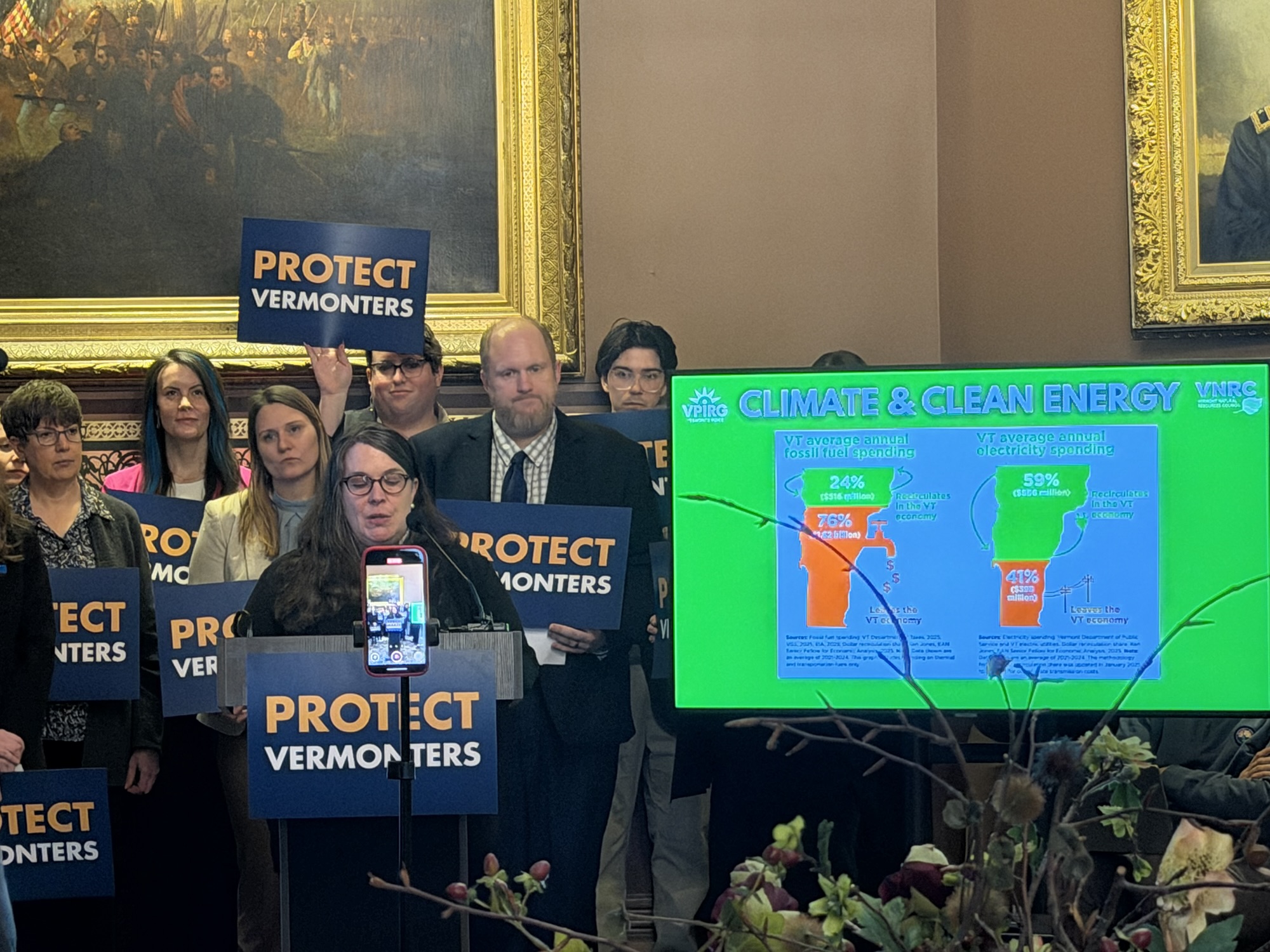
Clean Energy Standard (not to be confused with a Clean Heat Standard!
Vermont’s energy system has changed a lot since we last updated our Renewable Energy Standard – two years ago. Demand for electricity is growing, large new projects are harder to permit, and during peak times the regional grid is relying even more on fossil fuels. There are a lot of moving parts impacting this change.
The Governor has suggested moving to a clean energy standard in order to slightly reduce rates. I am open to that direction in the future and see value in it. The transition itself is not especially hard. What it does not resolve on its own is a really important issue: Vermont and the region also need more power and more flexibility in how the grid operates.
A clean energy standard largely changes how electricity is counted. It allows more low-carbon power sources like nuclear to count toward state goals. It does not build new generation, strengthen the grid, or lower costs by itself. Those outcomes depend on separate planning and decisions.
There has been a recurring focus on immediate savings and pushing costs into the future. That may ease pressure in the moment, but it can crowd out more thoughtful, comprehensive policy that lowers costs and risk over the long term.
If Vermont moves in this direction, it should be done as part of a more comprehensive plan that addresses supply, reliability, affordability, and grid flexibility together..
Bills I’m Sponsoring This Session
My legislative work this year focuses on transparency, student rights, and preparing Vermont for emerging infrastructure and governance challenges:
- H.747 An act relating to standards for law enforcement identification
- H.752 An act relating to the Agency of Digital Services
- H.783 An act relating to chatbot disclosure requirements
- H.784 An act relating to the regulation of chatbots
- H.791 An act relating to State government and information privacy
- H.793 An act relating to removing the power of Vermont corporations to spend money on election activities
- H.813 An act relating to ensuring the same accountability, transparency, and education standards for all schools receiving public funding
- H.829 An act relating to notification of robocalls that use an artificial voice
Recent State Reports
Property Taxes: What the State’s New Report Shows
The state’s 2026 Property Valuation and Review Report confirms that Vermont property values are changing faster than towns are able to update assessments, and that is resulting in unpredictable tax bills.
Vermont relies on a statewide education tax system that adjusts rates between towns, but it depends on reasonably current local property assessments. Many towns are operating with outdated values. The average town last completed a full reappraisal in 2018, and required reappraisals are now backed up due to limited number of appraisers.
The report makes several points that are particularly relevant to towns like ours:
- Rural towns with seasonal homes, forest land, and limited staff capacity are more likely to experience larger swings when reappraisals finally occur.
- Towns with a high share of land in Current Use are protected from development-based taxation on farm and forest land, but pressure shifts to residential property.
- Communities that have not reappraised recently may see sharp changes even if local conditions have not changed much.
This is not the whole story on increased property taxes, but it is a part of the story. What this means going forward is reappraisals need to happen more regularly, many towns need state support to do that work, and changes need to be phased and communicated clearly so adjustments are not sudden or destabilizing.
If you need help with state services, please reach out. I do not have staff and I work year-round, so if you do not hear back in a day or two, please follow up or send a text. If you find my work useful and are able to support it, you can do that here.
Thank you for staying engaged and staying in touch!
Rep. Laura Sibilia
Windham-2 District (Dover, Jamaica, Somerset, Stratton, Wardsboro)
Email: lsibilia@leg.state.vt.us
Phone: (802) 384-0233
H.730 bill introduction to the House Environment Committee this week
Discover more from Vermont State Representative Laura Sibilia
Subscribe to get the latest posts sent to your email.
 Vermont State Representative Laura Sibilia