Friends and neighbors,
As we move into the second week of the 2026 legislative session, I am focused on the work here in our state. Nonetheless, national decisions and statements are shaping the context Vermont is operating in, whether we are talking about civil rights, education, energy, or affordability. What happens at the federal level eventually shows up in our communities and is especially now regularly showing up in the questions people bring to local and state officials.
This week, a New York Times article reported on the president’s claim that civil rights protections have resulted in discrimination against white Americans. The president’s argument echoes his administration’s broader attacks on diversity and inclusion, suggesting that protections meant to prevent discrimination undermine merit, rather than recognizing that those protections exist so merit can actually be judged fairly.
That argument is not new. We have heard versions of it before in moments when the country was asked to confront unequal treatment under the law, and when calls for patience or “unity” were used to slow or avoid necessary change.
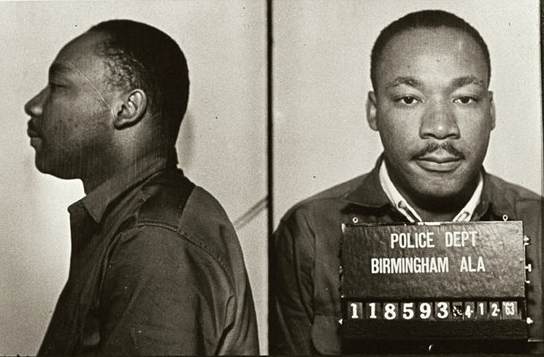
This past summer, I had the opportunity to revisit Dr. Martin Luther King Jr.’s Letter from Birmingham Jail. At its core, the message is straightforward and still relevant today. When laws and systems appear fair on paper but produce unequal results in real life, they must be challenged Dr. King wrote in response to white clergy who called for “unity” and restraint. He explained that unity without justice is empty, and that asking people to wait in the face of injustice only protects the status quo. He was also clear that nonviolent action is not chaos or disorder, but a necessary moral and civic responsibility when lawful systems fail to deliver equal protection.
Monday is the Martin Luther King Jr. Day holiday. It exists not simply to honor Dr. King’s legacy, but to remind us that civil rights, equal protection under the law, and nonviolent civic engagement are foundational to our democracy and require ongoing work.
That message matters as we enter the holiday weekend. Many people today are hurting and distressed by the treatment of minorities, immigrants, the trans community, women, Muslims, and others who seemingly do not fit the President’s demographic preferences. Framing civil rights as a grievance distracts from the real work and the very real challenges Americans and Vermonters are facing every day, including affordability, housing shortages and the local impacts of a changing global economy and climate.
With that in mind, here is an update on what I am working on this week:
What’s the current debate around Education Reform and Act 73?
Many of you have reached out with questions about Act 73 and what it could mean for local schools, property taxes, and communities. This matters deeply to parents, educators, and taxpayers across our district. Two recent opinion pieces capture the core disagreement.
Supporters of Act 73, including the Secretary of Education, argue that Vermont’s education challenges are not just about property taxes. (Zoie Saunders: It’s not all about taxes) They believe our current system is fragmented and inequitable, with student opportunities, staffing, and pay varying widely by district. Their view is that more regional approaches could create efficiencies, improve consistency for students, and make funding more predictable over time.
Critics of the Governor’s approach, including members of the Act 73 Redistricting Task Force, (Letter to the Editor: Governor’s fixation on Act 73 is detached from reality.) agree that education reform is needed but caution against moving too quickly toward large-scale redistricting. They argue the Governor has overstated what Act 73 can accomplish in the short term and downplayed the risks for rural communities. The task force focused on more targeted approaches, such as shared services, regional high schools, and cost controls, rather than a single statewide redraw.
Where I am: I supported Act 73, on purpose, because I believe Vermont urgently needs comprehensive, structural education reform. The current system is putting unsustainable pressure on local boards, families, and taxpayers, while not delivering consistent outcomes for students. Schools are closing in ways that are creating what will have long term unintended consequences. I also believe the work of the Redistricting Task Force can be very useful, especially in the short term and should be used to inform our immediate next steps. And finally, wholesale education reform requires care, data, transparency, and respect for local communities.
It’s also important to be honest that both the Legislature and the Governor have repeatedly contributed to rising education costs as student enrollment has declined by making spending decisions at the state level on programs to fund out of the state education fund. Ignoring that reality does not make reform easier. Many Vermonters understand those state actions have happened.
As I have noted previously, there are no easy answers, and most folks in Montpelier actually care quite a lot, about lots of different perspectives. I hope you will encourage those you are reaching out to to work hard and diligently and to be willing to compromise where compromise provides greater opportunities for kids and communities.
Legislators received a refresher this week on what Act 73 does and how it is structured. You can find background materials here:
- Act 73
- Act 73 Summary
- Act 73 Overview Notes
- High Level Overview of Act 73 of 2025
- Act 73 of 2025 Timeline
- Legislative Education Reports Overview
VTDigger: Vermont’s top economists say state revenue is steady as tight budget cycle nears
A federal change with state and local impacts
New York Times: E.P.A. to Stop Considering Lives Saved When Setting Rules on Air Pollution In a reversal, the agency plans to calculate only the cost to industry when setting pollution limits, and not the monetary value of saving human lives, documents show.
This change affects how the federal government decides whether pollution rules are “worth it.” This matters because the way the federal government measures costs and benefits directly shapes the rules that protect our air, water, and public health. For decades, clean air standards have been built on analyses that weigh both the costs of compliance and the health benefits of reducing pollution. The change now underway at the EPA would continue to count industry costs in dollars while treating avoided illness and premature death as non-monetized and “uncertain.”
That shift may sound technical, but it has real consequences. What isn’t valued is not considered equally with what is valued. I want both a robust economy, sound predictable regulation, and protection of the common good and public health.
Vermont Edition and a Rural Caucus Update on Act 181
This week I was on Vermont Edition with Let’s Build Homes and the Vermont Natural Resources Council to talk about housing legislation and how Act 181 is being implemented.
I shared my perspective as co-chair of the Rural Caucus, focused on what rural communities need as these changes begin to affect real people, real land, and real local decisions.
What I am hearing most clearly from rural legislators, towns, and landowners is concern about how it is being rolled out. People want clear notice, understandable timelines, and fair treatment before new rules change how land is valued, accessed, or permitted. That is especially true as the state develops Tier 3 rules and new road-based Act 250 triggers.
Leaders of the Rural Caucus have spent the past several months gathering feedback and working through these concerns and developing legislation to address notice, transparency, valuation, and timing issues so implementation works as intended for rural communities and does not create confusion or unintended harm.
I will share more details once that bill is formally introduced, which I expect will be early next week.
In the Energy and Digital Infrastructure Committee
Notice when your phone service changes
Thanks to outreach from many of you across our district, it has become clear that communication when telephone companies transition customers from traditional copper landline service to VOIP service (phone service over broadband) is not where it needs to be.
Right now, neither the Department of Public Service nor the E-911 Board is required to be notified when these switches happen. That matters because changes in phone service can affect reliability, emergency calling, and how quickly problems are identified and addressed and these entities are directly dealing with any public challenges related to the switchovers.
This week, our committee heard testimony about these transitions. In response, our committee chair, Rep. Kathleen James, has asked for a bill to be drafted that would require telephone companies to notify the Department of Public Service and the E-911 Board by mail and email when these changes occur.
This is a small but important step to help the state respond more quickly, support consumers, and keep public safety systems aligned with changes happening at individual addresses. Thank you to everyone who has taken the time to share your experiences with me over the past several years. Your input is helping shape practical, commonsense policy that better protects Vermonters.
If your phone service stops working during a transition, please reach out to me or the Department of Public Service so issues can be documented.
2025 Climate Action Plan Updates
This week, testimony and materials before the House Energy and Digital Infrastructure Committee this session, included updates from the Agency of Natural Resources on greenhouse gas reporting, and the 2025 Climate Action Plan from the Vermont Climate Council, underscore both the scale of the climate challenge and the importance of getting policy design right. Together, this information helps clarify what tools are working, where gaps remain, and what needs to be improved before moving forward.
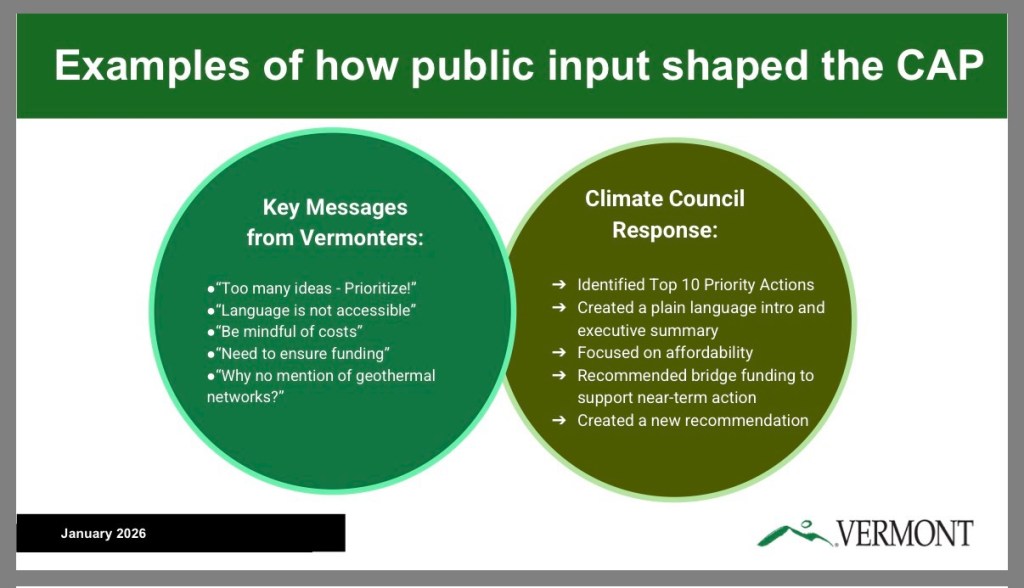
- Agency Natural Resources 2025 Climate Action Plan and Greenhouse Gas Reporting Update
- Greenhouse Gas Reporting Memo
- Vermont Climate Council Letter of Support
Clean Heat Standard: Where Things Stand
Earlier this month, the Public Utility Commission released its second review of the Clean Heat Standard, adding new information about what is working and what still needs to be addressed if the policy were to move forward.
Status: The Clean Heat Standard is not in effect and would require further legislative action before any program could move forward.
The review reinforces a simple point: lowering heating costs and emissions matters, AND the Clean Heat Standard, as currently structured, is not ready to proceed without changes. In the Second Checkback Report on the Clean Heat Standard the Commission identified data gaps, unresolved administrative questions, and risks that households could face higher costs without changes.
Meet My 2026 Legislative Interns
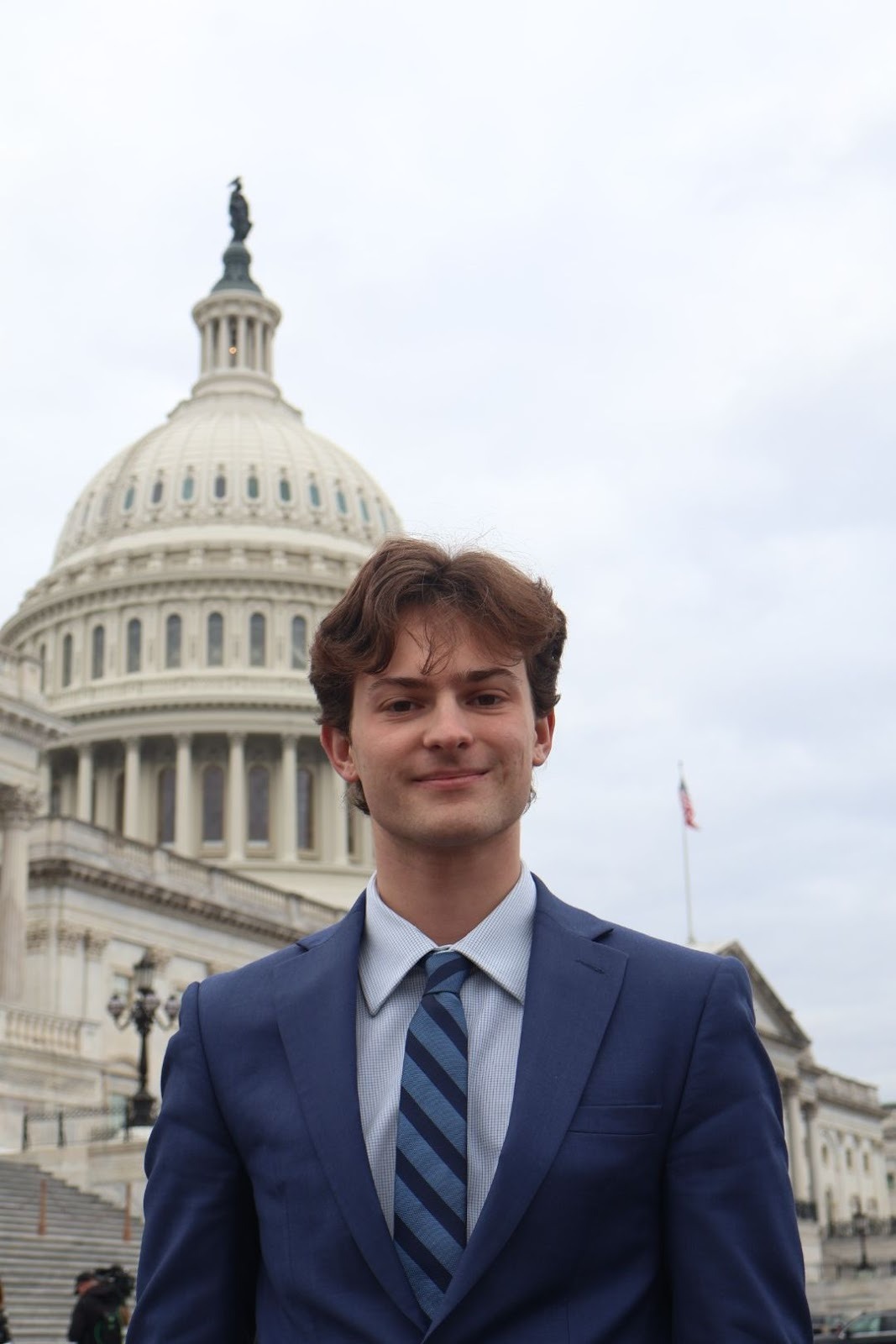
I’m excited (and fortunate) to be able to introduce two interns who are working with me during the 2026 legislative session. Like most Vermont legislators, I do not have staff, so interns play an important role in helping me keep up with research and the day-to-day work of the State House.
Owen Rhudy is a junior at the University of Vermont studying Political Science and Environmental Studies. Originally from Ithaca, New York, he brings experience from political campaigns and congressional offices and is especially interested in issues affecting rural communities and working people.

McKenzie Hart is a junior at the University of Vermont, where she studies political science and serves as a student trustee. She grew up in Arlington, Virginia, and has experience in grassroots organizing, congressional offices, and academic governance, with interests in education, healthcare, and technology policy.
Both Owen and McKenzie plan to join me at town meetings and are spending time with me at the State House this session.
Bills I have sponsored:
| H.527 | An act relating to extending the sunset of 30 V.S.A. § 248a |
| H.560 | An act relating to the Cybersecurity Advisory Council |
| H.593 | An act relating to Public Utility Commission approval of interregional transmission agreements |
| H.595 | An act relating to Child Care Financial Assistance Program eligibility |
| H.644 | An act relating to regulating the use of artificial intelligence in the provision of mental health services |
| H.652 | An act relating to wastewater discharges from landfills |
| H.686 | An act relating to expanding identification of certain lobbying advertisements |
H.686 Rationale: Because Vermont’s disclosure rules for paid lobbying advertisements only apply during the legislative session, national advocacy groups like Americans for Prosperity have been able to spend heavily outside the session in election years without public reporting. That off-session spending is intended to shape public opinion of candidates and also bypasses campaign finance reporting.
I’m sponsoring H.686 to close this transparency loophole. The bill does not limit speech or advocacy. It simply ensures that when paid lobbying ads are used to influence elections, Vermonters can see who is paying for those ads and make more informed decisions.
Recent Reports to the Legislature:
Officer Misconduct and Transparency of Information Report A new report from the Vermont Criminal Justice Council shows that in 2025 there were eight complaints involving police officers related to domestic or sexual violence. Four involving domestic violence and four involving sexual violence. Some of these cases resulted in disciplinary action, including decertification, meaning the officer is no longer allowed to work in law enforcement in Vermont. The report is required by law and is part of ongoing efforts to improve accountability, transparency, and public trust in policing in Vermont.
From Jamaica Organizers:
Saturday, January 17 2:00 PM Downtown Jamaica (Route 30)
- Community gathering and protest.
- Poster-making supplies will be available.
Sunday, January 18 4:30–5:00 PM Jamaica Village Green
- Candlelight vigil and community sing.
- The vigil will honor Renee Nicole Good and others who have died during encounters with U.S. Immigration and Customs Enforcement.
All are welcome.
If you need help with state services, please reach out. I do not have staff and I work year-round, so if you do not hear back in a day or two, please follow up or send a text. If you find my work useful and are able to support it, you can do that here.
Thank you for staying engaged and staying in touch!
Rep. Laura Sibilia
Windham-2 District (Dover, Jamaica, Somerset, Stratton, Wardsboro)
Email: lsibilia@leg.state.vt.us
Phone: (802) 384-0233
Discover more from Vermont State Representative Laura Sibilia
Subscribe to get the latest posts sent to your email.
 Vermont State Representative Laura Sibilia