
Friends and neighbors,
I hope you were able to spend time with family and friends over the Thanksgiving holiday. We were grateful to spend time with two of our kids and family! My daughter and I were lucky enough to spend a few days in Canada including visiting Notre Dame Cathedral. Thank you for staying engaged. I will hold office hours next Saturday December 6th in Dover from 11 to noon at the Dover Free Library. I hope to see you there.
Education Property Taxes and the December 1 Letter
Tomorrow is December 1, the date set in 32 V.S.A. 5402b for the Tax Commissioner to issue the annual letter projecting next year’s education property tax rates. Last year the Governor and the Legislature used close to 120 million dollars in one time surplus funds to buy down the statewide increase to roughly 1.1 percent, rather than the much higher rates that had been projected.
I expect this year’s letter will once again start a round of political rhetoric about school funding, property taxes, and finger pointing. We already have bipartisan agreement about the urgent need for education reform.
We also now face a significant challenge. The redistricting task force has proposed a voluntary 10 year regional services plan instead of producing new proposed regional district maps.. The Governor has questioned whether that proposal is compliant with the law. It is unclear what House and Senate leadership will do next. I’ll send out an update with the letter and responses later this week.
School Closures and the Lack of a Statewide Perspective
Without a statewide perspective, people on the ground in the Windham region are doing the best they can to provide for their students and taxpayers. This now includes the possible uncoordinated closure of several elementary schools in different supervisory unions.
These potential closures make sense to individual small towns, but the possible broader regional impact is the unintended consequence we cannot ignore. One closure that makes sense in a local district may create a big gap between itself and another district. Before long, large parts of rural Vermont could be left without any local elementary school at all.
This is what happens when decisions are made in isolation. It is a failure of state leadership, both in the administration and in the Legislature, to not request and support broader regional conversations – right now. Our communities should not be left to navigate this alone.
There are areas of education policy where I disagree with the Governor and other areas where I disagree with the Democratic majority. But I also know we can not and we will not make progress on governance reform or on property tax relief without bipartisan agreement between the administration and the Legislature. That requires the Legislature and the Governor to keep working together. I hope you will dig in, be slow to join the finger pointing and be enthusiastic in encouraging all of us to stay focused on real solutions that ensure:
- High quality educational opportunities for every Vermont student
- Costs that taxpayers can bear
- Schools spaced so we do not create education deserts in rural Vermont
FCC Grants Consolidated Communications Petition to Retire Copper
The FCC has granted Consolidated Communication’s request to retire copper service in Vermont. The Federal Communications Commission is the national agency that regulates interstate communications. Under 47 U.S.C. 214, a company may not stop providing a regulated phone service without FCC approval and proper notice to customers and state officials.
Copper service is the old telephone line that served Vermont homes for generations. Telephone service is regulated and carries statewide obligations. Once copper is retired, landline telephone service will only be available over wireless and fiber based broadband, which is unregulated and does not carry the same public safety requirements.
While this transition may be inevitable, it also must be planned for. If the power goes out, fiber based phones also go out unless customers buy and maintain batteries. Some medical and accessibility devices, alarms, and elevator systems do not yet work reliably over fiber.
At the same time, in fact on the same day, the FCC opened a new proceeding to “modernize” Telecommunications Relay Services by phasing out older analog relay systems. For many rural and older Vermonters who rely on relay services for hearing, speech, or mobility challenges, these changes add another layer of uncertainty. Vermonters are already reporting service interruptions, unclear notices, and real fear about whether phones, assistive devices, or 911 access will work during outages. These questions deserve clear answers before older systems are dismantled and copper lines are removed.
I want you to know that I was not informed that Consolidated had filed this petition with the FCC, and I did not know the federal public comment period was underway (from Oct 1 – November 21) while many of you were reporting outages, confusing notices, and unexpected loss of service to me and to the PUC and the DPS. During that public comment period, based on your complaints, I was asking both Consolidated and the Department of Public Service when fiber retirement might occur and how customers would be notified, and I did not get clear answers. I was extremely surprised to learn, the day before Thanksgiving, that the FCC had granted CCI’s petition to retire copper. This is not acceptable.
The FCC has now approved the request to retire telephone landlines with absolutely ZERO public comments on the record. I am currently gathering facts, and I will be pursuing all means of holding Consolidated and state officials accountable for their obligations to Vermonters and to federal and state law with regard to this FCC proceeding.
If you have experienced unclear notices, outages, or loss of service, please share that information with the Department of Public Service and with me. And if anyone is telling you, as they have told me, that these concerns are only about old copper lines, that is not correct. Vermonters have filed serious complaints about Consolidated’s performance on both copper and fiber. Rebranding as “Fidium” does not change the obligation to provide reliable service or meet federal and state standards..
Shining a Light on Outside Spending Targeting Vermonters
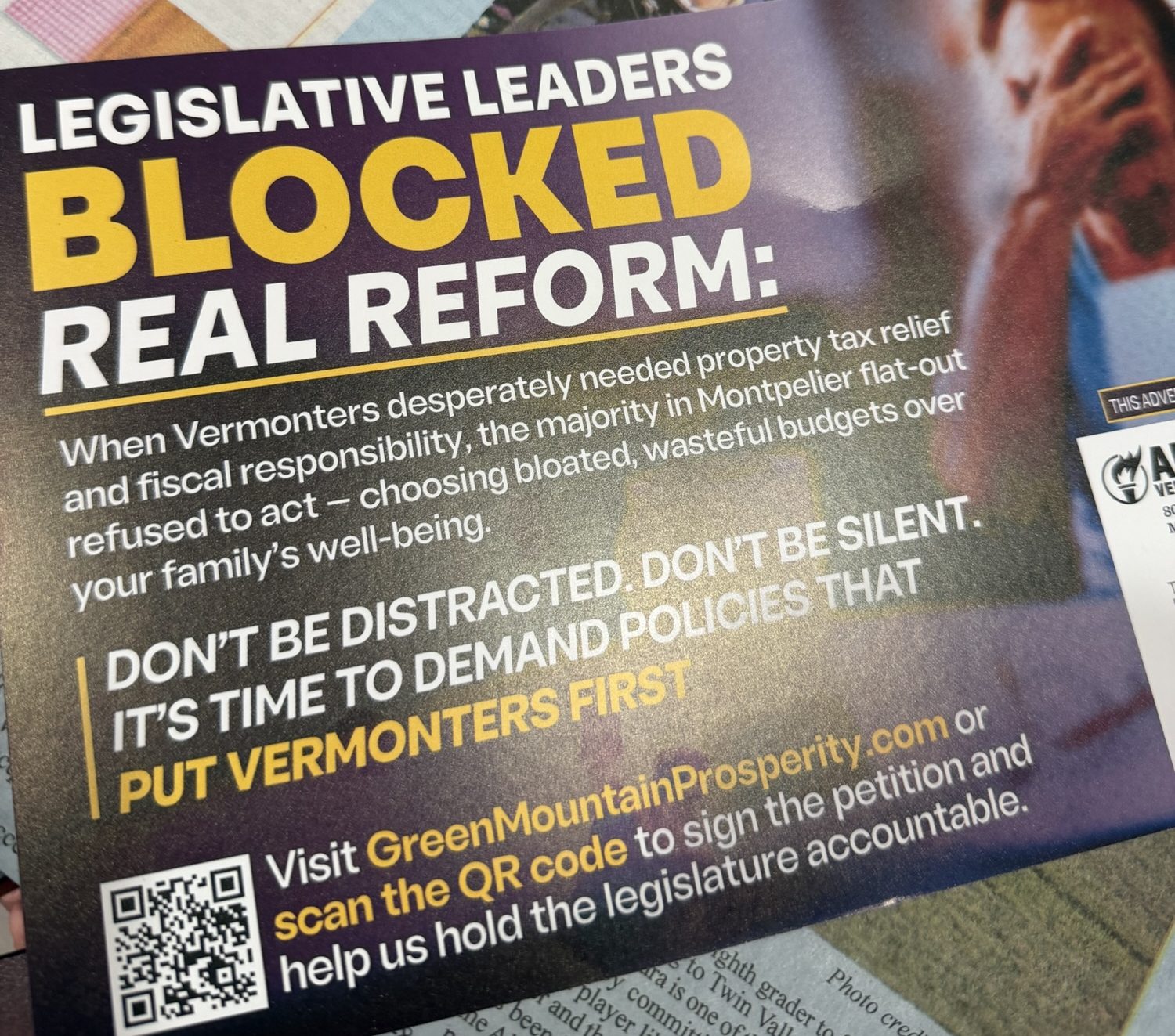
Many of you have seen these vague and distressing postcards landing in our mailboxes this fall. These mailers are not coming from Vermonters. They are being sent by a national political organization with fossil fuel ties, and the person running their so called Vermont arm does not even live in this state.
Vermont’s lobbying law (2 V.S.A. 264c) normally requires anyone paid to influence state government to register with the Secretary of State and report how much they spend on ads, mailers, or other outreach. But there is a major loophole. These reports are only required for ads issued before the Legislature’s adjournment in May. From adjournment through January, groups can spend unlimited money to shape public opinion without any reporting at all.
Campaign finance rules do not apply because these mailers do not say “vote for” or “vote against” anyone. They are designed to influence Vermonters without triggering disclosure.
I am introducing legislation this year so disclosure applies year round. Vermonters deserve to know who is trying to influence them and how much money they are spending.
This is a simple fix and long overdue.
Act 250 and Tier 3 and Tier 2 Updates
The Land Use Review Board has sent out a new update on Act 181’s Tier 3 work. Hundreds of Vermonters and many town officials have already engaged, and the Board is now revising the draft maps and the new Road Rule based on that feedback.
Rural Caucus members, including myself, have drafted legislation that would require:
- Clear mailed notice to every affected landowner
- A fair and predictable process for town
- Guardrails against sudden valuation impacts
We are seeking additional sponsors now. I have also raised transparency concerns with our Regional Planning Commissions as the Future Land Use Maps are developed. I appreciate VAPDA’s invitation to discuss this directly with their leadership.
All materials and contacts are posted at act250.vermont.gov. Public comments are open through the end of the year.
Information Online from the LURB:
- Tier 3 Rulemaking and Report | Act 250
- Road Construction Jurisdiction | Act 250 (aka the Road Rule)
Wondering what this is all about…information from the LURB:
What is Act 250?
Enacted in 1970, Act 250 aims to balance environmental protection with sustainable development. It regulates large development and subdivision projects based on environmental, economic, and public welfare criteria. The law helps maintain Vermont’s historic settlement pattern of compact villages and urban centers, separated by rural countryside, while allowing for responsible growth. Act 250 plays a crucial role in fostering distinctive communities and preserving Vermont’s unique sense of place.
What are Tier 3 areas?
Historically, Act 250 jurisdiction has been based on the size of the development or subdivision, with a focus on larger projects. Act 181 of 2024 implements location-based jurisdiction reform by identifying three different areas. Tier 1 areas are planned for growth in and around village and downtown centers, where Act 250 jurisdiction would be reduced or eliminated entirely in favor of municipal-level permitting and other State permitting (e.g., ANR, Division of Fire Safety, etc.). Tier 3 areas are critical natural resources, where Act 250 jurisdiction would be increased to cover more types of development than today. Tier 2 areas are the rest of the state, where Act 250 jurisdiction would remain largely as we know it today, but with additional jurisdiction for projects building more than 800 feet of new roads.
Act 181 tasks the Land Use Review Board (LURB) with rulemaking to identify what critical natural resources will be included in the Tier 3 definition, and when Act 250 jurisdiction will be triggered for development in Tier 3 areas. The Legislature outlined certain types of resources that must be considered, but left the final decision to the LURB rulemaking process. That’s where we need help from stakeholders, experts, and the public! It’s a policy discussion and a mapping exercise all wrapped up in a rulemaking process.
Dover: Saturday, December 6, 11 AM–12 PM | Dover Free Library
Wardsboro: Thursday, December 18, 6–7 PM | Wardsboro Library
From January to May, regularly scheduled in person office hours will only take place on the 1st Saturday in Dover. I am in Montpelier from Monday evening to Friday evening when the legislature is in session.
If you need help with state services, please reach out. I do not have staff and I work year-round, so if you do not hear back in a day or two, please follow up or send a text. If you find my work useful and are able to support it, you can do that here.
Thank you for staying engaged and looking out for one another. That is how Vermont gets through hard times and solves problems.
Rep. Laura Sibilia
Windham-2 District (Dover, Jamaica, Somerset, Stratton, Wardsboro)
Email: lsibilia@leg.state.vt.us
Phone: (802) 384-0233
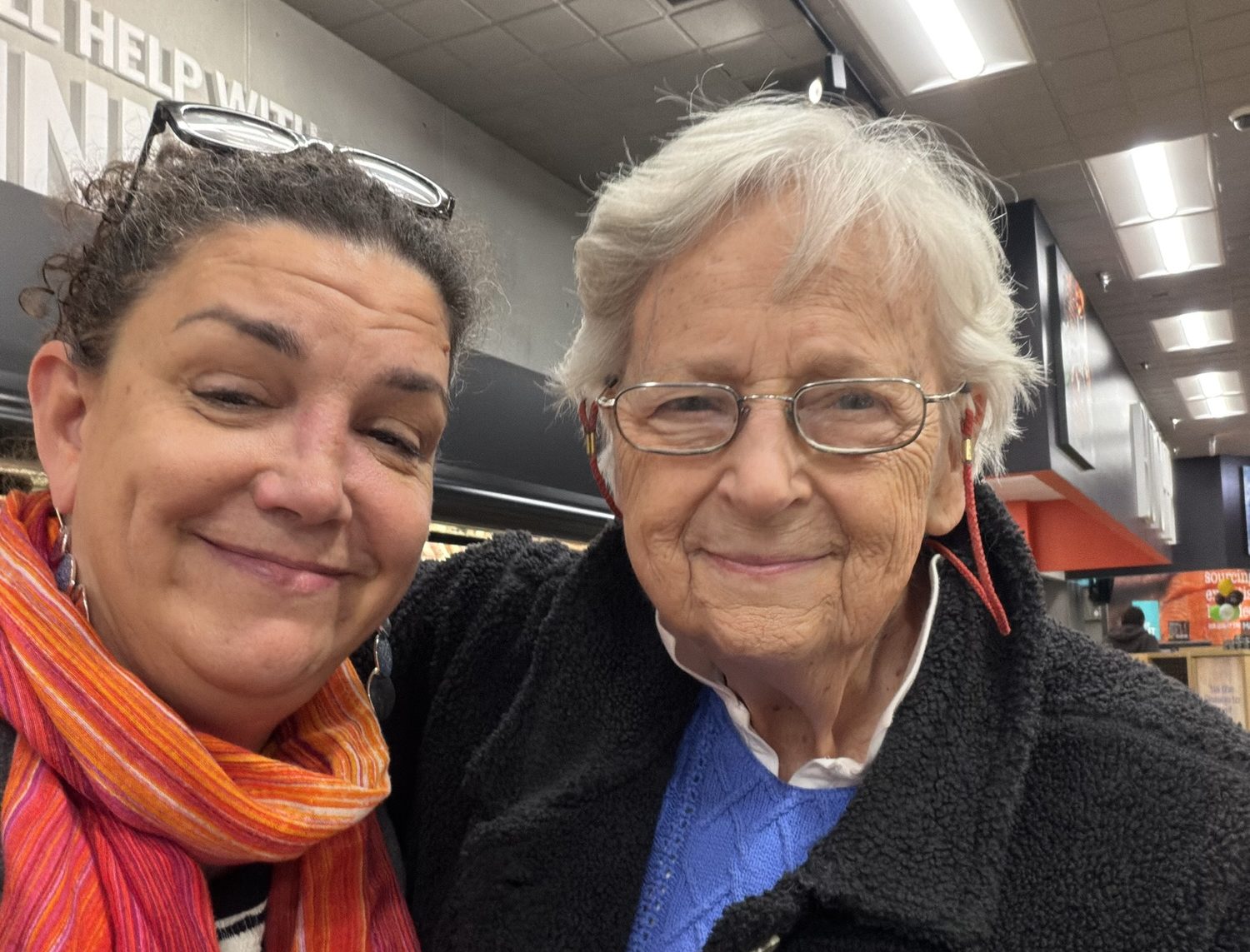
Met my friend and mentor Ann Manwaring pre-Thanksgiving in the turkey aisle:
Discover more from Vermont State Representative Laura Sibilia
Subscribe to get the latest posts sent to your email.
 Vermont State Representative Laura Sibilia