Dear friends and neighbors,
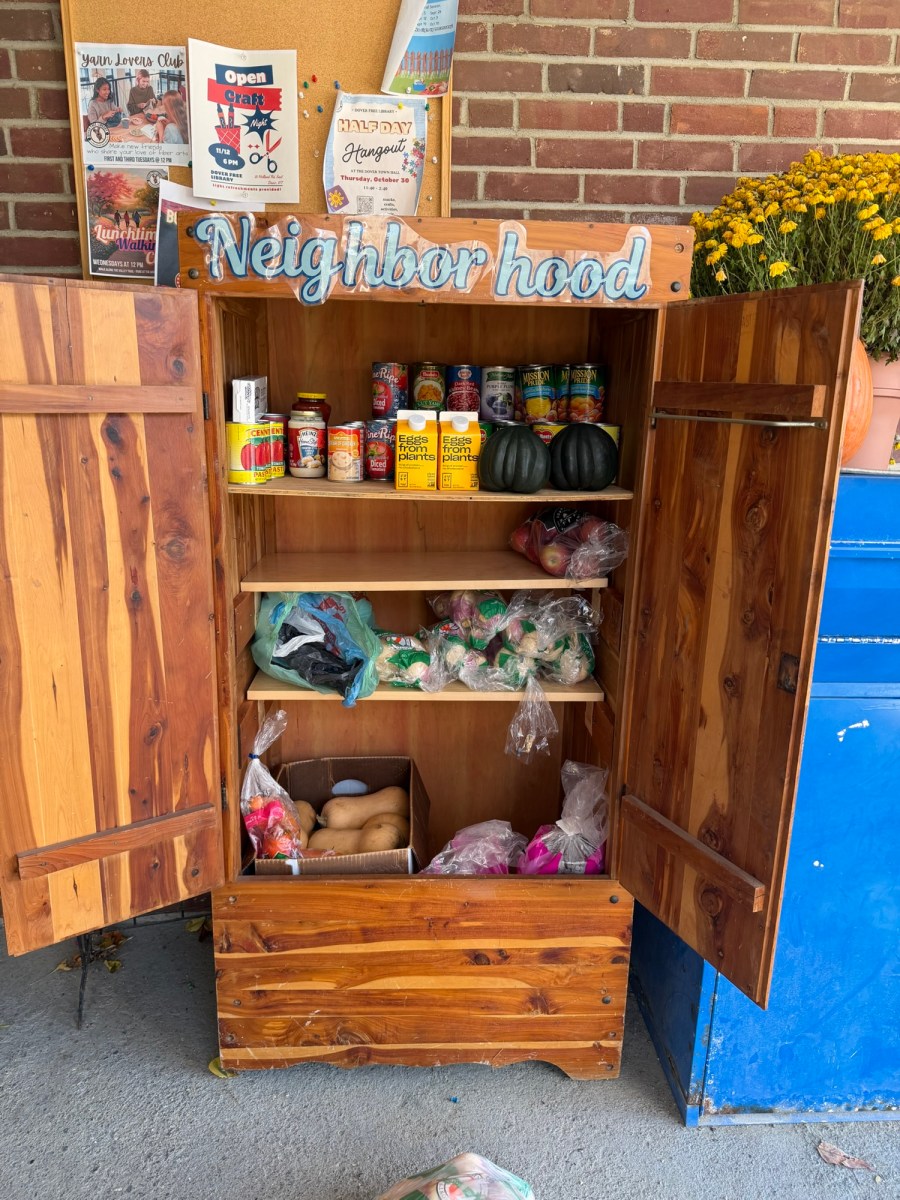
I want to start close to home. When things feel uncertain at the national level, Vermont communities continue to do what we always do. We take care of one another. The new community pantry at the Dover Free Library is an example of that spirit in action. Anyone who needs food is welcome to take what they need, and neighbors who are able can quietly contribute unexpired items. Thank you to our librarian and the local residents who made it happen. This is not a program handed down from above. It is neighbors deciding to look out for neighbors.
I know many families are watching the federal shutdown with understandable concern. For households relying on 3SquaresVT and heating assistance, as my own family did when I was a child, this is not a partisan political story. It is food, fuel, and daily stability. Vermont has approved state funding to keep benefits going through the first fifteen days of November if federal dollars do not arrive on time. There may be a short delay in processing as the system updates, but benefits will be provided. I will share reliable information as we get it.
Here in Vermont, we also have significant work ahead in the 2026 Legislative Session that we are planning for. The Legislature will soon take up decisions about our public education system and the most substantial land use changes in more than fifty years. The conversations that are coming will affect where housing can be built, how rural towns grow, and where our students learn. Vermonters deserve to know what is happening to their property and grand lists and to be heard before decisions are made. That is basic respect and how we do things in this state.
Below are updates in three areas: local community support, state decisions on education and land use, and federal benefit and enrollment changes.
Thank you for staying engaged and for continuing to look out for one another. Strong communities and steady civic participation are Vermont’s tradition, and that can carry us through this moment as well.
Education: Local impacts of Two Proposals
Vermont is moving toward major decisions about how we organize and govern public education. This work is happening in the School District Redistricting Task Force, which was created by Act 73 and will send recommendations to the Legislature for consideration in 2026. These decisions will shape how our communities educate young people and how small towns like ours participate in a statewide system.
The Task Force is currently reviewing competing proposals. two very different proposals are on the table. One would move Vermont toward regional public high schools everywhere. The other keeps the current school-choice towns intact and focuses instead on regional cooperation for services. For our towns, the impacts are not the same. Jamaica already attends Leland & Gray, so for them the change would mostly be about governance, not where students go to school. Wardsboro and Dover are high school-choice towns today. Under a statewide regional public high school model, those students would likely be assigned to a regional public high school instead. Under the choice-preserving plan, families would continue to have a choice. Stratton is also a choice town and would likely lose that option under a public-only model. Somerset, because of its size and geography, needs flexibility either way, but the choice-preserving approach keeps that flexibility. In short: Jamaica’s future is mostly about structure, while Wardsboro, Dover, Stratton, and Somerset would see the greatest change based on whether Vermont moves to assigned public regional high schools or continues to allow publicly funded private school tuition. Learn more from these documents at the last Redistricting Committee Meeting:
Regional Comprehensive Public High School Model (Badams)
- Draft Discussion of Ensuring Access to Comprehensive High Schools in Vermont – Rep. Holcombe and Jay Badams
- Envisioning a future Vermont Public Education System built around Regional Comprehensive High Schools – Jay Badams and Rep. Holcombe
Choice-Preserving / CTE-Region Governance Model (Beck/Wolk)
- CTE Modified Map Template – Senator Beck and Dave Wolk
- Districts based on Modified CTE Regions – Senator Beck and Dave Wolk
- Modified Career and Technical Education Region based District Boundaries – Senator Beck and Dave Wolk
Strategic Merger & Cooperative Services Framework (Holcombe concept)
- Memo to Task Force Members – Rep. Holcombe and Jennifer Bozojorns
- Regional Cooperative Education Services Model, Part 2 – Rep. Holcombe and Jennifer Bozojorns
- Regional Cooperative Education Services Model, Part 2, Presentation – Rep. Holcombe and Jennifer Bozojorns
Video explainer from House Speaker Jill Krowinski’s Office:
Housing and Act 250
Vermont’s housing shortage is affecting families here in our towns. We see teachers who want to live near their classrooms and cannot, nurses driving long distances to work, and young people who would like to stay but cannot find an affordable place to build a life.
At the same time, the state is implementing Act 181. This was a major, long-overdue update to our land use system. Act 181 sets new development tiers, with a clear goal: more housing in designated village centers and growth areas, and stronger protection for sensitive and remote lands. It also directs the Land Use Review Board to map those tiers and develop rules that determine where Act 250 applies going forward. This work will shape housing, land use, and community tax bases for decades to come.
Right now there are three conversations happening or beginning to happen.
The Administration
The Governor has issued an Executive Order to speed up permitting in designated areas. His team argues that long review timelines have slowed needed housing.
Read their perspective here.
Vermont Natural Resources Council and conservation interests
VNRC and other environmental organizations question the legality of the Executive Order and warn that moving too fast could weaken public input and environmental protections. They believe Vermont can build the housing we need while keeping strong environmental safeguards.
VNRC’s perspective here.
Rural Caucus leadership
Members of the Rural Caucus from across parties support accelerating housing now in places that communities have already planned for it. We also believe rural Vermonters deserve direct notice before Tier 3 rules and new road access standards take effect. People should not learn after the fact that rules have changed on their land.
What we are calling the Rural Notice and Fair Implementation Act is straightforward. It does not change Act 181. It does not weaken Act 250. It does not create new exemptions. It ensures that landowners receive direct notice and that the public can participate before location-based rules take effect. For rural Vermont, this is also an environmental justice issue. Communities that already carry the largest share of land stewardship should not be expected to accept new restrictions on their property without notice.
There are partisan political interests already working to discourage members of the legislature from supporting even this narrow and reasonable proposal. I do not believe Vermonters want land use decisions made that way. Good policy invites debate, participation, and accountability.
At the same time, statutorily required work on moving Act 181 forward locally is under way. Regional planning commissions are developing draft regional land use and Tier 3 maps. In our region, the Windham Regional Commission is grounding this work in the maps from each town’s adopted town plan. This is another key point of engagement. I encourage residents and local officials to ask questions and make sure we understand how these decisions may affect individual properties, local tax bases, and housing opportunities. Local knowledge and community input need to stay central in this process. Learn more about the Windham Regional Commission process here.
Bottom line for me: Vermont needs more homes, strong environmental protections and transparency and direct notice to the people most affected.
We can do all of this. If you are reading this outside of the Windham-2 District, I encourage you to reach out to your legislators and ask them if they support noticing Vermonters whose ability to use their land is changing.
Medicare & Medicaid Updates
Vermont seniors will see changes to Medicare Advantage plans next year. Most Medicare Advantage (Part C) plans in Vermont will end on December 31, 2025, and affected Vermonters will return to Original Medicare unless they choose a new plan. Humana will continue to offer Part C plans in several southern counties, including Windham County.
If you now have a Medicare Advantage plan, you will need a separate Part D prescription plan for 2026. Open enrollment runs through December 7, 2025, with an extra Special Enrollment Period through February 28, 2026.
Expanded Medicare Savings Program income limits beginning January 1, 2026 will help more Vermonters with premiums and prescription costs.
For help reviewing your coverage or understanding your options, the Vermont Health Care Advocate is available by phone.
More information:
- Medicare plan updates: https://www.vtlawhelp.org/2026-medicare-advantage-plans
- Health Care Advocate: https://www.vtlawhelp.org/health or 1-800-917-7787
Safe Medication Disposal
National Prescription Drug Take Back Day was October 25, but Vermonters can dispose of unused or expired medications year-round.
Find drop-off sites and safe disposal information at MyOldMeds.com.
Community Food Shelves & Help Resources
Jamaica–Wardsboro Community Food Pantry
Second & last Wednesday monthly | 6:30–8:00 PM | Vestry Building, Wardsboro
(802) 874-7234
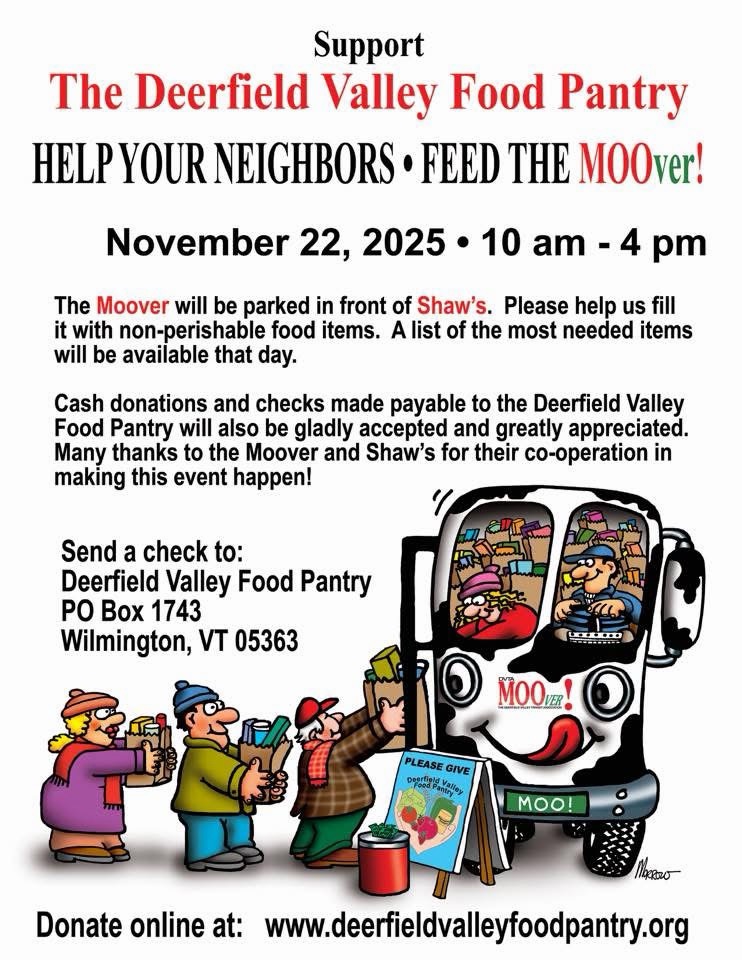
Deerfield Valley Food Pantry — Wilmington
Third Saturday monthly (9 AM–11 AM) & preceding Thursday (1-3 PM)
(802) 464-0148
SEVCA Crisis Fuel / Utilities / Shelter: (800) 464-9951
3SquaresVT: https://dcf.vermont.gov/benefits/3SquaresVT
LIHEAP: https://dcf.vermont.gov/benefits/fuel
Thank you to all of the volunteers who make sure no neighbor goes without help when they need it.
Office Hours
Wardsboro: Thursday, November 20 — 6–7 PM | Wardsboro Library
Dover: Saturday December 6 — 11 AM–12 PM | Dover Free Library
Please stop by.
I spent a long day in my gardens today, getting them ready for the next seasons and planing seeds that will bring joy to my family, friends and guests and next spring. It reminded me that good things grow when we prepare with care, tend to what matters, and stay patient and present through the work. That is true in our gardens and true in our communities and State House.
Thank you for staying engaged. Please keep sharing what you are seeing and experiencing — it shapes my efforts every day. I am proud to serve our district and grateful to offer help where I can.
If you have questions or need support navigating state services, please always reach out. Becasue I have no staff and a year round job, if you don’t hear back in a day or two – please reach out again or send me a text.
— Rep. Laura Sibilia
Windham-2 District (Dover, Jamaica, Somerset, Stratton, Wardsboro)
Email: lsibilia@leg.state.vt.us
Phone: (802) 384-0233
Discover more from Vermont State Representative Laura Sibilia
Subscribe to get the latest posts sent to your email.
 Vermont State Representative Laura Sibilia
Hello Laura, Thank you for including the Deerfield Valley Food Pantry in your list of local food resources. While the days we are open for distribution are correct, the times aren’t. On the Thursday preceding the 3rd Saturday we’re open 1-3 PM, and on the 3rd Saturday we’re open 9-11 AM. Would you please issue a public correction of our hours? Thank you! Deb Boyd, Board PresidentDeerfield Valley Food Pantry, Inc