
Friends and Neighbors,
This summer has been full of significant developments in our district, across Vermont, and nationally. In this newsletter I will share some highlights of what is happening now and what it may mean for us.
I will continue to regularly hold office hours on the 3rd Thursday of the month at the Wardsboro Library (6–7 pm) and the 1st Saturday at the Dover Free Library (11–noon). I apologize for the scheduling conflicts in Dover over July and August – we will be back on schedule in September for the Dover Free Library on the 6th. Please come by to share your concerns, or reach out anytime at lsibilia@leg.state.vt.us
or (802) 384-0233.
State Budget & Federal Impacts
On July 31st, the Emergency Board and Joint Fiscal Committee met to review the state’s consensus revenue forecast. The good news: Vermont’s revenues are stable, with a 2.5% increase projected for FY27 and our reserves are strong at about $300 million.
The challenge: projected growth in revenues is not enough to cover state employee contracts, pension obligations, and other fixed costs. Federal budget cuts and policy shifts, particularly in healthcare and nutrition programs, add more uncertainty. While we don’t expect a special session this fall, the Legislature will face hard choices next year as we build the FY27 budget.
You can read the economist’s full July 2025 forecast here.
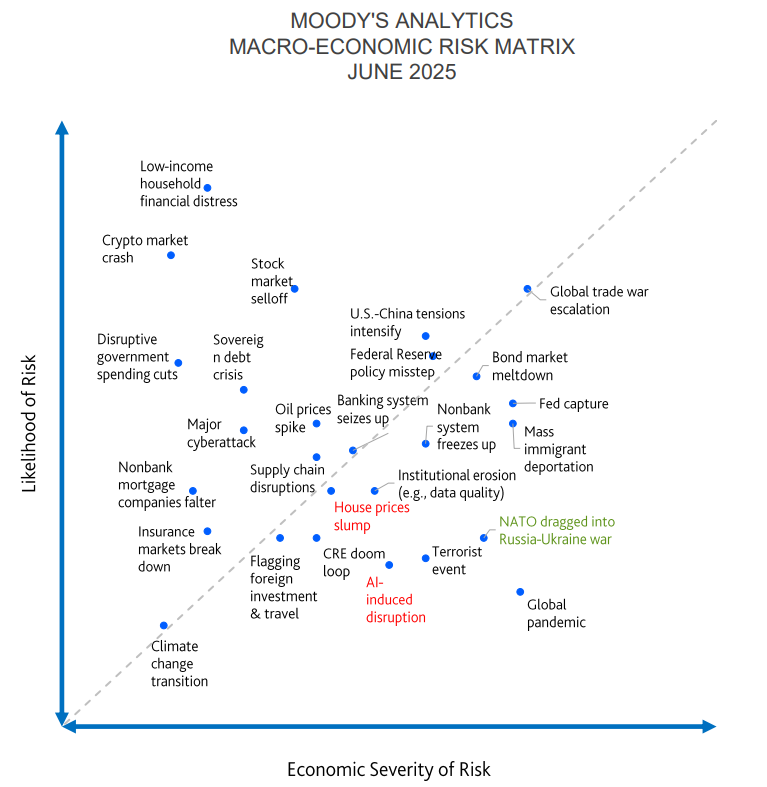
The chart plots different risks by: How likely they are to happen (up the side), and How big the economic impact would be (across the bottom). Some risks like household financial distress, oil price spikes, or a stock market selloff are more likely and could pinch Vermonters directly at the gas pump, in retirement accounts, or in household budgets. Others—like a global trade war or NATO being dragged into the Russia–Ukraine war—are less likely, but could have very large economic consequences if they occurred.
Personal income tax is the biggest driver of Vermont’s revenues, so job growth, wages, and inflation will continue to shape what’s possible in the next state budget.
Healthcare: Some Slight Relief
By Olivia Gieger
The Department of Financial Regulation issued an order that sets guardrails around any agreements the state’s two largest health insurers enter into with half of Vermont hospitals.
In my last letter, I flagged looming rate increases and federal changes. Since then, the Green Mountain Care Board has issued its decisions on 2026 health insurance rates, cutting requested increases by more than half:
- Blue Cross (individual): 23.5% requested → 9.6% approved
- Blue Cross (small group): 13.5% requested → 4.4% approved
- MVP (individual): 6.2% requested → 1.3% approved
- MVP (small group): 7.5% requested → 2.5% approved
This is somewhat of a relief for families and small businesses, but these lower then expected rate increases follow years of significant increases.
At the same time, federal law (H.R. 2 and the OBBB) is restructuring Medicaid and Medicare. New documentation rules could cause Vermonters to lose coverage if they can’t keep up with paperwork. Refugee adults, including many lawful permanent residents and workers, are being cut out of Medicaid entirely. And our rural hospitals will face increased financial pressure.
Locally, Southwestern Vermont Medical Center has announced the closure of urgent care service at Mount Snow.
Education Governance Reform
The School District Redistricting Task Force created by Act 73 (H.454) has begun its work. You can view minutes and meeting materials.
Nothing is final. The Legislature must still review and vote on any proposed maps before they take effect. Between now and winter, the Task Force will be sketching possible district configurations.
New Tuition Criteria (effective July 1, 2025):
To receive public tuition, an independent, private or religious school must:
- Be located in Vermont.
- Be located in a supervisory district (or union) that does not operate a public school for some grades as of July 1, 2024.
- Have at least 25% of enrollment made up of publicly funded students in 2023-24.
- Comply with Act 73 minimum class size requirements.
- Have been previously approved to receive publicly funded tuition.
These new rules reduce the number of independent, public or religious schools that qualify. The intent is to focus tuition support on schools without nearby public alternatives and that already have a track record of serving publicly funded students.
Grandfathering Clause Students already attending an independent, public or religious school with public tuition in 2024-25, or accepted for enrollment for 2025-26 before July 1, 2025, will continue receiving public tuition until graduation from that school, even if that school is no longer eligible under the new criteria.
List of Eligible Independent Schools as of now:
- Okemo Mountain School
- Thaddeus Stevens School
- Maple Street School
- Killington Mountain School
- Burke Mountain Academy
- Thetford Academy
- Stratton Mountain School
- Expeditionary School of Black River
- Southshire Community School
- Riverside School
- Burr & Burton Academy
- St. Johnsbury Academy
- Mountain School at Winhall
- Long Trail School
- East Burke School
- Sharon Academy
- Lyndon Institute
- Village School of North Bennington
I know many are worried about property taxes, choice and losing local control. This will be a long road, with many potential off-ramps. I’ll continue sharing updates as proposals take shape.
Climate, Land Use & Local Resilience
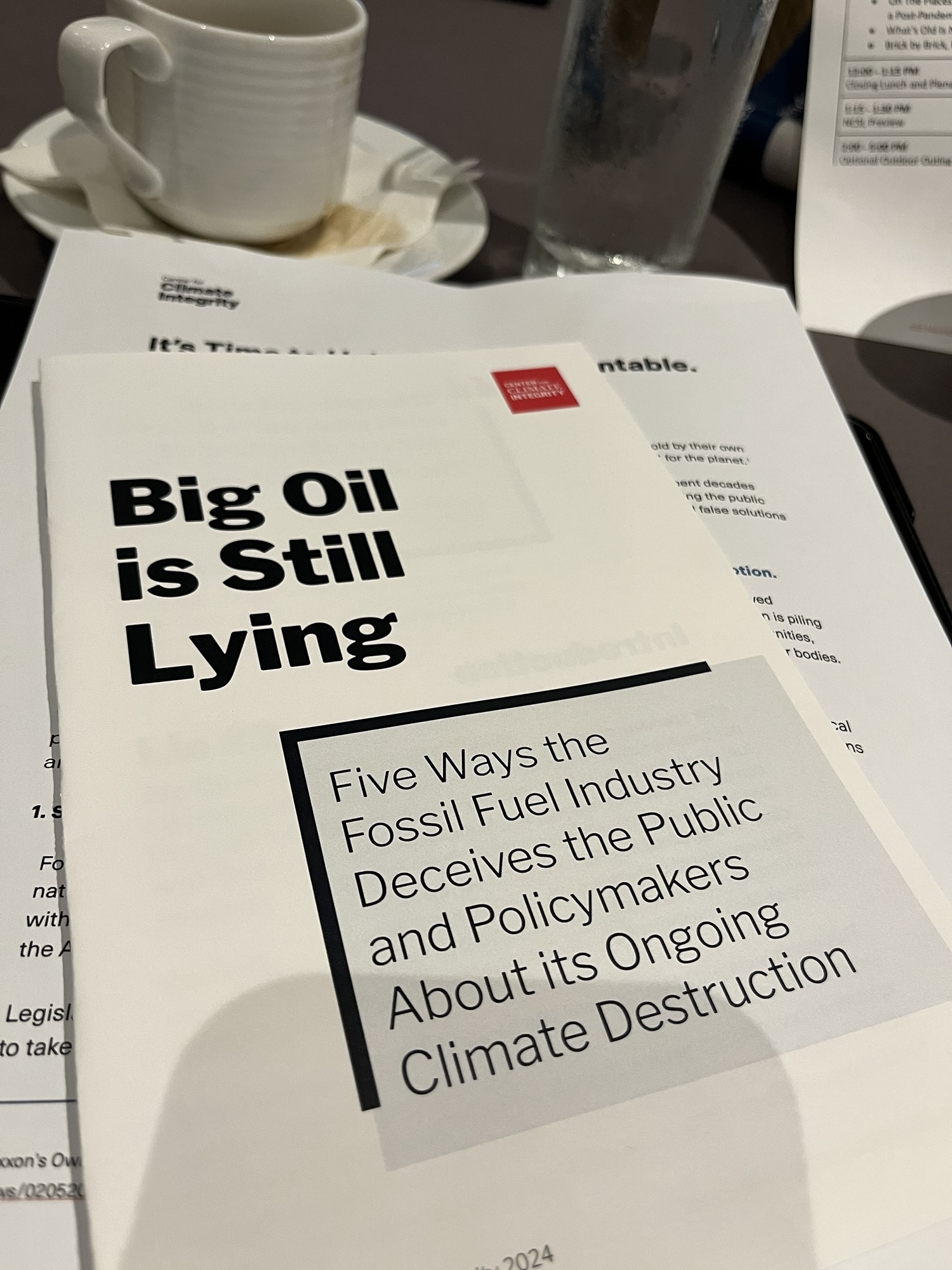
I want to pause here and say plainly: I am deeply worried about the decisions being made federally to incentivize and increase fossil fuel usage at the very moment science tells us we should be cutting back. If we fail to plan and act carefully, working families and rural communities like ours will be left holding the bill.
Recently, postcards funded by national fossil fuel interests and Americans For Prosperity have circulated in Vermont with misleading claims about our state’s climate work. Similar campaigns have been used before, including during debate on the Clean Heat Standard, when dire predictions did not come true.
Vermonters deserve facts, clear answers to their questions, and honest debate about climate policy. If you receive one of these postcards or other communications, please reach out. I want to make sure you have the information you need about what the Legislature is actually doing to help Vermonters adapt to a changing climate and manage the energy transition that is underway.
Climate Superfund Act
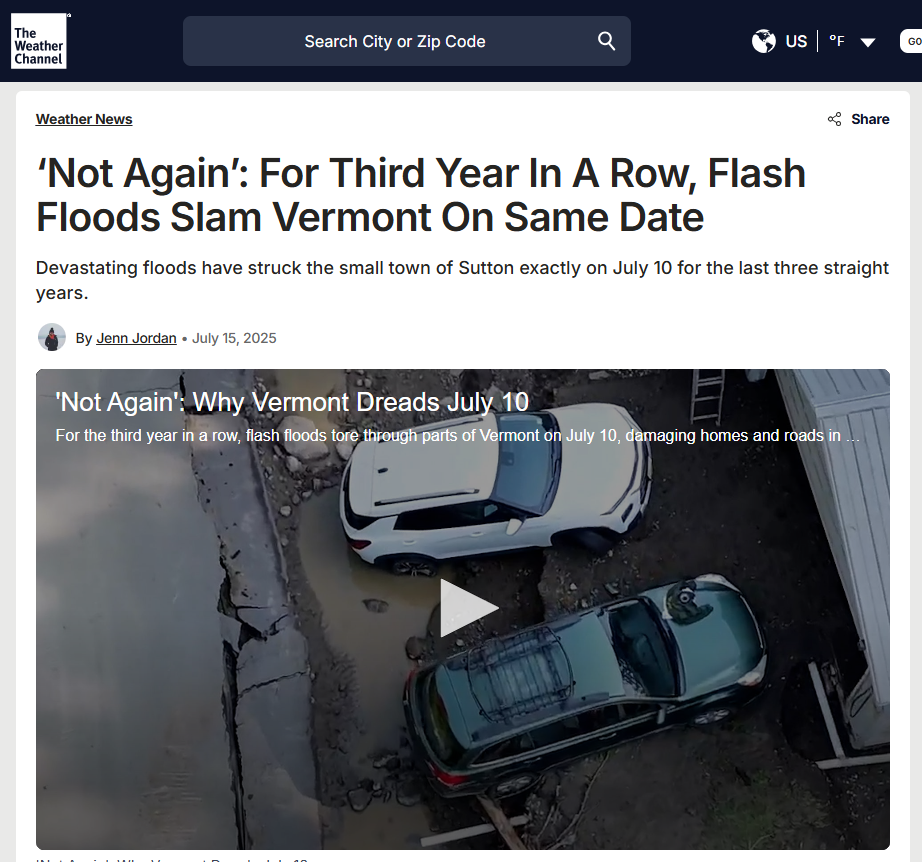
Vermont passed a law requiring big oil companies to pay a share of the damage caused by their past pollution. Fossil fuel companies and 24 states have sued. Vermont and partner nonprofits are defending the law in federal court. This is not about regulating future emissions, it’s about holding entitles that knew their products were causing harm accountable for the damage already done.
- Trump takes Vermont’s Climate Superfund law to court (VTDigger)
- State and nonprofits ask federal courts to dismiss lawsuits against Climate Superfund Act (VTDigger)
River Corridor Plan
The Department of Environmental Conservation has released a new plan for the Upper West River with over 60 projects to reduce flooding, improve water quality, and protect property values. An informational meeting will be held Wednesday, Sept. 3 at 6:30 pm at the Londonderry Town Office. Please consider attending, particularly residents and businesses from our district who live and operate in Jamaica or Stratton.
Act 181 Land Use Reform
Perhaps the most under-the-radar but consequential work right now is the mapping of Tier 1A and Tier 3 areas under Act 181. These maps will determine which lands are open for development and which will be subject to stronger conservation restrictions.
I’m worried that too few Vermonters are paying attention to this process, and yet it could directly affect future property values and how you can use your land. Once these maps are adopted, they will guide permitting and development decisions for years to come. Draft rules for Tier 3 have been published and are available on the Land Use Review Board Website. As towns are working on their updated Town Plans, they will be required to identify areas that will be exempt from Act 250, remain the same under Act 250, and those areas (Tier 3) which will come under greater scrutiny in regards to Act 250.
I expect this to be a major issue in the coming legislative session and one that the Rural Caucus has heavily engaged in during previous legislative sessions. As important as it is to help Vermonters adapt to changing weather patterns, the Legislature needs to also act simultaneously and with intention to understand and address the real impacts this law will have on general land use, personal property and municipal grand lists.
Other climate news I’m reading:
- Todd Heyman: Vermont planning commissions should not legislate or litigate (VTDigger)
- Vermont Supreme Court greenlights Hartland farm store project (Valley News)
- Climate Forward: Your Communities, Your Solutions (NYT)
- State concludes Vermont is failing to meet its carbon reduction targets (VTDigger)
- Trump’s EPA wants to eliminate regulation for greenhouse gases (NPR)
Other Legislative Studies & Committees
Here are links to a few other ongoing efforts:
- CHIP Guidelines: Work continues to make the new community housing and infrastructure program accessible for all towns.
- Opioid Settlement Advisory Committee: Guiding how opioid settlement funds are spent.
- EMS Advisory Committee: Updating the state’s five-year emergency medical services plan.
Social Media in Schools
This year, the Legislature passed a new Phone and Social Media Free Schools law. By July 2026, all public schools must require phones to be stored “bell to bell.” Effective immediately, schools can no longer communicate directly with students via social media. Parents should expect schools to use other communication methods.
Vermont and the Federal Government
Over the summer, the relationship between Vermont and the federal government has been stress tested on several fronts.
National Guard Requests
Governor Scott has twice declined requests from the Trump administration to deploy Vermont National Guard troops. The first was a request to send a dozen Guard members to St. Albans to perform clerical work for federal immigration enforcement. The second was a request to send several dozen troops to Washington, D.C., to help enforce the President’s takeover of that city’s police force. In both cases, the Governor said these missions did not meet the purpose of the Guard and could be handled by federal staff. His refusals drew national attention, including support from retired military leaders who warned against blurring the lines between civilian law enforcement and military responsibilities.
SNAP Data Handover
At the same time, the administration complied with a very different federal request. Vermont turned over the personal data of more than 64,000 Vermonters who receive SNAP food benefits. This included names, dates of birth, social security numbers, and addresses going back five years.
I am concerned both with ensuring we follow the law and also with the consequences of handing over Vermonters’ personal data. The recent actions by the federal government have made clear that it is working to consolidate data profiles of Americans across programs and agencies. Turning over this information helps to build that system, and it increases concerns about privacy and trust. The Governor’s team has said refusal could have led to financial penalties, but other states are challenging the order in court. In Vermont, food security advocates have warned that this decision undermines confidence in state systems that are supposed to protect Vermonters while serving their needs.
On August 5th, I reached out directly to the Scott administration with questions on behalf of multiple constituents in our district, including whether Vermont has shared this kind of data before, whether Vermonters are notified when their information is shared, and confirmation that immigration status data was not included. The Agency acknowledged my request and said they were preparing a response. To date I have not received further information. I intend to continue pressing to identify and close the gaps where Vermonters’ personal information may be shared or sold by the state of Vermont without their knowledge or consent.
Closing Note
Recent New York Times reporting highlights that more Americans are rejecting the two major parties. Gallup data shows this is not new. Independent voters have been rising for more than two decades. What has changed is the balance: Democrats have slipped from the mid-30s to the high 20s, Republicans have stayed steadier in the 20s, and independents are now the largest group of voters.
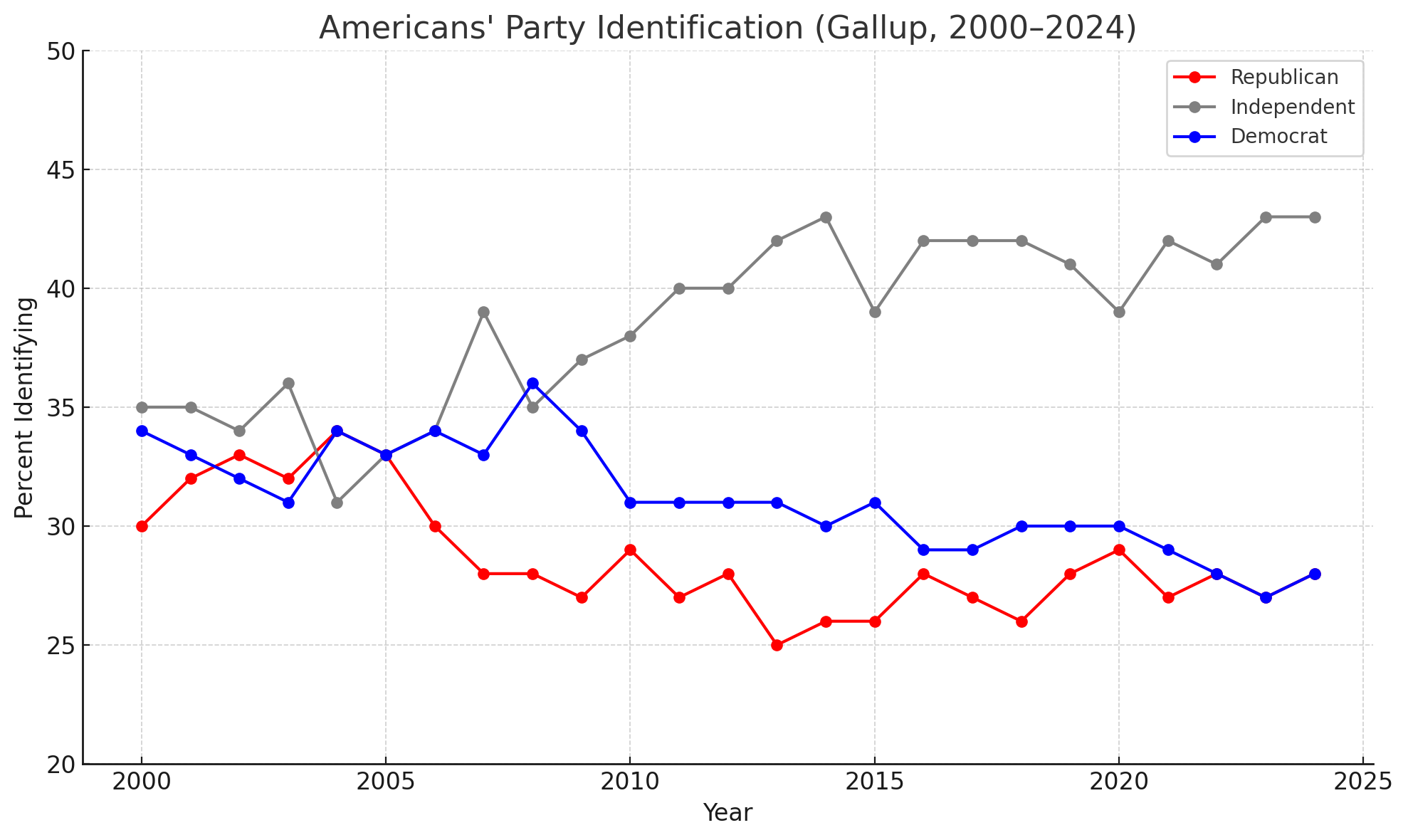
In bipartisan political conversations this summer, I have heard a lot of “both sides” talk, as if every voter falls neatly into one party’s camp or the other. But nearly half of Americans no longer associate themselves with either party. Vermonters repeatedly tell me they are both alarmed by Republicans nationally embracing authoritarian actions and frustrated that Democrats seem unable to stop it. Most of all, they tell me they want government to leave them alone whenever possible, and to help with the problems they cannot solve on their own: health care, infrastructure, crime, education, climate change, and protecting human rights.
Parties are not going away, and they have value in bringing people together around shared ideas. But they are only one slice of the electorate. The fastest-growing slice is made up of people who do not identify with either party. That means governing requires more care, listening not only to your base but also to the many voters who want progress without constant partisan fights.
A book many have been reading this summer, Abundance by Ezra Klein and Derek Thompson, makes this point in a different way. It argues that our biggest problem is not a shortage of ideas or resources, but rules, gridlock, and politics that make it too hard to build what we need. That feels familiar even here in Vermont where we still have a tradition of bipartisan action. Whether it is housing, health care, or clean energy, people are not asking for endless partisan battles. They are asking for progress.

I’ve been reflecting on that and think it’s an important reminder for all Vermont lawmakers and elected officials. The work of government should not be about helping one side come out on top, but about removing barriers and solving the real problems people face every day.
Please stay in touch,
Laura
Rep. Laura Sibilia
Dover, Jamaica, Somerset, Stratton & Wardsboro
lsibilia@leg.state.vt.us | (802) 384-0233
Office hours: Wardsboro (3rd Thursday, 6–7 pm) | Dover (1st Saturday, 11–noon)
P.S. Looking for something fun and meaningful to do with kids this holiday weekend?
Check out the Good Citizen Challenge. It’s a summer project for K-8 students to explore their communities, pitch in, and practice civic skills. Submit one activity by Labor Day, September 1 for a chance to win prizes — including a trip to Washington, D.C. and a Vermont State Parks pass.
Discover more from Vermont State Representative Laura Sibilia
Subscribe to get the latest posts sent to your email.
 Vermont State Representative Laura Sibilia