
Friends and Neighbors,
We left the State House just after midnight and will return in two weeks to finish our work. Despite progress on many issues, the Legislature was unable to adjourn as expected due to continued disagreement on an education reform bill. Below are updates on where key efforts stand—including education, housing, data privacy, tax relief, and rural tools.

Education Reform: Where We Are and What Comes Next
Education policy is deeply personal to Vermonters and their legislators in many different ways. It shapes our children’s futures and the strength of our communities. That also makes it incredibly difficult to reach consensus. Too often, disagreement leads to inaction. But our kids and communities deserve better.
I’m appreciative that Governor Scott had the courage to propose bold action this year, and though I don’t agree with every single aspect of the bill we passed, I’m proud of the transparent and detailed work the House has done so far this year to build on the governor’s proposal and create a legal path forward for consideration. Unfortunately, the Senate is so deeply conflicted that progress forward has stalled.
I’ve spent the last few weeks actively encouraging the administration, House and Senate leadership, and my colleagues involved in the negotiations to pull up out of the weeds. Right now, legislators and the governor are trying to solve too many complex issues all at once. I’ve urged we start where there is the most agreement: a public process to develop maps for larger, more sustainable governance districts, which relates to boards, not buildings.
If we can agree on that step, we’ll have made meaningful progress toward modernizing our system, ensuring high-quality education for all students, and improving long-term financial sustainability. And then we can take more steps.
This work is hard, but necessary. And our kids and communities are worth it.
Protecting Vermonters’ Data and Digital Rights
This session, I helped lead two efforts focused on data privacy and tech accountability:
- A letter opposing a broad federal AI moratorium, which could consolidate power in tech corporations and federal agencies without public oversight.
- A successful amendment requiring the Secretary of State’s office to disclose when it sells Vermonters’ personal data, an overdue step for transparency relate to Vermont government handling of Vermonter’s data. The Secretary of State’s office collaborated on the development of this amendment.
I appreciate Chair Kathleen James of Manchester’s support and leadership in moving both of those efforts forward, and Rep. Monique Priestley of Bradford’s for her overall leadership within the Vermont General Assembly in this realm. Monique brings national-level insight and deep Vermont values to the work of protecting Vermonters data and privacy.
We also passed the Age-Appropriate Design Code (S.69), which would require online platforms to prioritize children’s privacy and safety in how they design their products. The bill passed both chambers by wide margins, with Windham County Senator Wendy Harrison and Bennington County Senator Rob Plunkett leading that effort in the Senate. It now sits on the Governor’s desk.
At the same time, I remain alarmed by how little progress we’ve made in protecting Vermonters from unchecked tech influence. Nearly $1 million has been spent lobbying Vermont lawmakers this year by Big Tech, and the result has been delays and resistance to even basic consumer protections.
We’re not just up against lobbyists—we’re up against coordinated, anonymous pressure campaigns shielding who profits from our data. The DOGE operation, a data-mining program under the Trump Administration, should be a wake-up call.
I urge Vermonters to contact the Governor and our federal delegation. Tell them that protecting our privacy, our kids, and our democracy cannot wait.
Bipartisan Tax Relief Agreement Reached

Late last night, the House and Senate reached final agreement on S.51, a major tax relief package. It is expected to pass the Senate later this month and be signed by the Governor.
The bill includes:
- Expanded Child Tax Credit and Earned Income Tax Credit
- Increased exemptions for Social Security and CSRS benefits
- Full exemption for most military retirement and survivor benefits
- A new refundable tax credit for low-income veterans
This is a strong, bipartisan step forward for Vermonters.
Final Housing Package: New Tools, Ongoing Gaps for Rural Vermont
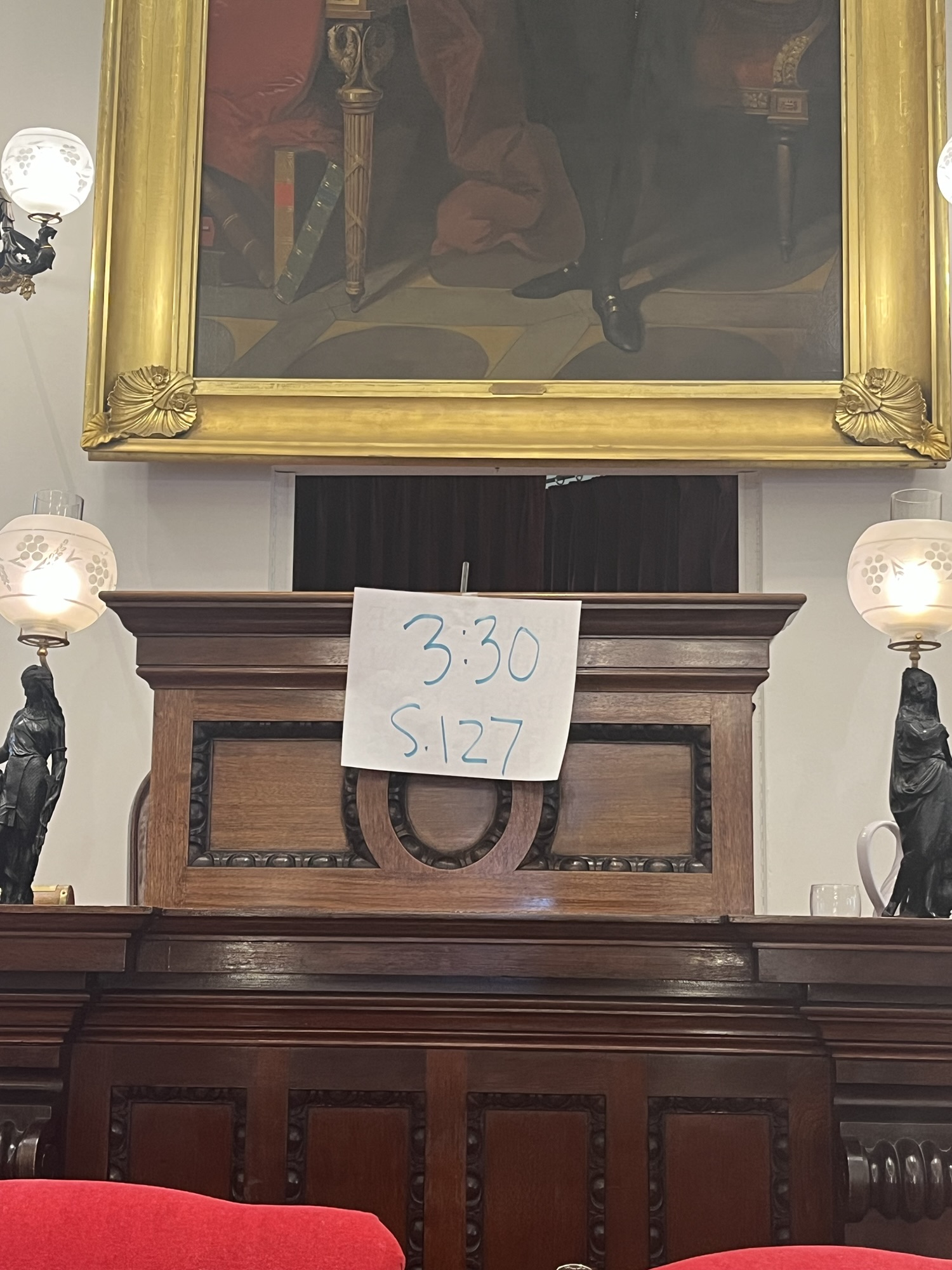
The House and Senate have finalized S.127, and I voted yes on the compromise because we need more housing, and we need tools to support building housing.
However, this bill was not designed with rural Vermont in mind. It’s the second year in a row we’ve had to fight for rural fixes (following Act 181 of 2024). While CHIP, the Community Housing Infrastructure Program, has been improved following significant push-back by members of the Rural Caucus, it still contains administrative hurdles and eligibility barriers that disadvantage smaller towns.
I’m committed to working next session on programs that are designed specifically for rural development, not adapted late in the process.
Read the final S.127 Committee of Conference Report (PDF)
Office of New Americans Study Committee (S.56)
S.56 proposes creating an Office of New Americans Study Committee. This group will examine barriers faced by immigrants and refugees—like access to housing, jobs, and services—and how a dedicated office could better support and coordinate across state government.
The report is due by September 2026, and reflects growing recognition of the important role New Americans play in Vermont’s economy and communities.
Motor Vehicle Policy Bill (S.123)
The House and Senate have reached final agreement on S.123, a comprehensive transportation bill.
Key highlights:
- Veterans: Free registration and EV fees; optional “Veteran” designation on IDs
- Affordability: Reduced or waived DMV fees for former foster youth, SSI/SSDI recipients
- Access: Maintains non-REAL ID options; allows gender marker self-attestation
- Public Safety: Volunteer placards; stronger odometer fraud penalties
- Licensing: Modernized test rules and instructor standards
- Tax Updates: Adjusted rules for trade-ins, refund timelines, and registration brackets
Read the full bill and fiscal note here:
https://legislature.vermont.gov/bill/status/2024/S.123
Upcoming Training’s on Land Use and Act 181

The Windham Regional Commission is providing two important remote training sessions that I encourage all municipal officials and Vermonters interested in land use and planning to attend.
These sessions are particularly important because Act 181 of 2024 directs the creation of a statewide map identifying whether every parcel in Vermont is subject to or exempt from Act 250 jurisdiction. The goal of Act 181 was to bring clarity and consistency to land use regulation. This process could also have implications for land development and property values, depending on how parcels are classified. While these meetings are aimed at municipal officials, they are open to the public and will likely offer useful information for anyone involved in municipal planning or land use decisions.
Basics of Land Use Planning
Tuesday, May 28 | 12:00 – 1:30 p.m. | Zoom
The Basics of Land Use Planning training provides an overview of the statutory authority for planning and zoning in Vermont, and best practices for meetings, public hearings, and the decision-making process. The training is geared towards Planning Commission, ZBA, and DRB members, and municipal staff. The training will be recorded and posted on WRC’s website.
Act 181 Workshop for Municipal Officials
Thursday, June 5 | 6:00 – 7:30 p.m. | Zoom
This workshop will cover the history of Act 181, new requirements for municipal and regional plans, changes to Act 250 jurisdiction and the State Designation Program, and WRC’s process for collaborating with municipalities and implementing these changes. The workshop will be recorded and posted on WRC’s website for viewing. WRC will begin work with its member towns to implement the Act 181 requirements in the fall of 2025.
Wetlands Mapping Update
Vermont is updating the Vermont Significant Wetlands Inventory (VSWI) using new data from the National Wetlands Inventory (NWI), as required by the Flood Safety Act (Act 121 of 2024). This update is designed to identify wetlands that may qualify for Class II protection, which could lead to changes in how these areas are regulated under the Vermont Wetland Rules.
Our region has not yet been mapped in this update, and this work is being completed in phases across the state. As new maps are finalized, some newly identified wetlands may be subject to regulation, particularly for property owners or developers planning construction, excavation, or other land use changes near potential wetland areas.
You can follow the mapping process and sign up to receive notifications as new maps are released and approved: Click here to follow the wetland mapping project and get updates
Protecting yourself when protesting, Know Your Rights: What to Do if You or a Loved One is Detained
 Federal Funds under the Trump Administration
This is a live webpage from the Joint Fiscal Office dedicated to tracking the impact of federal policy on states. The current presidential administration has issued executive orders freezing federal funds, discussed the elimination of federal programs, and has proposed significant changes to tax policy. Congressional budgetary actions could further impact states.
Recent Reports to the Legislature
Annual Worker Misclassification Report, in Accordance with Act 85 (2020) The January 2025 Annual Worker Misclassification Report, submitted by the Vermont Attorney General’s Office pursuant to Act 85 (2020), outlines the state’s ongoing efforts to address employer misclassification of workers to avoid compliance with workers’ compensation and unemployment insurance laws. Between Q4 2023 and Q3 2024, the Vermont Department of Labor (VDOL) opened 131 investigations and issued 35 citations for workers’ compensation violations, totaling $168,710 in assessments. In the same period, the VDOL conducted 61 audits and 306 investigations into unemployment insurance misclassification, uncovering 49 violations impacting 301 employees, and assessed over $70,000 in unpaid contributions, interest, and penalties. The AGO and VDOL did not pursue separate enforcement actions this year, reflecting more effective coordination. The multi-agency Misclassification Task Force, established to facilitate collaboration, recommends continuing joint enforcement while sunsetting the Task Force itself, concluding it has fulfilled its purpose.
- H.494 An act relating to capital construction and State bonding
- H.461 An act relating to expanding employee access to unpaid leave
- H.98 An act relating to confirmatory adoptions and standby guardianships
- H.41 An act relating to abuse of the dead body of a person
- S.56 An act relating to creating an Office of New Americans
- S.44 An act relating to authorization to enter into certain immigration agreements
- H.493 An act relating to making appropriations for the support of the government
- H.398 An act relating to the Vermont Economic Development Authority
- H.27 An act relating to the Domestic Violence Fatality Review Commission
- H.491 An act relating to setting the homestead property tax yields and the nonhomestead property tax rate
- H.137 An act relating to the regulation of insurance products and services
- S.36 An act relating to the delivery and payment of certain services provided through the Agency of Human Services, services for persons who are incapacitated, and Human Services Board proceedings
- S.27 An act relating to medical debt relief and excluding medical debt from credit reports
- H.13, An act relating to Medicaid payment rates for community-based service providers
- H.96, An act relating to increasing the monetary thresholds for certificates of need
- H.206, An act relating to the Uniform Commercial Code
- H.218, An act relating to fiscal year 2026 appropriations from the Opioid Abatement Special Fund
- H.463, An act relating to technical corrections for the 2025 legislative session
- S.18,An act relating to licensure of freestanding birth centers
- S.28, An act relating to access to certain legally protected health care services
- H.21 An act relating to service of writs of possession
- H.243 An act relating to the regulation of business organizations
- H.118 An act relating to expanding the scope of hate-motivated crimes
- S.30 An act relating to updating & reorganizing the health insurance statutes in 8 V.S.A. chapter 107
- S.9 An act relating to after-hours access to orders against sexual assault
- H.259 An act relating to preventing workplace violence in hospitals
- S.3 An act relating to the transfer of property to a trust
- H.80 An act relating to the Office of the Health Care Advocate
- H.154 An act relating to designating November as the Vermont Month of the Veteran
- H.2 An act relating to increasing the minimum age for delinquency proceedings
- H.31 An act relating to claim edit standards and prior authorization requirements
- H.35 An act relating to unmerging the individual and small group health insurance markets
- H.78 An act relating to the use of the Australian ballot system in local elections
During the 2025 legislative session from January through May I will continue to meet on the 1st Saturday of the month at the Dover Free Library from 11-noon and at your group’s invitation as schedules allow. Monitor my votes and the bills I am sponsoring at: https://legislature.vermont.gov/people/single/2026/24023 As always, if you have suggestions, concerns or critiques please be in touch so we can schedule one on one time to discuss. Please do not hesitate to contact me if you need assistance navigating government services at (802) 384-0233 or lsibilia@leg.state.vt.us. Follow my regular posts online at http://www.laurasibiliavt.com

Discover more from Vermont State Representative Laura Sibilia
Subscribe to get the latest posts sent to your email.
 Vermont State Representative Laura Sibilia