The photo collage above came from mail I received this week in my statehouse mailbox. Things are moving noticeably slower this year as major changes to the education system are worked on and committees try to get a handle on the size of the impacts we may be seeing from federal actions. I am hearing that the session might be extended into June.
This year, I’m serving on the Energy and Digital Infrastructure Committee, a new group with a new chair, where five out of nine members are new to the legislature. We’ve been meeting with members of the governor’s administration on issues related to energy, telecommunications, IT, and cybersecurity.
Senators Sanders and Welch are joining an online Town Hall with Congresswoman Becca Balint on Wednesday February 26th at 6:30 pm – rsvp and ask a question in advance here: https://balint.house.gov/live/
Our first bill is focused on the Agency of Digital Services and are based on recommendations from the Vermont Auditor’s Office and the Joint Fiscal Office. The second bill, H.125, which I introduced, directs the Department of Public Service to analyze existing data from various agencies on how Vermonters are experiencing the energy transition. The goal is to identify any specific geographic areas in Vermont where people face higher energy costs or difficulty accessing services.
This work feels urgent to me, especially given what we experienced with the telecommunications transition in Vermont. Those with access to broadband and cell service left telephone lines behind, leaving those without access increasingly dependent on telephone lines. As a result, maintenance and repair costs skyrocketed, and we saw increasing delays and complaints in rural areas. This situation prompted the governor and legislature to act to ensure all Vermonters have access to broadband through the work of our Community Unions and the Vermont Community Broadband Board.
I worry we could see a similar issue emerge, especially in the fuel service delivery system and gas stations. This bill is an attempt to have the government monitor changes in the energy economy proactively. The governor’s team appears to be on board and has suggested we take a multi-year approach.
In addition, several bills have been introduced to repeal or amend the Global Warming Solutions Act, the Clean Heat Standard, and the 10-year-old Renewable Energy Standard. So far this year, we’ve spent 22 days in committee, with 16 of those focused on understanding the concepts in these bills and hearing from regulatory agencies.
The Department of Public Service (DPS) has testified that Vermont continues to have some of the lowest electric rates in New England, and the data supports that.
The governor and the VTGOP have recently introduced a bill to make changes to several climate bills. It doesn’t repeal any of those noted above and has arrived late. The committee chair has informed us that we will be taking significant testimony on it during the second half of the session.
Our government is a democracy, which means bills are passed by majority vote while ensuring that minority rights are protected by the Constitution and House rules. It’s important to remember that a majority refers to numbers, not party lines. In the Vermont House, a majority means 76 members agreeing on something.
On a more personal note, I’m increasingly concerned about the potential impact of federal actions on our most vulnerable residents, particularly in healthcare and education. Even if there are federal reversals on staffing cuts, program eliminations, and funding freezes, we may still face cuts to critical programs that many rely on in the coming year.
Our local boards and state government will need to be creative to address these challenges, and this will require support and understanding from all of us as Vermonters. This is a time for us to come together and actively engage in our local democracy.
By attending town meetings, participating in local discussions, and advocating for transparency, we can strengthen our local governance and stay attuned to the needs of our communities. Every action counts, and your voice matters.
Education Reform The Governor’s proposed bill to go along with his vision is anticipated next Tuesday, February 25th. The House Education Committee has started working on a miscellaneous education bill. The proposed education bill would amend existing education quality standards to ensure that public schools meet specific benchmarks, particularly regarding class size minimums. The State Board of Education would establish the standards which would take effect in 2027.
Additionally, the bill mandates the creation of a statewide school calendar, to be published by September 1, 2026, to standardize school schedules across the state. The language in the bill encourages the modernization of school infrastructure and sets a minimum average daily membership of 600 students for public schools serving grades 6-12.
All school districts would be required to adopt statewide financial and student data management systems by July 1, 2027, to improve data sharing and accountability. The bill also outlines criteria for designating independent schools for residents with lengthy transportation times and prohibits districts from closing existing public schools and paying tuition for students to attend other schools, instead requiring designation.
The State Board of Education would be responsible for implementing these standards. The current effective date is July 1, 2025.
School District Governance. There are numerous proposals which contemplate significantly consolidating the number of school districts. This would have the effect of eliminating current school boards and electing new boards over larger areas. The Government Operations Committees are beginning to consider how to do this. There was a joint hearing with House and Senate Government Operations Friday which can be viewed here: https://www.youtube.com/live/Vjmmg6KAhGc?si=9cd_j-u3caj0CVa9 a second meeting is currently scheduled for next Friday February 28th at 1 PM. The meeting will be livestreamed at https://legislature.vermont.gov/committee/streaming/senate-government-operations
Regional Property Assessment Districts This draft bill proposes the creation of 12 regional property assessment districts in Vermont to and centralize some municipal tasks such as maintaining grand lists, data collection, and reappraisals, which are currently handled by local listers. Each district would be managed by an Assessment Supervisor appointed by the Vermont Tax Commissioner, with reappraisals occurring every six years. The Vermont Director of Property Valuation and Review would set guidelines and standards for these districts. The bill outlines a process for taxpayers to appeal assessments, either to the Director or the Superior Court, with specific timelines and conditions for filing, objections, and hearings. The draft proposal currently has an effective date of January 1, 2027. The House Ways and Means Committee has begun to take testimony and work on this bill.
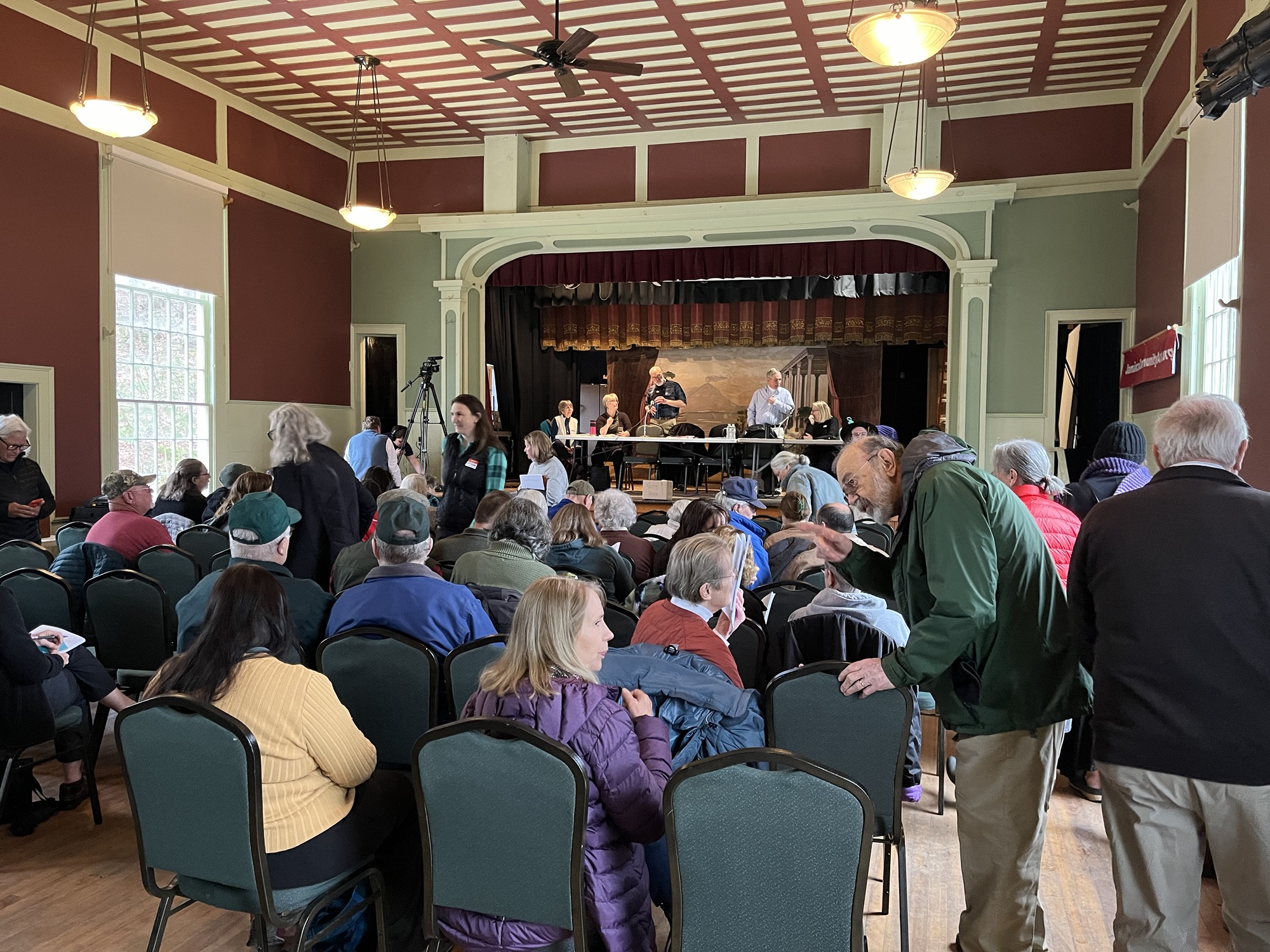
2025Town meeting schedule
This year I will start in Wardsboro which begins at 9 am, then proceed to Jamaica, Stratton and finishing in Dover. I hope to see you there and will be announcing public forums on education proposals now that the bill language is starting to emerge.
Dover Town Meeting takes place at Dover Town Hall on Tuesday, March 4, 2025, starting at 10:00 a.m. Polls will be open until 7:00 p.m. WARNING
Jamaica Town Meeting takes place at Jamaica Town Hall on Tuesday, March 4, 2025, starting at 10:00 a.m. WARNING
Stratton Town Meeting takes place at Stratton Town Hall on Tuesday, March 4, 2025, starting at 10:00 a.m. WARNING The Stratton School District Meeting takes place at Stratton Town Hall on Tuesday, March 4, 2025, starting at 11:00 a.m. WARNING
Wardsboro The residents of the Town of Wardsboro are hereby notified and warned to meet at Wardsboro Town Hall on Tuesday, March 4, 2025, starting at 9:00 a.m. WARNING
Latest Legislative Reports
Recommendations to the General Assembly Regarding Viable Approaches to a Cap-and-Invest Program – Vermont State Treasurer’s Office. The report comes from Act 148 of 2024, which required an analysis of sustainability options and transportation emissions reductions in Vermont. The Treasurer’s Office, in collaboration with the Agency of Natural Resources (ANR), reviewed various scenarios and cost/revenue projections. Based on this analysis, the Treasurer was tasked with providing a recommendation to the Vermont General Assembly regarding viable approaches. The report discusses the benefits and challenges of a cap-and-invest program, advising Vermont to wait for the New York Climate Initiative (NYCI) rather than joining the Western Climate Initiative (WCI) at this time. It also suggests monitoring developments and preparing for future actions that protect low-income Vermonters and support the state’s transition to sustainable energy.
Restaurant Meals Program Implementation Analysis by the Supplemental Nutrition Assistance Program – Department of Children and Families. The Department for Children and Families (DCF) submitted a report analyzing the resources needed for Vermont to implement the Restaurant Meals Program (RMP), as required by Act 143 of 2024. The RMP, which is part of the Supplemental Nutrition Assistance Program (SNAP), allows eligible households—especially those experiencing homelessness or with elderly or disabled members—to buy meals at approved restaurants. Currently, Vermont’s SNAP program offers a “cash out” option, allowing households to use benefits like cash, which differs from the RMP’s eligibility criteria. To implement RMP in Vermont, the DCF would need a new position and additional resources, including programming costs to enable Electronic Benefit Transfer (EBT) card use at restaurants. This would require significant funding, with costs split between state and federal funds.
On February 19, Governor Scott signed bill of the following title:
H.35 (Act 2) An act relating to unmerging the individual and small group health insurance markets The act, H.35, seeks to unmerge Vermont’s individual and small group health insurance markets by modifying definitions and regulations within the Vermont Health Benefit Exchange. It updates the classification of “qualified employers” and “small employers,” setting a threshold of 100 employees while maintaining provisions for continued participation if company size grows. The bill clarifies employer and individual enrollment options, ensures compliance with federal standards under the Affordable Care Act, and reinforces the role of registered carriers, brokers, and navigators in assisting individuals and businesses with health plan enrollment.
Bills I’ve sponsored
H.241An act relating to amendments to the scope of practice for optometrists This bill proposes to revise and further define the scope of practice for optometrists. It would also create an advanced therapeutic procedures specialty that would allow qualified optometrists to perform certain advanced therapeutic procedures.
H.257An act relating to creating the Office of Entrepreneurship This bill proposes the creation of the Office of Entrepreneurship within Vermont’s Agency of Commerce and Community Development to support entrepreneurs by developing policies, providing technical assistance, and enhancing access to resources for businesses operating for five years or less. The office would also serve as a point of contact for young businesses navigating state agencies and promote awarding at least 5% of state contracts to them. Beginning in 2027, it would submit an annual report to the legislature detailing contract awards, demographic and geographic breakdowns, and recommendations to improve entrepreneurship statewide. The bill would take effect on July 1, 2025.
During the 2025 legislative session from January through May I will continue to meet on the 1st Saturday of the month at the Dover Free Library from 11-noon and at your group’s invitation as schedules allow.
As always, if you have suggestions, concerns or critiques please be in touch so we can schedule one on one time to discuss. Please do not hesitate to contact me if you need assistance navigating government services at (802) 384-0233 or lsibilia@leg.state.vt.us. Follow my regular posts online at http://www.laurasibiliavt.com
Information I am Reading/Listening To Help Process Federal Actions





 Vermont State Representative Laura Sibilia