Dear Friends and Neighbors,
This week, I had a conversation with a new colleague who expressed concern and worry about the perceived lack of attention we are paying at the state level to the national issues that are causing alarm among Vermonters. People are worried, and I understand why. What we are seeing at the national level, especially related to healthcare, social programs, and our fundamental rights will have impacts for us here in Vermont.
As your state representative, my primary responsibility is to represent the interests of the good people of Dover, Jamaica, Wardsboro, Stratton, and Somerset, working on the issues that impact our state and our communities. While I am focused on state-level work, I also can’t ignore the growing concerns about federal policies that threaten essential services and protections. Programs that support the elderly and disabled, healthcare, education, voting rights, and even workplace protections are at risk. More and more, the rights of Vermonters and legal immigrants living here are being threatened by national actions.
I am also deeply concerned about developments in American foreign policy, and how it could undermine our country’s security, harm vulnerable populations abroad, and jeopardize Vermonters who serve our country or study internationally. It’s important to stay informed, stay connected, and most of all, stay engaged in our local communities. These are difficult times, and we need each other.
If you are feeling uncertain or overwhelmed, you are not alone. My advice is to get involved in your community, attend town meetings, and talk to your neighbors. Volunteer for local roles, stay informed about the challenges our boards and institutions face, and most importantly, let your state and local officials know what you’re seeing and feeling. While we can’t change national policies overnight, we can work together here in Vermont to care for each other and ensure our communities are strong.
I know it’s not easy, but we must stay hopeful and we must stay active. Democracy begins in our communities, with us, the people.
Below, you’ll find this week’s updates and opportunities to engage in Vermont’s legislative work. I have also include some thinking and links on federal actions at the end of this weeks newsletter. Please don’t hesitate to reach out if you need assistance or want to discuss any issues that are on your mind.
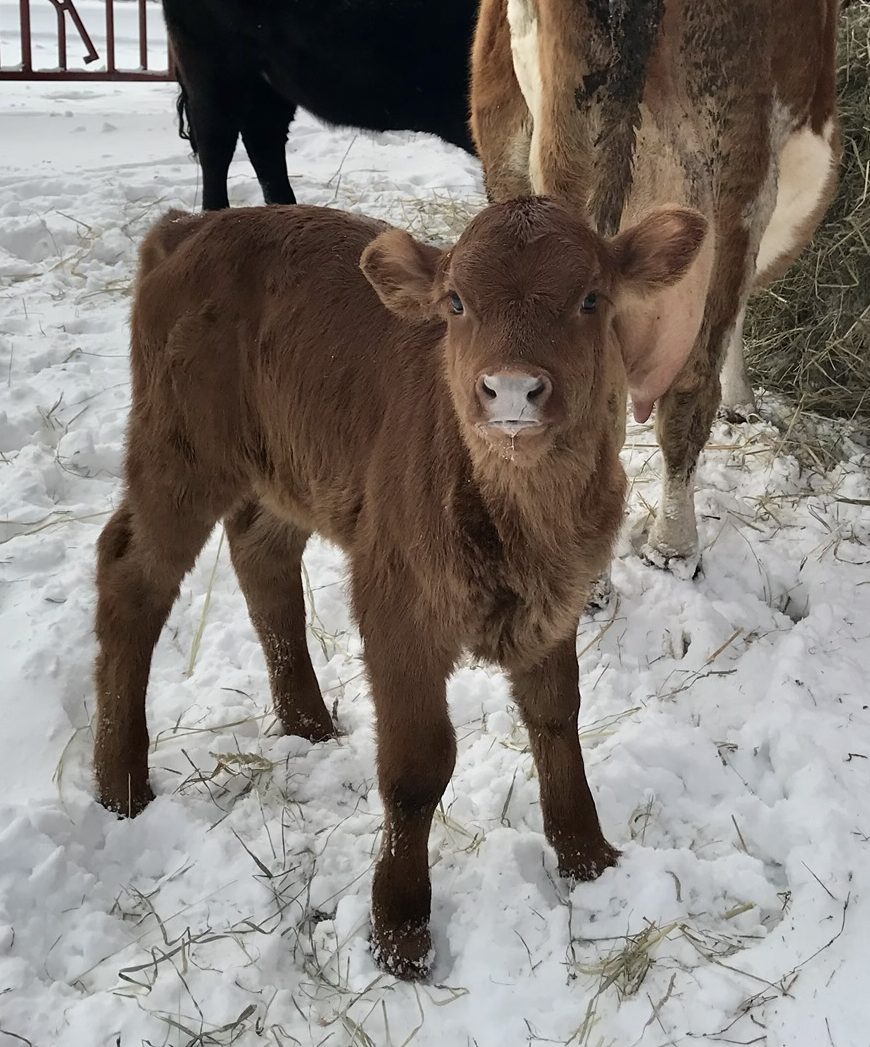
Finally, a personal note. This week I was very happy to take a break to have dinner with my two amazing interns and my former colleague and friend Lucy Rogers where we also got to meet Lucy’s calf, Celine – isn’t she a beauty?!
Take care of yourselves,
Laura Sibilia
Public Hearings on FY26 Budget
The House and Senate Committees on Appropriations will hold two joint public hearings on the FY26 budget:
- Thursday, February 20, 2025, at 5:00 p.m.
This is an important opportunity for Vermonters to share their priorities directly with legislators. If you’d like to testify, you must sign up in advance here: Sign Up Form
Once signed up, you’ll receive instructions on how to participate. You can also watch the hearings live on YouTube: Legislative Streaming
New Act 250 Land Use Review Board Appointed
Governor Phil Scott has appointed five members to the newly created Land Use Review Board, established by Act 181 of 2024.
Replacing the Natural Resources Board, this new body oversees Act 250’s land use permitting, district offices, and environmental commissions. Its key tasks include transitioning Act 250 to location-based jurisdiction, streamlining permitting, and balancing responsible development with natural resource protection.
Appointments:
- Janet Hurley (Chair, Bennington County) – Assistant director at Bennington County Regional Commission, former municipal planner, and UVM-trained natural resource planner.
- Alex Weinhagen (Chittenden County) – Hinesburg planning and zoning director, Vermont Planners Association president, and former wildlife biologist.
- Brooke Dingledine (Orange County) – Land use attorney with a background in environmental law and public service.
- Kirsten Sultan (Caledonia County) – Act 250 coordinator for the Northeast Kingdom, with engineering and project management experience.
- Sarah Hadd (Franklin County) – Fairfax town manager, certified planner, and former zoning director in Colchester.
Rural Caucus Public Forum
The Rural Caucus is a tri-partisan caucus of members of the Vermont House of Representatives who collaborate to support Vermont’s rural communities & economy. The group values civil discourse, local wisdom, and working across party lines for a better future for Vermont.
- When: Wednesday, February 19, 2025 from 5:30-7:00 pm
- Where: VT State House, Room 10 & Online via Zoom
- Who: Vermonters with constructive ideas to share
We need to hear from you! The public is invited to share their top issues affecting rural Vermont with the Rural Caucus. We’re looking for actionable ideas and insights from rural Vermonters as to what can be done legislatively. Whether you are concerned about education reform, health care, climate change resiliency, affordable housing, or another topic, let your voices be heard and share your perspective that will guide the work of the Rural Caucus in the upcoming session and beyond.
It would be most helpful for us to hear about concrete policy recommendations to address the challenges all rural communities face. Participants will have 2 minutes each, so please be focused and concise in your remarks.
Sign up here to participate: https://forms.gle/cccHsG66y9HXXHWD7
Please reference our website for additional information on the Rural Caucus: vtruralcaucus.com
Latest Legislative Reports
- 2025 Unemployment Insurance Trust Fund Report Department of Labor The Unemployment Insurance (UI) Trust Fund in Vermont has remained stable and cash-positive over the past three years due to low claims levels and increased employer contributions. In 2024, the fund received a $15 million federal reimbursement, bringing its year-end balance to an estimated $308 million, closely aligning with previous projections. Vermont’s UI Trust Fund, designed to function as a “rainy day fund,” has recovered from past economic downturns, with recent stability ensuring its ability to withstand future recessions.
- Annual Report of the Clean Energy Development Fund, Fiscal Year 2024 In Fiscal Year 2024, the Clean Energy Development Fund (CEDF) focused on administering existing grant programs, including those funded by ARPA and state appropriations, with no new funds allocated. The Fund continued managing the SHARE and SSREIP programs, though incentive uptake declined, and total expenditures reached a historic low of $610,396. With the Fund nearing full expenditure and preparations underway for its closure, the only remaining active loan is a $750,000 ARRA-funded loan to Montpelier’s district heating system, which the city has yet to begin repaying.
- Non-Target Animal Captures During Trapping Season Department of Fish & Wildlife This report, required by 10 V.S.A. § 4861, provides data on non-target animal captures during Vermont’s trapping season from October 2023 to October 2024. Data is collected through a mandatory trapper mail survey and warden reports, with efforts made to prevent duplicate reporting. Non-target captures are categorized by animal damage control, in-season trapping, and warden-reported incidents, with domestic dog and cat captures requiring immediate reporting. The 2023-2024 report includes species such as woodchucks (49), red squirrels (7), raccoons (3), and river otters (3), among others
On February 13, Governor Scott signed bill of the following title:
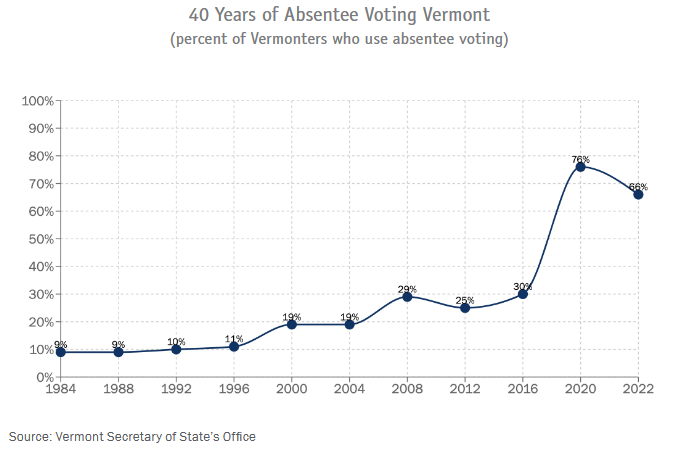
H.78, An act relating to the use of the Australian ballot system in local elections This bill allows Vermont municipalities to adopt the Australian ballot system for electing any or all municipal offices. Once adopted, the system remains in place until the municipality votes to discontinue it. The bill ensures that municipal elections held in 2025 remain valid, even if they did not fully comply with the new procedures. Additionally, past votes to elect some but not all municipal officers using the Australian ballot will not be subject to legal challenges. The bill takes effect immediately.
Bills I’ve sponsored
Three important data privacy bills have been introduced by my colleagues Rep. Monique Priestly (D) and I am proud to be amongst dozens of bipartisan sponsors for this urgent effort. Read her latest oped here: VTDigger: Opinion — Rep. Monique Priestley and Caitriona Fitzgerald: Why data privacy is the key to unlocking affordability
- Vermont House Bill 208 (H.208) An act relating to consumer data privacy and online surveillance. The bill would establish the Vermont Data Privacy and Online Surveillance Act, a comprehensive law designed to protect consumers’ personal data and regulate online surveillance practices.
- H.210 Vermont Age-Appropriate Design Code Act. Would require businesses offering online services or products likely to be accessed by children to avoid privacy-invasive or harmful design features. The bill outlines various definitions, including terms like “covered business,” “consumer health data,” and “compulsive use.” Its purpose is to regulate online platforms to ensure they are safe and suitable for minors.
- H.211 An act relating to data brokers and personal information An act relating to data brokers and personal information proposes updates to the state’s laws on data brokers and personal information protection. The bill includes provisions requiring data brokers to notify consumers of security breaches, certify that personal information is used for legitimate purposes, and provide mechanisms for consumers to request the deletion of their data. It also defines terms related to personal information, biometric data, and consumer health data.
During the 2025 legislative session from January through May I will continue to meet on the 1st Saturday of the month at the Dover Free Library from 11-noon and at your group’s invitation as schedules allow.
Monitor my votes and the bills I am sponsoring at: https://legislature.vermont.gov/people/single/2026/24023
As always, if you have suggestions, concerns or critiques please be in touch so we can schedule one on one time to discuss. Please do not hesitate to contact me if you need assistance navigating government services at (802) 384-0233 or lsibilia@leg.state.vt.us. Follow my regular posts online at http://www.laurasibiliavt.com

Information I am Reading To Help Process Federal Actions
Proposed Federal Voting Legislation
I reached out to Vermont Secretary of State Sarah Copeland Hanzas to better understand the potential impact of the proposed SAVE Act (H.B. 22) on Vermont voters. She expressed serious concerns that the bill could result in mass disenfranchisement, particularly for women whose married names don’t match their birth certificates and for people who have lost vital records due to natural disasters. She also highlighted the significant costs and logistical challenges for Vermont, including IT upgrades, extensive training for town clerks, and a statewide outreach effort. “To disenfranchise millions of Americans in order to intercept the fraction of one percent of non-citizens who may mistakenly try to vote is just madness,” she told me. She urged Vermonters to push back—protesting, contacting their congressional representatives, and spreading the word—because while non-citizen voter fraud isn’t a real issue, this bill could strip millions of Americans of their right to vote.
Read the bill here: SAVE Act (H.B. 22).
Panama, Canada, Greenland and Gaza
The UN Charter and the Geneva Conventions are two foundational agreements that shape international law and global stability. The UN Charter, adopted in 1945, establishes the principles of sovereignty, non-aggression, and collective security, guiding how nations interact to prevent war and promote human rights. The Geneva Conventions, first adopted in 1864 and updated after World War II, set the standards for humanitarian treatment during armed conflicts, ensuring protections for civilians, prisoners of war, and the wounded. Both agreements reflect a global commitment to reducing harm and upholding the rule of law, even in the toughest circumstances. Understanding and defending these principles is critical as conflicts and international tensions evolve. You can read the UN Charter here and the Geneva Conventions here.
Carnegie Endowment for International Peace: Countering Disinformation Effectively: An Evidence-Based Policy Guide

Discover more from Vermont State Representative Laura Sibilia
Subscribe to get the latest posts sent to your email.
 Vermont State Representative Laura Sibilia
Thank you for what you do. I have to say I am surprised there is no mention of the Bill that is currently in the House Ways and Means. This coincides with the Education Districts that seems to be a hot topic since the Governor brought it to our attention during his presentation of the proposed budget. This bill follows suit that there in addition to Education Districts, there will also be Assessment Districts. Each district will have an Assessment Supervisor. I hope you have at least read through this 21 page document.
Linda Sherman
Assessor for the Town of Dover
Was not aware of its introduction on Wednesday of this week. Thank you for flagging